


South Africa’s consumer price inflation slowed for the first time in three months in November, despite a sharp uptick in food prices, data from the Statistics South Africa (SSA) released on Wednesday show.
According to the agency, headline inflation moderated to 3.5% year-on-year in November, down from 3.6% in October. The monthly change in the consumer price index (CPI) was -0.1%.
Core inflation, which excludes volatile items like food and energy, eased to 3.2%, reflecting broader stability in underlying price pressures. The decline in headline inflation mirrors a larger regional trend seen in other major economies in November, including Nigeria and Ghana.
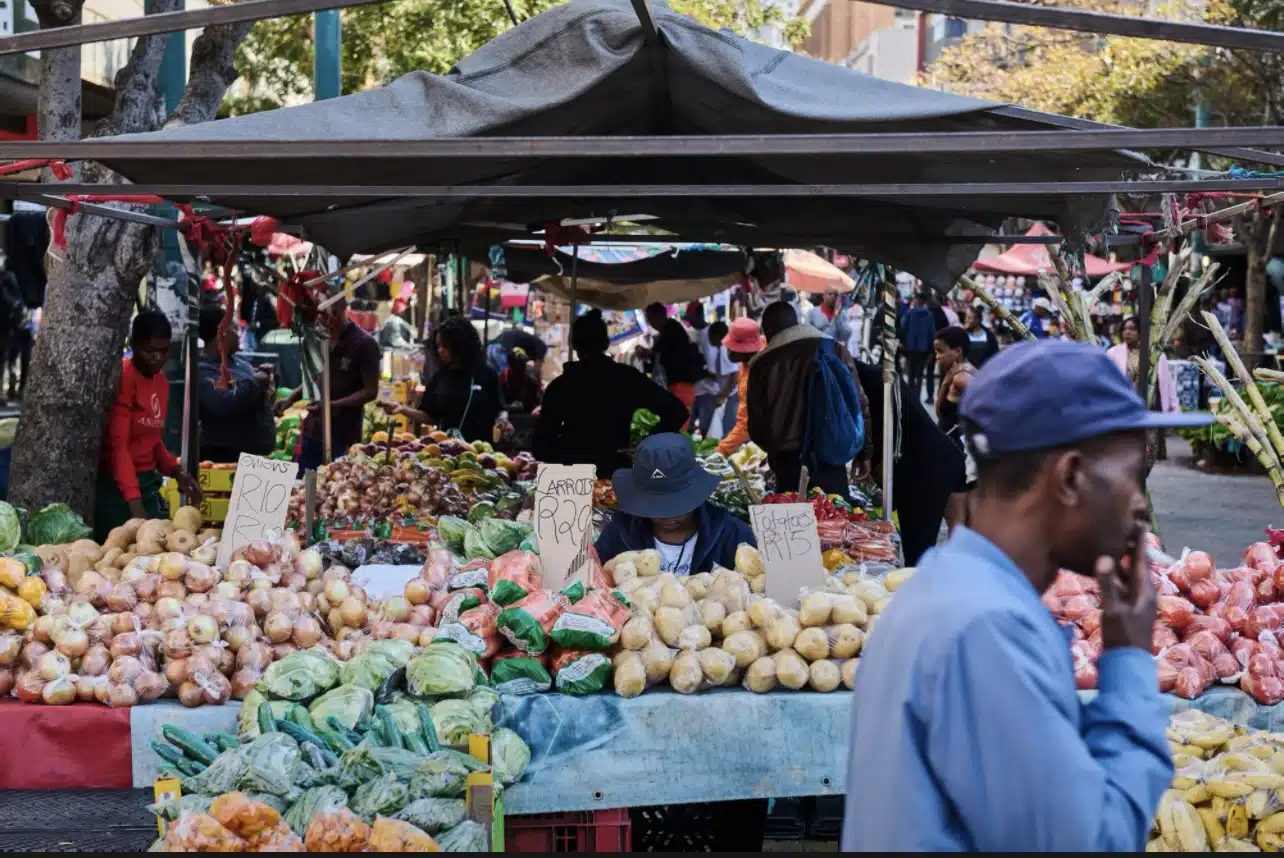
Despite the overall slowdown, food and non-alcoholic beverages (NAB) recorded their first increase in four months, rising to 4.4% from 3.9% in October, highlighting the continuing pressure of rising staple prices.
Meat prices surged by 12.2% over the year, the highest since January 2018, as beef, pork, lamb, and sausage costs accelerated.
Milk, other dairy products, and eggs continued to register mild deflation, though rates eased slightly from -1.6% in September to -1.2% in November.
The SSA noted that price growth also accelerated across restaurants & accommodation services, and alcoholic beverages and tobacco.
Transport and other categories ease
Other categories saw moderation. Transport inflation fell to 0.7% from 1.5%, driven by weaker vehicle and fuel prices. Vehicle inflation dropped to 0.9%, the lowest since June 2013, supported by a consistent decline in used vehicle prices since August 2024.
Used SUVs and MPVs fell 3.9% year-on-year, while new bakkies rose 2.8%. Fuel prices declined 2.2% month-on-month, bringing annual fuel inflation to 0.1%.
Annual inflation also eased in recreation, sport & culture, and information & communication, while four categories remained unchanged.
Softer reading fuels rate cut expectations
Economists say the softer reading could give the central bank more room to ease interest rates next year, despite its new, lower inflation target.
William Jackson, chief emerging markets economist at Capital Economics, said:
“The softer-than-expected South African headline inflation reading and weak core inflation will give the Reserve Bank plenty of confidence that it can meet its new, lower 3% inflation target. We expect 100 basis points of cuts in the repo rate in 2026.”
The South African Reserve Bank (SARB) last month cut the repo rate to 6.75%, citing an improved inflation outlook. A quarterly survey commissioned by the bank showed businesspeople, trade union officials, and analysts now expect much lower inflation under the new target.
The Reserve Bank’s next interest rate announcement is scheduled for January 29, 2026, with markets closely watching whether the softer CPI print will translate into further monetary easing.