



Ethiopia’s long-protected banking sector is finally showing measurable gains from a policy shift that has taken years in the making. After more than four decades of tight state control and limits on competition, recent deregulation and liberalisation efforts, embodied by the Homegrown Economic Reform Agenda (HGER 2.0), are translating into stronger performance for domestic banks and drawing attention from regional and global investors.
For decades, Ethiopia’s financial system was one of the most closed in Africa. Foreign banks were barred from operations, the state dominated credit flows, and the exchange rate regime was tightly managed. That long-standing model limited competition and the diversification of financial products, holding back growth in domestic credit and inclusion.
However, 2025 heralded a memorable turnaround as reform measures started to reshape this landscape, and dividends are becoming more tangible.
From protectionism to market orientation
Over the past seven years, successive policy changes have chipped away at the old model. In December 2024, Ethiopia passed a banking law that opened the sector to foreign competition for the first time, allowing foreign banks to set up subsidiaries, branches or acquire stakes in local institutions, albeit subject to ownership caps.
In parallel, the National Bank of Ethiopia (NBE) has overhauled core monetary policy frameworks, introduced interest rate-based tools, floated the currency, and loosened longstanding credit controls that previously restricted private lending.
Ultimately, this has culminated in a banking sector that is more dynamic, competitive and, and increasingly profitable.
The advancement of inclusion efforts
Recent financial disclosures from Ethiopian banks reflect a sector gaining traction, despite having a relatively low base of financial inclusion.
According to World Bank data, only 46% of Ethiopian adults held a bank or mobile money account in 2022, compared with nearly 80% in Kenya. That gap highlights both the structural challenge facing Ethiopian lenders and the growth opportunity embedded in the market. As deregulation improves operational flexibility, banks are increasingly leaning on digital channels and branch expansion to close that divide.
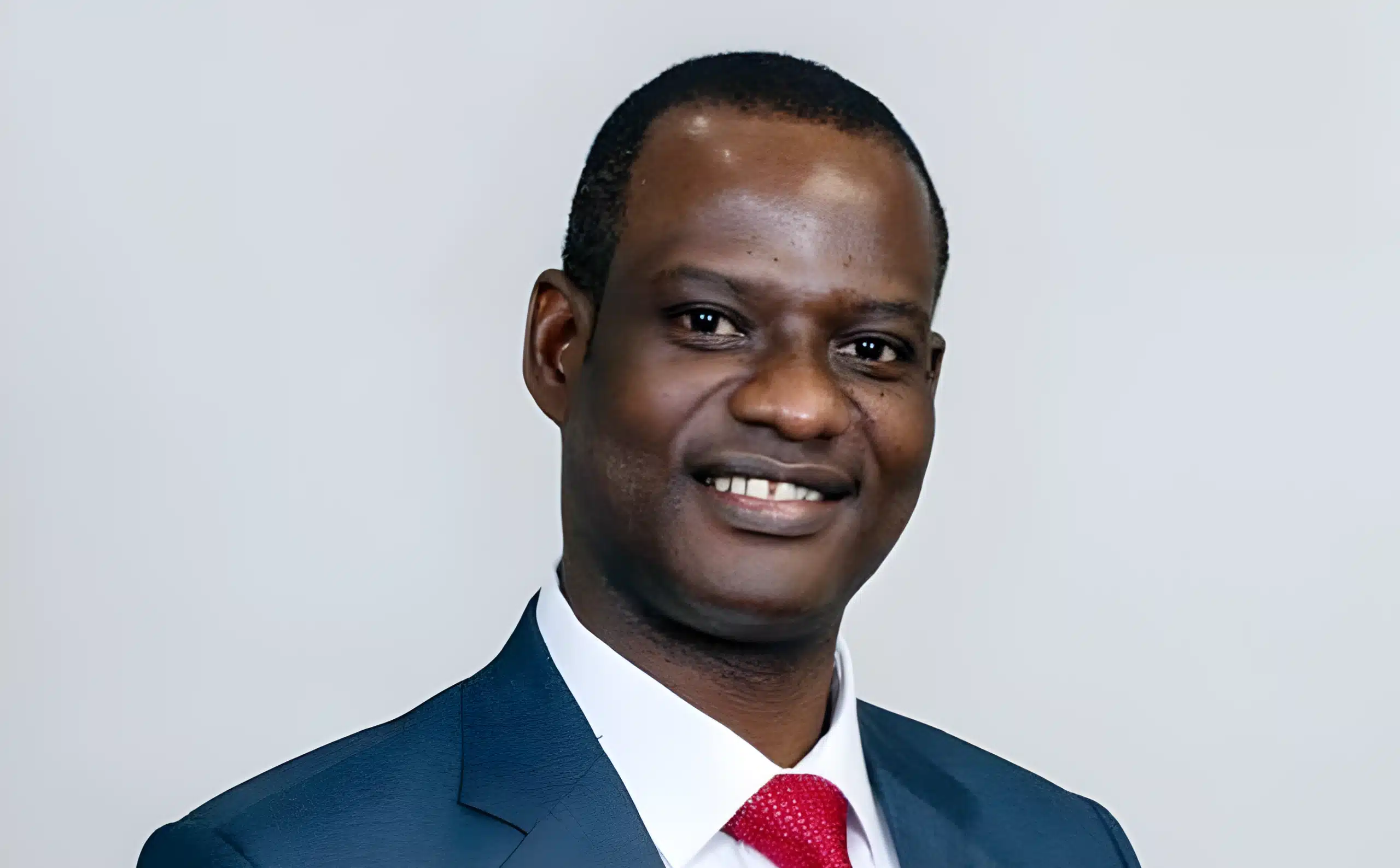
To drive forward inclusion in the banking sector, the Ethiopian reform has created the capacity for banks to connect with the economy on a more comprehensive scale. According to Neway Megersa, CEO of Siinqee Bank, the reform has enhanced the private sector’s productivity, customer base, and overall performance.
“The reform is building a stronger connection between finance and the broader economy,” he stated, highlighting an unprecedented achievement post-reform where the bank disbursed 25 billion birr ($160.66 million) in loans to over 331,000 micro-level customers in just a year.
Ethiopian banks report strong results post-reform
At Wegagen Bank, one of the country’s largest private banks, 2024/2025 fiscal year saw total revenue of 13.5 billion birr ($86.76 million), a 38 % increase year-on-year, while pre-tax profit surged 73% to 3.85 billion birr ($24.8 million). The bank’s management attributed the performance to disciplined investment, digital expansion and a broader strategic shift toward capital markets.
Similarly, Abyssinia Bank reported total assets climbing to 286.2 billion birr ($1.839 billion), a near 29% annual increase, and net profit over 90%, driven by stronger interest income and a growing loan book.
These gains underscore how deregulation, coupled with modernisation of risk and credit assessment, is unlocking latent demand for financial services.
According to an unnamed Addis-based banking analyst, “With capital nearly hitting the 30-billion-birr threshold and a fast-scaling digital footprint, Abyssinia is clearly signalling its intention to be more than a traditional bank. It’s positioning itself as a 21st-century financial services hub.”
Growth is not limited to long-established private banks. Cooperative Bank of Oromia, the newest Ethiopian entrant into the African Business Top 100 Banks ranking, illustrates how innovation is reshaping outreach. Founded just 20 years ago, the bank now operates 745 branches nationwide, with a deliberate focus on small and medium-scale farmers and the wider agricultural value chain.
Indications point to digital transformation as a key driver. Banks are expanding ATM networks, point-of-sale terminals and virtual banking services, widening access and improving customer experience. Abyssinia, for example, installed more than 1,700 ATMs and 3,600 POS terminals nationwide, boosting transaction volume and fee income.
Business models and investment services are reshaping
Beyond improved core banking results, deregulation is paving the way for deeper financial markets.
In March 2025, the Ethiopian Capital Market Authority (ECMA) issued the first investment banking licenses to CBE Capital and Wegagen Capital, marking a strategic shift toward intermediated finance, corporate underwriting, and capital raising.
These licenses are significant. Investment banking services have been largely absent in Ethiopia. Their introduction signals a move away from a simple deposit-and-loan model toward a more diversified financial ecosystem capable of supporting larger corporate financing and infrastructure projects.
This aligns with broader reforms including the January 2025 launch of the Ethiopian Securities Exchange (ESX), which introduced trading in treasury bills and equities. As banks and investment firms extend services into securities and advisory work, the financial system is beginning to integrate more with capital markets, a long-anticipated step toward deeper economic development.
International interest is increasing
Ethiopia’s decision to open its long-closed banking sector has triggered strong interest from regional and international lenders. Regional powerhouses like Nigeria’s Zenith Bank are exploring entry opportunities, underscoring the attractiveness of Ethiopia’s underbanked economy and its population of over 120 million, one of the largest on the continent.
Also, Kenyan banks are among the most active suitors. KCB Group, East Africa’s largest lender by assets, has maintained a representative office in Addis Ababa since 2015 and is widely viewed as a potential buyer of an existing Ethiopian bank once acquisition rules are clarified.
Equity Bank, known for its mass-market and SME focus, held discussions with the Ethiopian Investment Commission in September 2025 on possible entry routes, betting that regulatory reforms will unlock long-term growth.
Interest extends beyond Kenya. Banque pour le Commerce et l’Industrie Mer Rouge (BCIMR) of Djibouti has signalled interest, reflecting deepening trade links between the two countries.
South Africa’s Standard Bank is also monitoring developments, particularly in trade finance and large corporate services, while banks from Morocco and the United Arab Emirates have been linked to exploratory talks.
Speaking on the upsides of this development, Mirkarim Yakubov, CFO at 54 Capital, an asset management firm based in Addis Ababa, believes that “opening Ethiopia’s banking sector to foreign banks is expected to force the existing players to significantly upgrade what they are offering to businesses and consumers” and that “foreign banks will bring new technologies and new services,” catalysing improvements across board.
Notwithstanding, regulators are proceeding cautiously. The National Bank of Ethiopia (NBE) has indicated that up to five foreign banking licences could be issued over the next few years, with strict capital requirements and ownership limits designed to preserve stability.
Latent challenges to address
Even as Ethiopia’s banks post stronger results and regulators push reform, real structural challenges remain that could slow the pace of progress.
One persistent issue is credit concentration. According to the latest NBE financial stability data, the vast majority of loans are concentrated in the hands of a tiny share of borrowers. Just 0.5% of borrowers hold nearly three-quarters (74.8%) of all bank credit, while agriculture, a core part of the economy, receives barely 6–7% of total lending. That leaves many ordinary businesses and households on the sidelines of formal finance, reinforcing deep inequalities in access to capital.
Inflation, though improving, has been a stubborn drag. After peaking around 30–33% in recent years, price growth eased to the mid-teens by mid-2025 (roughly 13.9%) but remains well above the comfortable range seen in many emerging markets, constricting consumer purchasing power.
Institutional capacity and competition are also concerns. The sector remains dominated by a few large state-linked banks that control a significant share of assets and deposits, making it harder for private lenders to scale quickly and for markets to price risk efficiently.
“Despite progress, Ethiopia’s banking sector remains highly concentrated and underdeveloped, with the state‑owned bank controlling more than half of all assets,” notes the International Monetary Fund, pointing to ongoing hurdles in broadening access to credit and expanding private sector lending.
However, Yakubov appears certain that international competition is the way to go for exponential growth in Ethiopia’s banking sector and addressing these challenges in one fell swoop.
“I think it’s a very significant step towards opening up and liberalising and also stirring up competition within the financial sector. The local banks have remained unchallenged until now.”
The underlying challenges don’t negate the gains so far, but they highlight how far the system still has to go. For ordinary Ethiopians and small businesses, easier access to credit, more stable prices and a truly competitive banking market, not just headline-grabbing profits, are the changes that will matter most over the long run.
N.B: Figures originally reported in Ethiopian birr and converted using the average exchange rate of 155.6 ETB/$1 as of Friday, December 26, 2025.