
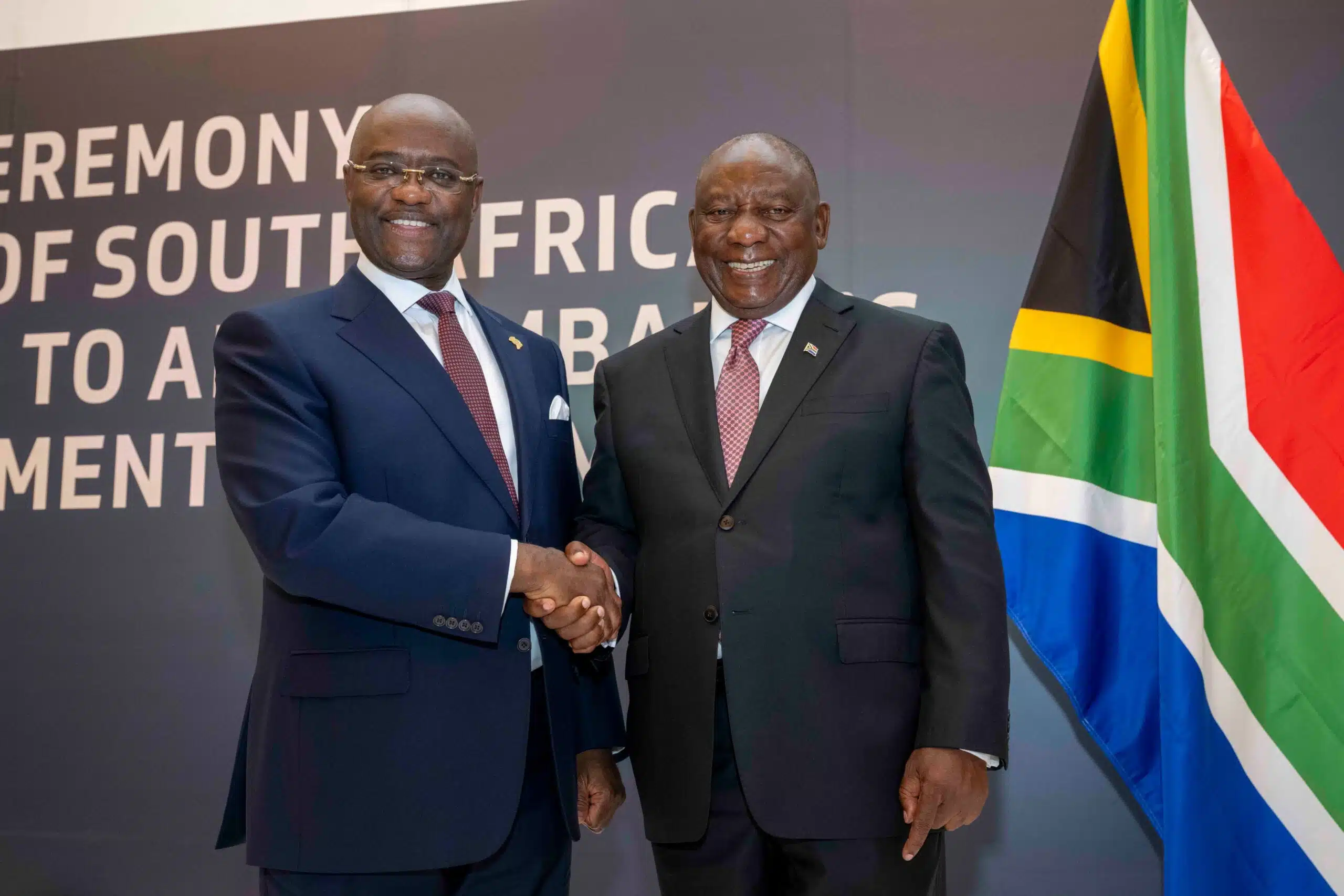


South Africa has formally acceded to the Establishment Agreement of the African Export-Import Bank (Afreximbank), becoming the 54th participating state and completing the pan-African trade lender’s continental membership for the first time in its three-decade history.
The accession, announced on February 4 in Johannesburg, was accompanied by the launch of a US$8 billion Afreximbank country programme for South Africa, aimed at supporting industrial development, trade finance, and regional value chains. Afreximbank said its current project pipeline in the country already exceeds US$6 billion, spanning sectors including manufacturing, energy, mining, healthcare, and financial services.
For Afreximbank, however, South Africa’s entry carries significance that goes well beyond the size of the financing package. With Africa’s most industrialised economy now formally inside its shareholder base, the Cairo-headquartered lender can credibly claim full continental coverage — a milestone that strengthens its institutional standing at a time of heightened scrutiny from global investors and rating agencies.
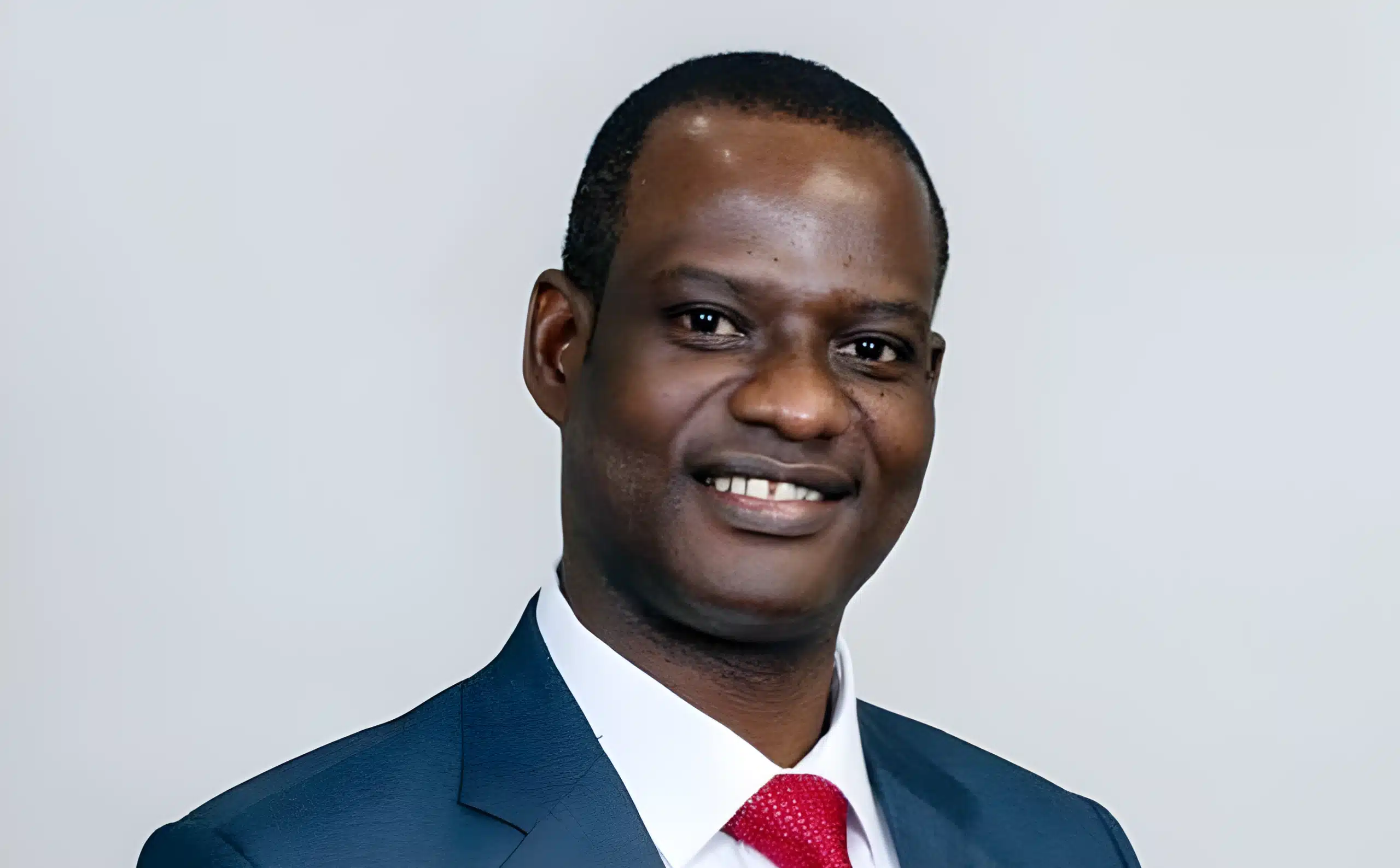
Dr George Elombi, President and Chairman of Afreximbank, described South Africa’s accession as a “decisive step” that completes the bank’s continental footprint.
“South Africa’s membership of the Bank, while providing Afreximbank a full continental coverage, brings the country into the heart of Afreximbank’s vision and its aspirations to promote the change so much desired in the structure of Africa’s trade,” Elombi said at the signing ceremony.
Closing a long-standing gap
South Africa had long been the most notable absentee from Afreximbank’s membership roster. While most African economies joined the institution years ago, Pretoria remained outside the treaty framework, relying instead on its deep domestic banking system and relatively strong access to global capital markets.
That calculus has shifted.
By joining Afreximbank, South Africa is aligning more closely with continental trade and industrial policy initiatives, including the African Continental Free Trade Area (AfCFTA). For Afreximbank, the move closes a symbolic and practical gap in its mandate as Africa’s principal multilateral trade finance institution.
President Cyril Ramaphosa framed the decision as part of a broader push toward economic integration across the continent.
“South Africa’s accession to the African Export-Import Bank affirms our commitment to African industrial development and to deepening trade, investment and development across our continent,” Ramaphosa said. He added that the partnership would strengthen South Africa’s ability to support exporters, industrial projects, and regional value chains.
Why timing matters
The timing of South Africa’s accession is particularly notable.
Over the past year, Afreximbank has found itself at the centre of debates over Africa’s sovereign debt restructurings, its exposure to distressed governments, and its treatment under global credit rating methodologies. Both Moody’s and Fitch downgraded the bank in 2025, citing rising sovereign risk and questions around preferred creditor status, while Fitch later withdrew coverage altogether following a public dispute.
Although Afreximbank continues to contest aspects of those assessments — and maintains investment-grade ratings from other agencies — the episode highlighted the challenges faced by hybrid institutions that sit between commercial lending and multilateral development finance.
The pressure on Afreximbank is part of a broader friction between African financial institutions and the global credit rating system. African policymakers have increasingly criticised what they see as pro-cyclical and externally biased assessments by the major rating agencies, arguing that they raise borrowing costs and constrain development finance. Efforts to create an African-led credit rating agency have gathered political momentum, but its launch has already been delayed into late 2025, leaving African lenders exposed to the same global frameworks in the interim.
In that context, South Africa’s entry provides a form of institutional ballast.
As a G20 member with sophisticated financial regulation and deep capital markets, South Africa strengthens Afreximbank’s shareholder profile in ways that are legible to global investors, development finance institutions, and co-financiers. Full continental membership makes it harder to characterise Afreximbank as a niche regional lender, rather than a systemically important African institution.
Implications for funding and partnerships
Institutional breadth matters because Afreximbank relies heavily on international capital markets to fund its trade finance and development activities. Shareholder composition, governance credibility, and political backing are increasingly scrutinised alongside capital adequacy and asset quality.
The presence of South Africa — alongside other large shareholders such as Nigeria and Egypt — reinforces Afreximbank’s argument that it is embedded in Africa’s economic governance architecture, not merely exposed to African risk.
That may also ease co-financing with global development finance institutions, many of which already have extensive operations in South Africa and prefer partners with broad-based shareholder support and clear policy alignment.
Elombi underscored that the new US$8 billion country programme was aligned with South Africa’s National Development Plan 2030 and national industrial priorities, signalling Afreximbank’s intention to operate as a long-term development partner rather than a transactional lender.
Beyond symbolism
For South Africa, the deal provides access to a wider set of trade finance instruments, guarantees, and project preparation facilities, particularly for companies expanding into other African markets. The country already accounts for roughly a fifth of intra-African trade, and policymakers see Afreximbank as a lever to deepen those linkages.
Ramaphosa pointed to domestic objectives as well, noting that part of the financing would support South Africa’s Transformation Fund, aimed at expanding access to capital for black-owned businesses historically excluded from the formal economy.
“One of the areas we are going to focus on with immediate effect is to give muscle to our Transformation Fund, to support black businesses,” he said.
What comes next
South Africa’s accession does not resolve Afreximbank’s outstanding challenges with global rating agencies, nor does it insulate the bank from the risks of operating in a continent still navigating debt restructurings, tight global liquidity, and external shocks.
But at a moment when African institutions are openly contesting how risk is assessed — and with no immediate alternative to the dominant global rating framework — full continental membership strengthens Afreximbank’s claim to systemic relevance rather than transactional utility.
Afreximbank enters its next phase with a stronger claim to legitimacy, scale, and systemic importance. Whether that translates into lower funding costs, smoother co-financing, or greater deference in future debt restructurings remains to be seen.
What is clear is that, at a moment of global trade fragmentation and tightening capital, Africa’s leading trade finance institution has closed its last major gap — and brought its largest economy firmly inside the tent.