
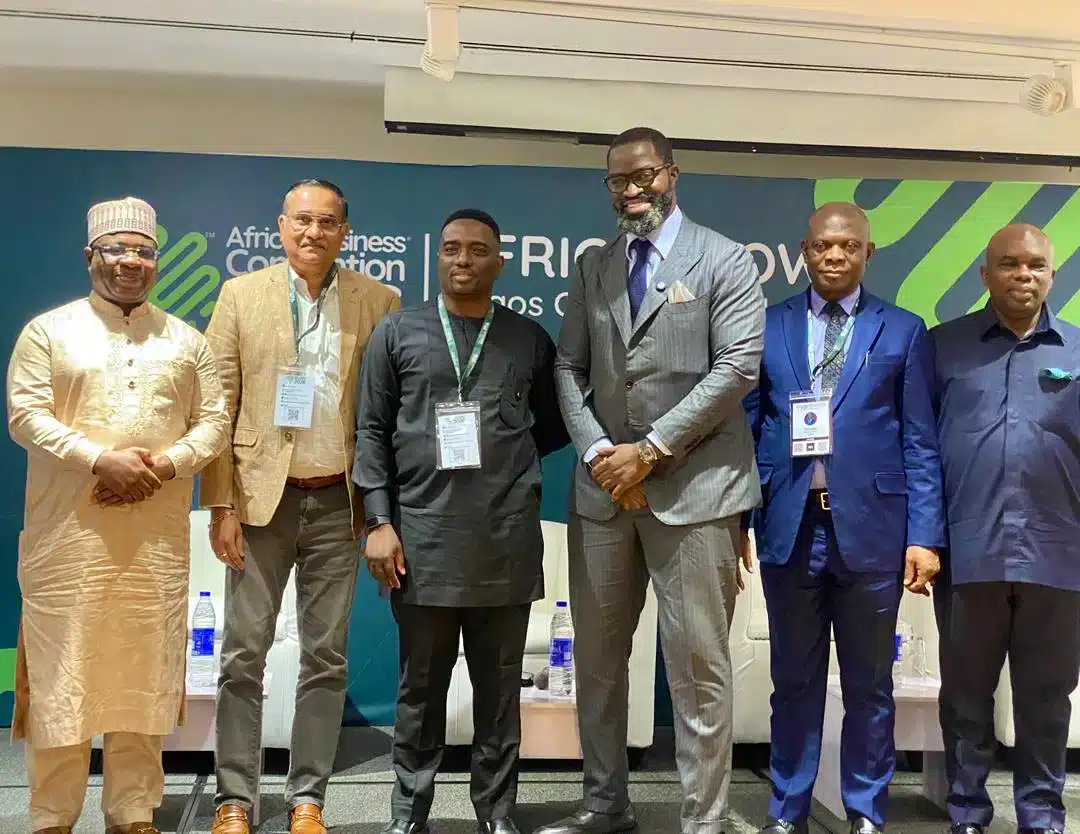


The Africa Business Convention rarely struggles for ambition. This year’s edition, held in Lagos, brought together the familiar mix of policymakers, founders, investors, and operators. All broadly aligned on the idea that Africa must grow faster, more fairly, and more sustainably.
What stood out, however, was not the ambition itself, but the quiet convergence around financial, regulatory, and market infrastructure as the binding constraint.
Across conversations, a shared tension emerged: Africa does not lack ideas, capital interest, or entrepreneurial energy. What it lacks is a reliable financial architecture that allows those forces to compound at scale.
Capital wants structure before it wants vision
Several panels returned to the same diagnosis: capital in Africa is expensive, not because of scarcity, but because of friction. Unclear pipelines. Weak exit paths. Inconsistent governance. Fragmented markets.
This framing reframes the growth debate. Growth is not primarily a demand-side problem; it is a systems problem.
As one speaker put it during a finance-focused session, capital flows fastest where three conditions hold: visibility into projects, protection through governance and risk management, and velocity — the ability to enter and exit markets efficiently. Where these are absent, capital prices are uncertain, or stay out entirely.
This matters because infrastructure capital — power, transport, digital connectivity — is uniquely intolerant of friction. Long-dated projects cannot survive short-term uncertainty.
FiA’s attention went to market linkages, not just market size
While much of the external coverage understandably gravitated toward innovation and startup policy, Finance in Africa’s conversations leaned elsewhere — toward market connectivity.
In conversations with executives from the Nigerian Exchange Group, including its CEO Jude Chiemeka and chairman Umar Kwairanga, one initiative stood out: the African Exchanges Linkage Project.
The project’s premise is deceptively simple: enable investors to access multiple African stock exchanges through a single market infrastructure.
If executed fully, this would address one of the African capital markets’ deepest structural weaknesses, which includes fragmentation. Individually, most African exchanges are small. Collectively, they represent a far more compelling investment universe. But without linkage, scale remains theoretical.
This is where the conversation becomes less about aspiration and more about execution risk. Linking exchanges requires harmonised settlement cycles, regulatory coordination, currency considerations, and investor protection standards — the unglamorous work of financial plumbing.
Yet this is precisely the kind of infrastructure that determines whether Africa’s savings pool can meaningfully finance its own growth.
Trade, standards, and the policy–reality gap
That same execution gap surfaced in trade-focused discussions, particularly around standards and cross-border movement of goods.
Officials from Nigeria’s standards authorities laid out the policy logic behind quality controls and compliance frameworks. Entrepreneurs, in parallel conversations, described the lived reality: delays, costs, and unpredictability.
The contrast was instructive. Policy intent is increasingly aligned with continental integration, especially under the African Continental Free Trade Area. But alignment on paper does not automatically translate into smooth commercial execution.
This gap — between design and delivery — is where Africa’s growth agenda is most vulnerable.
From conversations to infrastructure
What ABC 2026 made clear is that Africa is past the phase of debating whether growth is possible. The harder question now is which ideas can survive the journey from conference rooms to balance sheets and operating systems.
Some will not. Others — like cross-exchange linkages, payments interoperability, and trade-enabling infrastructure — have a better chance precisely because they sit beneath the surface, quietly compounding value rather than chasing headlines.
That is the lens Finance in Africa brings out of this year’s convention: not who said what on stage, but which conversations point to infrastructure that might actually stick.
And in African finance today, infrastructure — not inspiration — is the real growth story.