
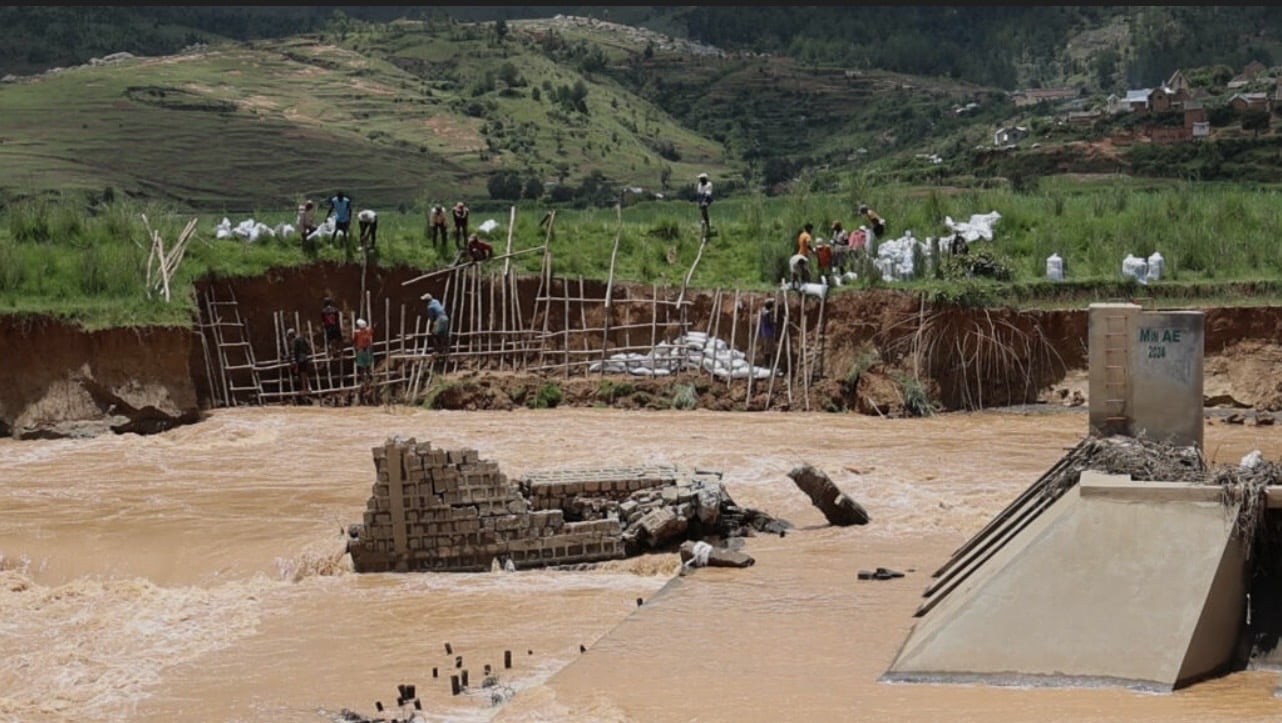


Madagascar has secured $37 million in emergency financing from the World Bank to support recovery efforts after two powerful cyclones battered the country in quick succession, deepening humanitarian needs and disrupting already fragile infrastructure.
In a statement issued last Friday, the Washington-based lender said the package will fund an initial response plan aimed at supporting around 40,000 households affected by Cyclones Fytia and Gezani.
The programme will provide social cash transfers, cash-for-work schemes and nutritional supplements, alongside measures to restore access to water and electricity services and strengthen national coordination efforts.
“The World Bank is fully committed to supporting Madagascar as it helps people restore their livelihoods, recover economically and rebuild in a more resilient and sustainable way,” said Atou Seck, the institution’s resident representative in Madagascar, as cited by Econfinagency.
The funding comes as authorities grapple with the fallout from back-to-back storms that struck within three weeks.
According to the World Food Programme, Cyclone Fytia triggered heavy rainfall and flooding across several regions, while Cyclone Gezani caused widespread destruction, with wind gusts reaching up to 250 kilometres per hour.
Tamatave, the country’s second-largest city and a key commercial hub, was among the worst affected.
Authorities estimate that about 80% of the city sustained damage, with urgent needs centred on access to clean water, sanitation, hygiene and electricity.
As of February 13, officials had recorded 38 deaths and 374 injuries, while more than 260,000 people were affected nationwide. Around 400,000 people are now estimated to be in urgent need of assistance.
Beyond immediate relief, the World Bank said it will work with the government to develop and implement sector-specific recovery measures.
These include rebuilding essential public services such as schools and health facilities, repairing transport infrastructure and supporting the restoration of basic economic activity in affected areas.
The government has declared a national state of emergency and appealed for international assistance, underscoring the country’s vulnerability to extreme weather events.
Madagascar, which remains heavily dependent on agriculture, is highly exposed to cyclones, droughts and floods, with structural weaknesses amplifying the economic and social impact of such shocks.
An estimated quarter of the country’s 30 million people live in areas at high risk of natural disasters, according to the International Fund for Agricultural Development.
The disaster adds pressure to an economy already struggling with persistent poverty, weak infrastructure and food insecurity.
Earlier, the World Bank projected agricultural production to decline in 2025 following a below-average rice harvest caused by insufficient rainfall, leading to higher food costs and elevated inflation.
Looking ahead, the lender sees a rebound in public infrastructure spending and private investment in mining, tourism and telecommunications lifting economic growth to about 4.2% through 2027.
However, near-term recovery will hinge on the speed and effectiveness of post-cyclone reconstruction efforts and continued external support.