
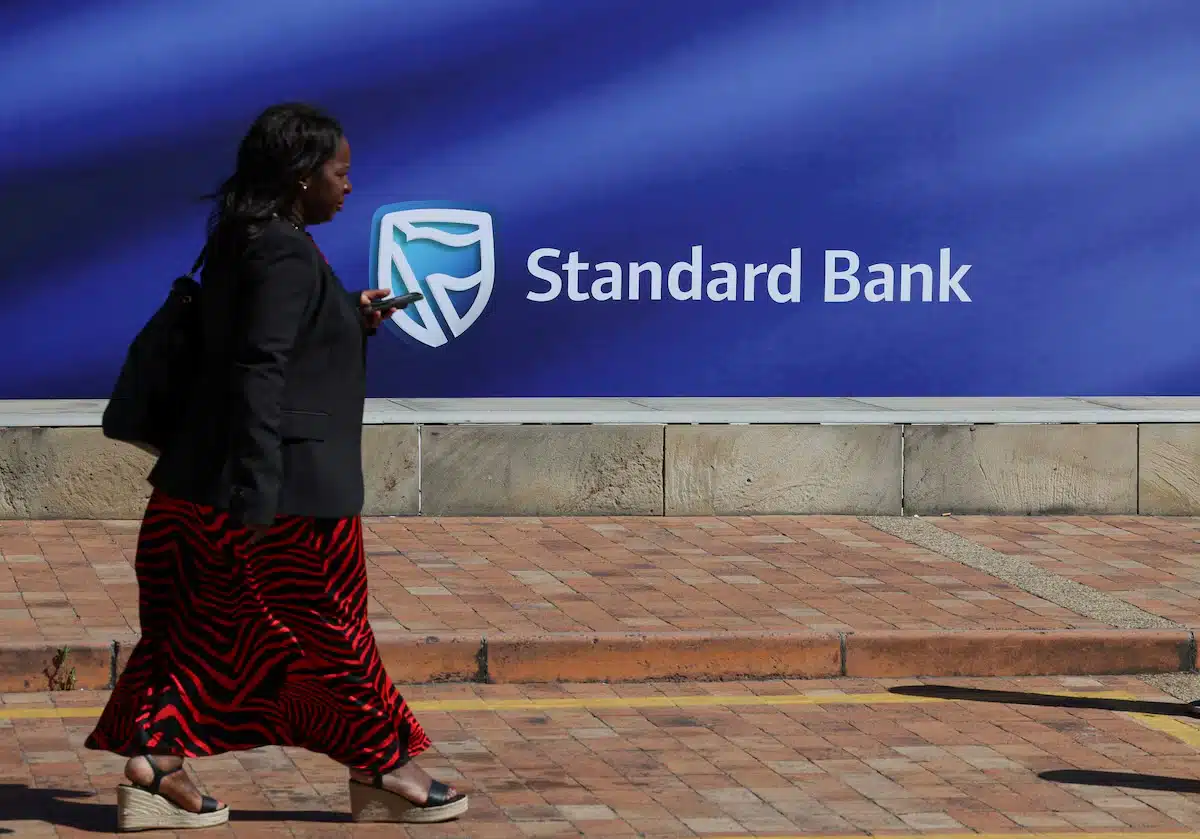


Standard Bank Group, Africa’s largest lender by assets, has raised $123.8 million (2 billion rand) through an oversubscribed debut issuance of financial loss-absorbing capacity (FLAC) notes, marking a milestone in the evolution of bank crisis management tools on the continent.
The transaction — the first of its kind by a South African lender — attracted bids exceeding $619 million (10 billion rand) from more than 30 institutional investors, underscoring strong demand for instruments designed to shield banks and taxpayers during periods of financial stress.
FLAC notes are structured to absorb losses if a bank faces severe distress.
Authorities can either write down the debt or convert it into equity, allowing the institution to stabilise without requiring public funds. The instrument forms part of broader regulatory reforms aimed at strengthening the resilience of systemically important banks.
The bank revealed the outcome of the issuance on Thursday, two days after it announced the debut issuance.
In its earlier statement, the African heavyweight said the move demonstrated decisive market leadership in South Africa, “setting a new benchmark for capital market innovation and regulatory alignment.”
Extensive preparations
Paul Burgoyne, head of treasury and money markets at Standard Bank, told Reuters the deal, which was split into four tranches, reflects years of preparation.
The transaction “is the culmination of many years of legal and regulatory work, as well as extensive institutional investor engagement,” he said, pointing to the complexity involved in introducing new loss-absorbing instruments.
The issuance follows the implementation of South Africa’s bank resolution framework in 2023, aligning the country with global reforms introduced after the 2008 financial crisis. These reforms, led by the Financial Stability Board, require major banks to maintain buffers that ensure investors — rather than governments — bear losses during a failure.
Credit rating agency Moody’s said the framework strengthens protections for depositors and senior creditors while reducing fiscal risks.
“South African authorities are likely to remain unwilling to bail out bank creditors, considering the government’s limited fiscal capacity,” the agency said, adding that the framework relies on instruments such as FLAC notes to absorb losses during a bank resolution.
Strong financial backdrop
Beyond regulatory alignment, the strong investor appetite also reflects confidence in Standard Bank’s financial performance and balance sheet strength.
The lender reported headline earnings of 21.2 billion rand ($1.3 billion) in the first half of 2025, a 7% increase from the previous year, supported by robust non-interest income, expanding lending activity and disciplined cost control.
The successful debut strengthens Standard Bank’s capital structure while enhancing its ability to withstand future shocks. It also sets a precedent for other South African lenders expected to issue similar instruments as regulators deepen efforts to reinforce financial stability across the banking system.
For investors, the transaction signals growing maturity in Africa’s capital markets and a shift towards globally aligned safeguards designed to contain financial crises without exposing governments to costly rescues.
NB: $1= R16.5 as of February 19, 2026