
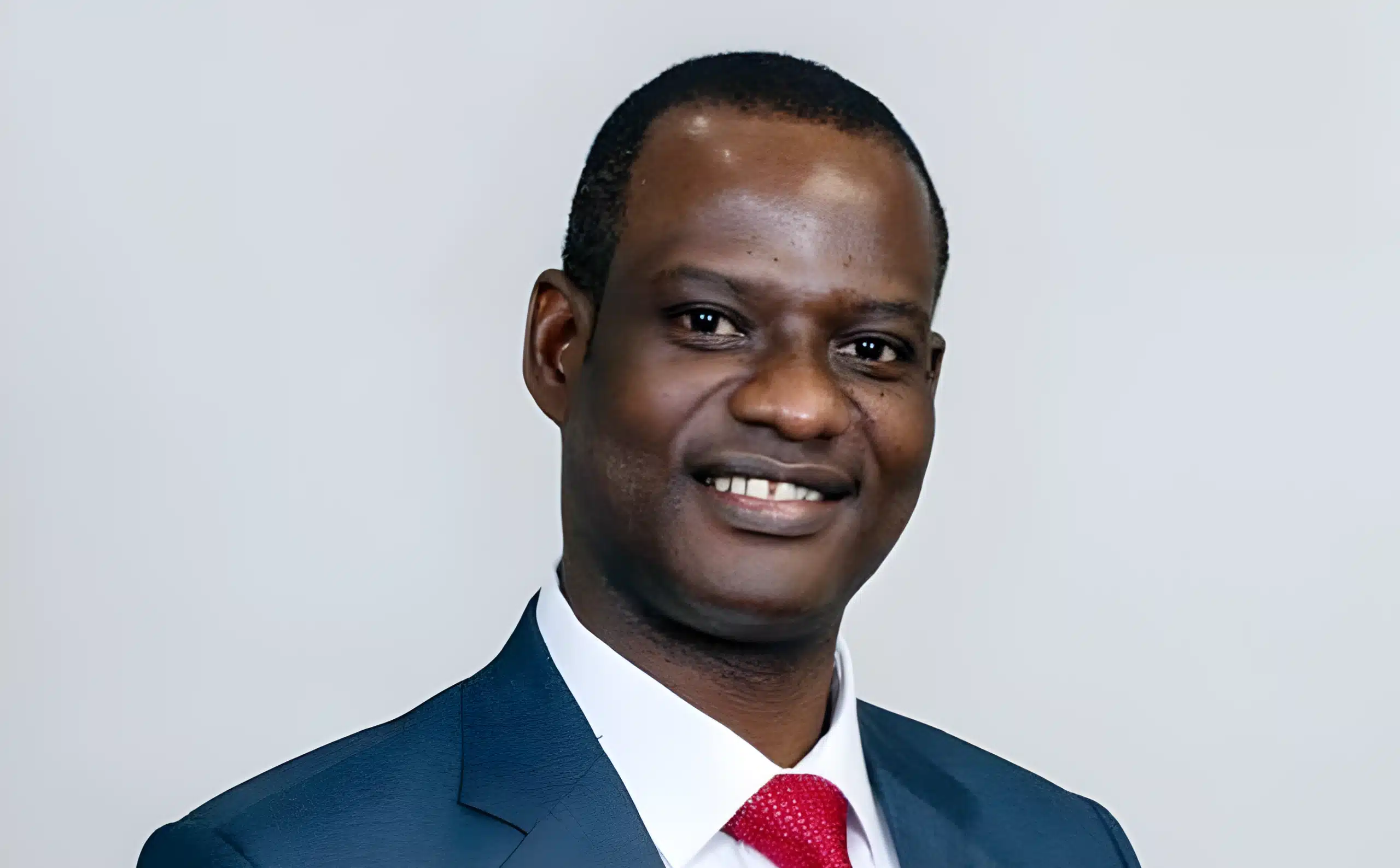


Nigerian President Bola Tinubu has nominated Taiwo Oyedele, the driving force behind Nigeria’s sweeping tax overhaul, as Minister of State for Finance.
He replaces Doris Uzoka-Anite, who has been redeployed as Minister of State for Budget and National Planning, her third portfolio in the administration. The nomination was conveyed to the Senate on Tuesday for confirmation in a letter to Senate President Godswill Akpabio.
The appointment marks a strategic elevation for the man who spent nearly three years designing the reforms now set to reshape Africa’s largest economy, effective from January 2026. It signals the government’s determination to move from policy design to aggressive execution as Nigeria grapples with inflation, currency pressures and the urgent need to diversify beyond oil.
Who is Taiwo Oyedele?
Oyedele, 50, is a Nigerian economist, chartered accountant and public policy expert from Ikaram-Akoko in Ondo State. He brings more than two decades of high-level experience, including 22 years at PwC, where he rose to Fiscal Policy Partner and Africa Tax Leader before stepping down in 2023 to lead the presidential committee.
He holds an HND in accountancy and finance from Yaba College of Technology, a BSc in applied accounting from Oxford Brookes University, and has completed executive programmes at the London School of Economics, Yale, Harvard Kennedy School and South Africa’s Gordon Institute of Business Science. He also serves as a professor at Babcock University.
Widely regarded as one of Nigeria’s foremost tax minds, Oyedele is known for his outspoken advocacy on fiscal policy, frequent media appearances and data-driven defence of reforms. His appointment pairs him with Finance Minister Wale Edun, creating what analysts see as a powerful technocratic duo to drive implementation.
Landmark changes and the “higi haga” of Nigeria’s tax reforms
Appointed committee chairman by the president in July 2023, Oyedele was tasked with tackling Nigeria’s notoriously fragmented, inefficient and business-hostile tax regime. The system was plagued by multiple taxation, overlapping agencies, low compliance and a tax-to-GDP ratio stuck around 10% among the world’s lowest.
The committee’s work produced four landmark bills: the Nigeria Tax Bill, Nigeria Tax Administration Bill, Nigeria Revenue Service (Establishment) Bill and Joint Revenue Board (Establishment) Bill; transmitted to the National Assembly in October 2024. These were passed, signed into law by President Tinubu and are scheduled for full effect from January 1, 2026.
Key provisions include:
- Consolidation of fragmented tax authorities into a single Nigeria Revenue Service (replacing FIRS and others).
- Simplified compliance and elimination of multiple taxation layers.
- Tax relief for low earners: the bottom 98% of income earners will pay less or zero tax; small businesses get 0% corporate income tax and VAT exemption.
- Removal of VAT on essential items such as food, education and healthcare.- Gradual reduction in company income tax rates (from 30% to 27.5% in 2025, then 25%).
- A target to raise the tax-to-GDP ratio to at least 18% within years without broad rate hikes, but through a broader base and better enforcement.
The journey has been anything but smooth, the classic Nigerian “higi haga” of political pushback, public confusion and last-minute drama.
Northern governors fiercely opposed changes to VAT revenue sharing, fearing losses for their states. Public hearings were heated. Critics, including opposition figures and civil society, warned the changes could burden citizens or favour big business.
The biggest storm erupted in December 2025 when a House member alleged discrepancies between the bills passed by the National Assembly and the versions gazetted for public use. Prominent voices, including former Vice President Atiku Abubakar and Peter Obi, called for the suspension of the laws.
Oyedele publicly dismissed the claims as based on unofficial documents, insisting taxes would fall for most Nigerians, not rise.
The Senate eventually ordered re-gazetting to resolve the issue.Oyedele himself revealed he received death threats for championing the changes, telling interviewers, “Reforms are hard, and tax reforms are even harder. You need courage. I receive threats simply for trying to fix a broken system.”
Despite the turbulence, the reforms passed. Oyedele has consistently used social media, television and public engagements to counter what he termed as misinformation, repeatedly stressing: “Your taxes are coming down next year, not going up.”
What the appointment means
By placing the architect of the reforms into the Finance Ministry itself, President Tinubu is sending a clear message: implementation will be fast-tracked.
The new structure aims to make tax payment easier, reduce the cost of doing business, attract foreign investment and generate the non-oil revenue needed for infrastructure and social programmes.
Markets have yet to react given the announcement’s recency, but investors and multilateral partners will be watching closely.
The Senate is expected to screen and confirm him in the coming weeks. If approved, Oyedele will step from policy designer to enforcer at a pivotal moment for Africa’s biggest economy.