
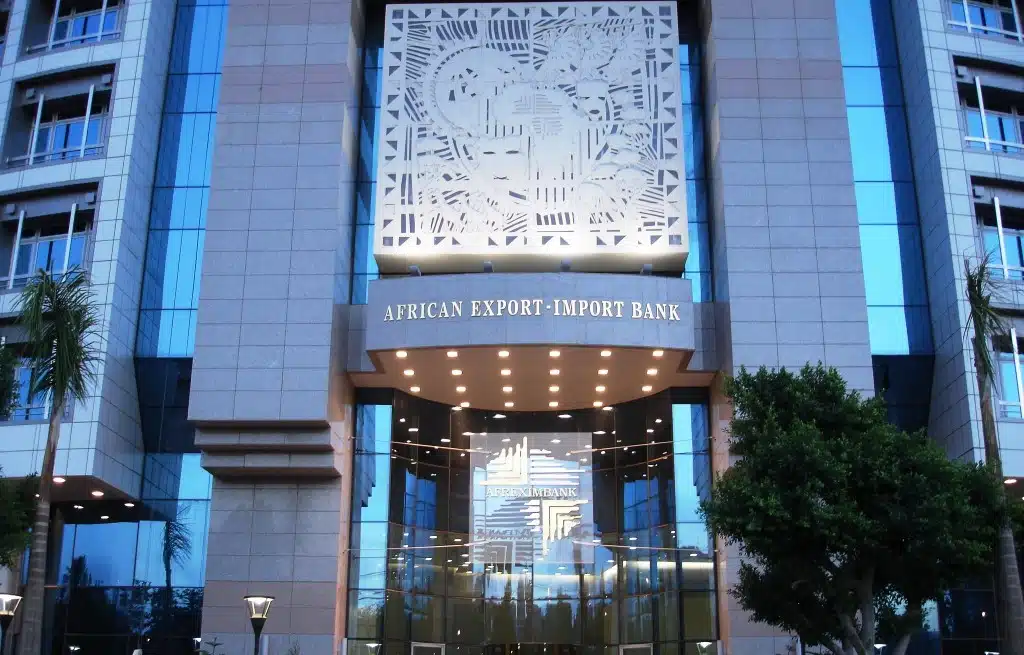


In January 2026, Fitch Ratings downgraded the African Export-Import Bank to BB+ (Junk status). Not long after, it withdrew its ratings. Ordinarily, this episode might have looked like a routine credit event. Rating agencies reassess risk all the time.
But everything about this looked different. And it did.
Within days of the downgrade but before the withdrawal of Fitch’s rating, Afreximbank severed its relationship with Fitch altogether, rejecting the agency’s assessment and, more importantly, the framework behind it. What unfolded was an interesting sequence. Fitch’s downgrade triggered a dispute, which then culminated in outright disengagement, especially considering the brewing negative perception of international credit rating agencies by African sovereigns and institutions.
This sequence has evolved into something larger than a single credit decision. It has become a defining moment in the relationship between African development financial institutions (DFIs) and the global rating system that shapes their access to capital.
At its core, this is no longer just about whether Afreximbank is investment grade. It is about how risk is measured, who defines it, and what happens when a major borrower steps outside that system.
The downgrade that triggered a break
Fitch Ratings’s downgrade of Afeximbank from investment grade to BB+, commonly referred to as “junk” status, was driven by concerns over rising credit risk. Central to the decision was the bank’s exposure to sovereign borrowers undergoing debt stress, particularly Ghana.
In its assessment, Fitch pointed to the treatment of Afreximbank’s loans during Ghana’s debt restructuring, arguing that the episode cast doubt on the bank’s preferred creditor status. This status, typically enjoyed by multilateral development institutions, implies that such lenders are repaid ahead of others during crises. It is a key pillar supporting strong credit ratings.
By questioning that assumption, Fitch effectively reclassified the bank’s risk profile. The implication was clear: Afreximbank’s lending to sovereigns could no longer be viewed through the same lens as that of traditional multilateral lenders.
But that conclusion raises a deeper tension within development finance. Institutions like Afreximbank are designed to step in precisely when private capital withdraws. If supporting distressed economies becomes grounds for penalisation, it creates an ironic trade-off: the more a development bank fulfils its mandate, the more its perceived risk may rise.
Afreximbank rejected Fitch’s conclusion. The bank argued that its treaty-based structure, backed by more than 50 African member states, provides legal protections that were not adequately reflected in the agency’s methodology. Even before the downgrade was finalised, the bank had moved to terminate its rating relationship with Fitch.
In its public statement issued on 23 January 2026, Afreximbank stated that it is its “firm belief that the credit rating exercise no longer reflects a good understanding of the Bank’s Establishment Agreement, its mission and its mandate.”
The African Peer Review Mechanism (APRM) agreed with Afreximbank’s decision, finding fault with the methodology employed in the downgrade. According to ARPM’s assessment, Afreximbank’s decision is not a reaction to Fitch Ratings’ downgrade; rather, “the issue relates to the quality of the rating analysis itself, including the rationale, analytical framing, and interpretation of underlying risk sources.
When a credit rating departs from fact-based, issuer-engaged analysis intended to inform investors, and instead relies on speculative or prejudicial assumptions, it undermines its core purpose.”
The dispute, however, is not just about methodology. It touches on the bank’s origins and purpose.
A question of identity: what kind of bank is Afreximbank?
Afreximbank is often described as a crisis-response institution, and for good reason. Its creation was rooted in the economic upheaval of the 1980s, when a combination of global shocks and the spillover from Latin America’s debt crisis, particularly in countries such as Mexico, Brazil and Argentina, cut off African economies from international credit markets.
As commodity prices fell and commercial banks retreated, many African countries lost access to trade and project finance almost overnight. Output contracted, domestic demand weakened, and the period became widely known as the continent’s “lost decade.”
In response, African policymakers sought to build a financial institution that could operate counter-cyclically; one that would provide liquidity and support when markets failed. That vision, backed by a feasibility study led by Babacar N’diaye and supported by the United Nations Development Programme (UNDP), led to the establishment of Afreximbank in 1987.
This history is central to the current debate. If a bank created to intervene during crises is downgraded for doing so, it raises questions about how development mandates are assessed within conventional credit frameworks.
The result, in this case, was a rare outcome. Fitch’s move and Afreximbank’s response underscore the widening gap between how the institution views its role and how that role is interpreted by global rating agencies.
Reactions from the global market
The reaction in financial markets was immediate.
Afreximbank’s bonds fell after the downgrade, as investors reacted to both the rating cut and the uncertainty created by its break with Fitch Ratings. Prices dropped while yields rose, a standard response in credit markets. When a bond is downgraded from investment grade to sub-investment grade, some institutional investors are required to sell, while others demand higher returns to stay invested.
In this case, yields on some of Afreximbank’s dollar bonds rose following the downgrade, reflecting a higher risk premium. The move is consistent with broader evidence: IMF research shows that crossing from investment grade to sub-investment grade can materially widen spreads, with differences of over 100 basis points observed between BB+ and BBB− credits in emerging markets.
However, the sell-off did not continue on a linear path.
Within days, some investors began to reassess. JP Morgan, for example, upgraded its view on Afreximbank’s bonds to “overweight,” arguing that the decline in prices had created value and that the bank’s fundamentals remained intact, including strong shareholder support and its central role in financing African trade.
That split in market reaction is interesting. It shows that while credit ratings still matter, they are not the only lens investors use. In cases like Afreximbank, where the institution does not fit neatly into standard categories, investors are increasingly relying on their own analysis rather than treating ratings as final.
What Afreximbank’s move means for Africa
The fallout has resonated beyond Afreximbank itself.
Across the continent, policymakers and financial institutions have long argued that global rating agencies systematically overestimate African risk. Bodies such as the African Union and the United Nations Economic Commission for Africa have called for reforms to rating methodologies, pointing to perceived biases and inconsistencies.
“A longstanding… sentiment across Africa holds that the methodologies of the ‘Big Three’… are systematically biased… and produce unfairly punitive ratings,” Macharia Kihuro, a development finance expert, said.
The Afreximbank episode has brought that debate into sharper focus.
By rejecting Fitch’s rating, the bank has effectively challenged the authority of one of the “Big Three” agencies. It has also raised the possibility that African institutions may increasingly seek to assert their own frameworks for assessing creditworthiness, rather than relying exclusively on external judgments.
This does not mean that ratings will become irrelevant. But it does suggest that their dominance may be contested more openly. And with the recent move to establish Africa’s own credit rating agency (AfCRA), this development becomes more significant.
The landscape of African credit ratings is shifting, attracting more attention from African-focused experts and scholars who denounce the status quo of international credit assessments of African countries.
According to Mpumelelo Ndiweni, founder of Colmin Group, a digital infrastructure bank offering local evaluation of African sovereigns for investment attraction, “Africa’s infrastructure investments have delivered returns better than any other comparator region globally [and its] assets are among the safest and highest-performing in global capital markets. The financing premium Africa continues to pay reflects not empirical performance but a persistent and correctable perception bias.”
The dwindling faith in credit rating agencies is echoed by Misheck Mutize, Lead Expert on support to African countries on credit ratings agencies with the African Peer Review Mechanism, where he shares the prevailing belief among scholars that these agencies are leaning towards political sensibilities.
“Several scholars have been advancing the case that ‘some of the international credit rating agencies have drifted away from their core purpose of objectively informing investors. They have become political institutions advancing the interests of certain constituencies’.
“If rating agencies wish to remain credible, they must manage analysts’ qualitative judgements to avoid conflating their individual displeasures into non-existing institutional risk. Post 2008, analysts must accept that they do not have a monopoly on opinions anymore, scrutiny now runs both ways,” he argued.
The question of borrowing
All of this feeds into the central issue: what does the downgrade, and the subsequent exit from Fitch, mean for Afreximbank’s ability to borrow?
In the immediate term, access to capital has not disappeared. The bank continues to issue debt, and its bonds remain actively traded. Investor appetite, while affected, has not collapsed.
However, the terms of that access are shifting.
Afreximbank’s core function is to intermediate capital; that is, to raise funds internationally and deploy them across African economies in support of trade and development. Before its downgrade by Fitch Ratings, the bank was operating at a scale of over $40bn in total assets, supported by roughly $7bn in shareholder funds, with the remainder largely financed through external borrowing.
Recent transactions before the downgrade included a $520m Samurai bond and a $303m Panda bond, relatively small components of a much larger, continuous funding programme.
If the cost of raising that capital increases, the effects do not remain confined to the bank. They are transmitted through its lending activities. Trade finance facilities may become more expensive and sovereign, and corporate borrowers may face tighter terms.
The impact is unlikely to be immediate or uniform. Afreximbank has buffers, including strong shareholder backing and diversified funding sources. It can absorb some shocks and adjust its strategy over time.
But the direction of travel is clear. Research from the IMF and UNCTAD shows that, for DFIs like Afreximbank, a higher cost of capital introduces friction into a system that depends on affordable financing.
This matters particularly in the context of AfCFTA, where expanding intra-African trade requires not just policy alignment but also accessible credit. If financing becomes more expensive, even at the margins, it can slow the pace of that expansion.
Beyond the downgrade
Afreximbank’s downgrade and exit from Fitch are not isolated events. They sit at the intersection of market mechanics, institutional identity, and geopolitical economics.
For the bank, the immediate implication is a more challenging borrowing environment; one defined by higher costs, a shifting investor base, and greater sensitivity to perception.
For the continent, the implications are broader.
This standoff raises fundamental questions about how African risk is assessed, and whether existing frameworks adequately capture the realities of institutions operating at the frontier of development and finance.
What began as a one-notch downgrade has evolved into something more consequential: a test of how far an African institution can push back against the systems that define its place in global markets, and what that means for the future cost of capital across the region.