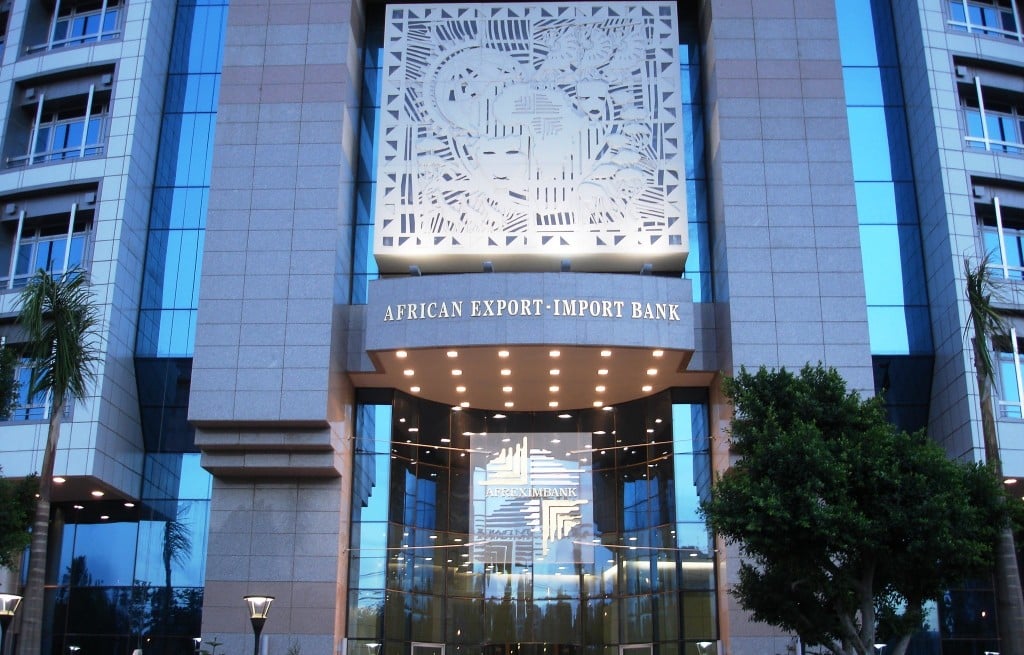



Afreximbank defied multiple credit rating downgrades in 2025 to raise more than $800 million from international markets, signalling sustained investor confidence even as concerns mounted over its risk profile and sovereign exposure.
In a statement on the bank’s 2025 financial performance released on Thursday, the Cairo-based lender said it successfully issued Samurai and Panda bonds across Japan and China during the year, underscoring its continued access to global capital despite being pushed to the lower end of investment grade by major agencies.
“Contrary to concerns raised by some rating agencies during the year, the Bank accessed international bond markets by successfully raising over US$800 million from Japan and China, courtesy of the Samurai and Panda bonds in 2025,” the bank said. “This demonstrated the Group’s fund-raising capabilities and the solid nature of the Bank’s DNA as a pan-African multilateral financial institution committed to ensuring that Africa’s full and sustainable self-reliance remain firm.”
Ratings pressure meets market confidence
The fundraising comes against the backdrop of back-to-back downgrades in 2025.
Back in June, Fitch cut Afreximbank’s rating by one notch to BBB-, placing it just above junk status with a negative outlook, citing rising exposure to sovereign debt distress and concerns around risk management practices.
The agency also flagged discrepancies in the bank’s asset quality reporting, estimating its non-performing loan (NPL) ratio at 7.1% compared with the bank’s reported 2.44% for 2024, pointing to differences in accounting treatment and impairment recognition.
Moody’s followed with a downgrade to Baa2 in the succeeding month, warning of weaker-than-expected asset performance and heightened risks tied to lending to countries undergoing debt restructuring, including Ghana and Zambia. While the bank’s credit outlook was revised to stable, the agency cautioned that such exposures could translate into potential losses under the G20 Common Framework.
Balance sheet expands despite headwinds
Even so, Afreximbank’s financial results point to a year of strong expansion. Total assets and contingencies rose by 21% to $48.5 billion at the end of December 2025, up from $40.1 billion a year earlier, reflecting sustained growth across its lending and trade finance operations.
Net loans and advances increased 16% to $33.5bn, driven by continued disbursements into strategic sectors including manufacturing, infrastructure, food security and climate adaptation.
Profitability also strengthened, with net income rising 19% to $1.2bn, while gross income climbed to $3.5bn. The bank maintained relatively strong cost discipline, posting a cost-to-income ratio of 21%, comfortably below its internal ceiling.
Liquidity remained robust, with cash and equivalents at $6.0bn, while shareholders’ funds grew 17% to $8.4bn, supported by retained earnings and fresh equity injections.
Asset quality debate persists
The bank maintained that asset quality remained stable, reporting an NPL ratio of 2.43% for 2025, only marginally higher than 2.33% in the prior year. However, this remains a key point of contention with rating agencies, which argue that restructuring practices and payment deferrals may be masking underlying credit risks.
These concerns are amplified by Afreximbank’s growing role in financing sovereigns facing fiscal strain, a strategy that has supported economic stability in member countries but increased scrutiny from external observers.
Momentum into 2026
Management insists the group’s performance reflects underlying strength rather than risk accumulation.
“Despite continuing global geopolitical challenges and disruptions caused by some rating actions, the Group delivered excellent financial performance in 2025,” said Denys Denya, senior executive vice-president of Afreximbank. “The Group’s balance sheet is at its strongest level ever, with liquidity levels and capitalisation well above target and good asset quality.”
He added that the bank is “way ahead” of targets under its current strategic plan, with subsidiaries gaining traction and profitability improving across business lines.
The contrast between rating agency caution and investor appetite highlights a broader tension around Afreximbank’s evolving role; balancing developmental mandates with commercial discipline — even as it scales its balance sheet and deepens its footprint across Africa and the Caribbean.