


Angola is seeking about $1billion in external financing, including a $165 million budget support loan from the African Development Bank (AfDB), despite benefiting from higher oil prices, Finance Minister Vera Daves de Sousa said on Friday.
Speaking on the sidelines of the IMF and World Bank Spring Meetings in Washington, Daves de Sousa said discussions with the AfDB are ongoing, while authorities are also considering bilateral loans and a potential return to international capital markets to meet remaining funding needs.
“This is a work in progress,” she said, noting that the AfDB facility would require the government to implement policy measures before it can be submitted for board approval.
Debt pressures persist despite oil windfall
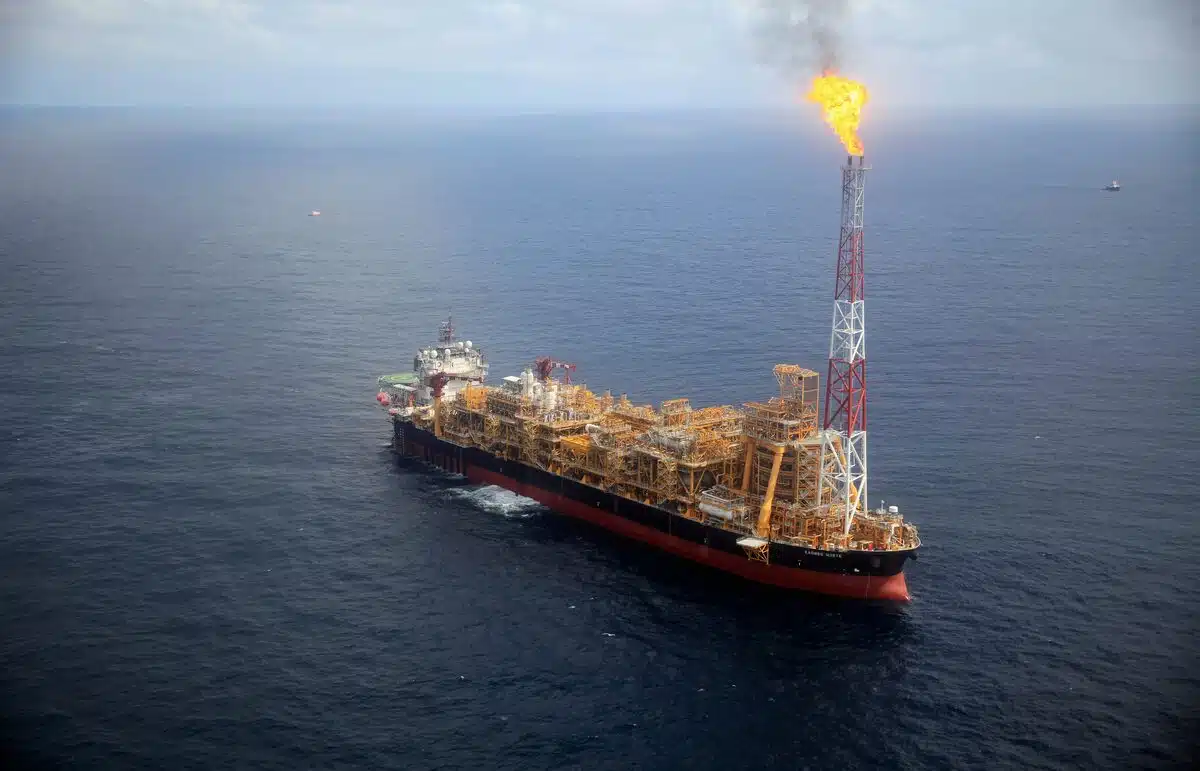
The borrowing plans come even as Angola— Africa’s second-largest oil producer— stands to benefit from a surge in crude prices linked to the Middle East crises. The country’s 2026 budget was benchmarked at $61 per barrel, while Brent crude is currently trading near $100, pointing to a significant revenue windfall for the oil-dependent economy.
However, elevated debt servicing obligations continue to weigh heavily on public finances. Debt payments accounted for nearly half of the West-African nation’s initial 2026 budget, underscoring the government’s efforts to rebalance its fiscal position.
Daves de Sousa said the authorities are reviewing revenue expectations and may adjust borrowing plans depending on the strength of oil receipts.
“We are working on scenarios, looking at mitigation measures,” she said. “We are an oil exporting country, we expect to see some windfall and to see how we can use that windfall to speed up some expenditures that are beneficial to our citizens.”
Angola has already secured $2.9 billion of the $3.8 billion it is targeting in external financing this year, leaving about $1 billion still to be raised.
No immediate IMF programme
Despite the funding needs, the government is not currently seeking a programme with the International Monetary Fund, opting instead for technical support to strengthen fiscal management.
“We stand ready if needed. But for now, that decision was not made,” Daves de Sousa said, referring to a potential IMF lending arrangement.
The Fund is currently assisting Angola in improving tax collection, analysing public spending and identifying reform priorities, as the government seeks to stabilise its fiscal outlook without entering a formal programme.
Debt management and reform efforts
Authorities have also taken steps to ease debt pressures. Angola recently bought back $1.75 billion in external debt, a move aimed at reducing future servicing costs and improving fiscal space.
In parallel, the government is advancing a “debt-for-education” swap backed by the World Bank, which is expected to finance new school infrastructure. Daves de Sousa said the transaction could be completed by June.
Higher oil revenues have also supported Angola’s credit profile, with analysts noting that the country’s dollar bonds have outperformed many African peers in recent months, narrowing spreads against US Treasuries.
Growth outlook supported by oil sector
Economic growth is expected to remain broadly stable at around 4% in 2026, supported by expansion in the oil sector, even as non-oil activity faces headwinds from global uncertainty.
Daves de Sousa said central bank officials are reviewing growth projections and assessing the impact of external shocks, including the ongoing conflict in the Middle East.
While rising oil prices offer a near-term boost to revenues, Angola’s continued reliance on external financing highlights the structural challenge of balancing fiscal needs with high debt obligations, even during periods of favourable commodity prices.