
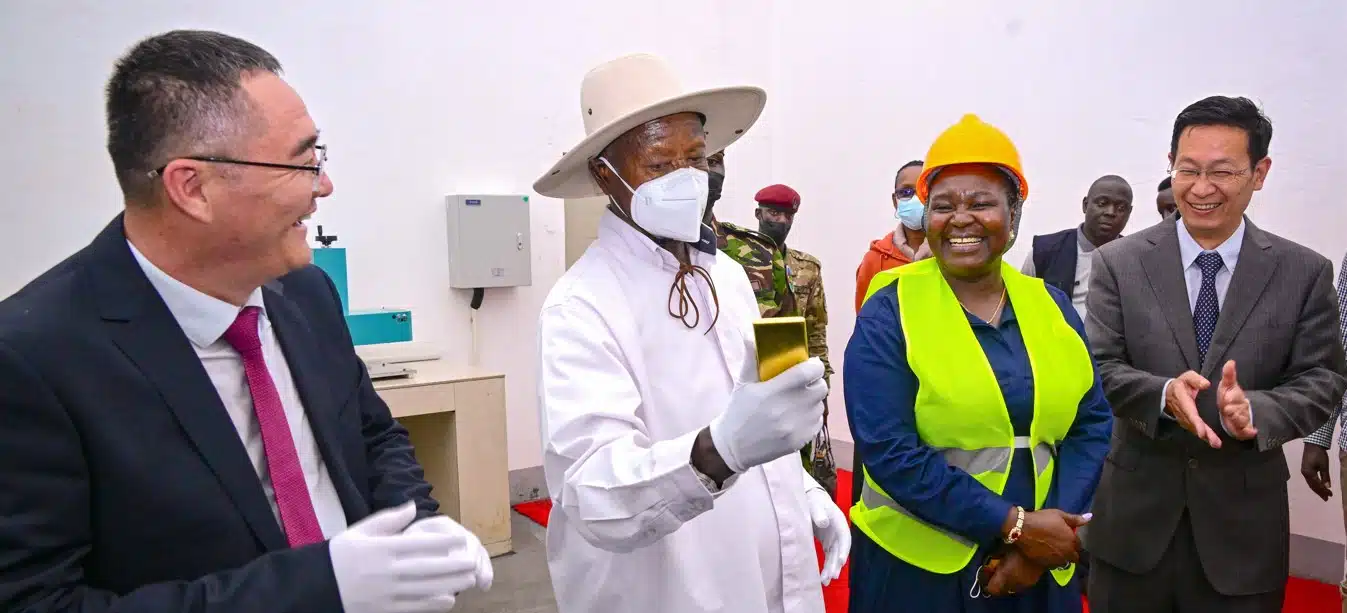


Uganda’s central bank has executed its first purchase of domestically mined gold, marking the start of a three-year pilot programme designed to integrate bullion directly into the country’s foreign reserves.
The Bank of Uganda (BoU) confirmed the initial buy on Friday and announced the move on Tuesday, without disclosing the volume or value of the transaction. The programme, first unveiled two years ago, aims to “build and diversify Uganda’s foreign exchange reserves portfolio by purchasing and processing domestically mined gold and including it in the foreign exchange reserves,” the bank said in a statement. “This will strengthen reserve adequacy and reduce risks associated with conventional reserve instruments.”
The initiative comes at a pivotal moment for Uganda’s gold sector. Last year the country exported $5.8 billion worth of bullion, a 76 per cent jump from $3.3 billion in 2024, overtaking coffee as its top export earner. Much of that trade reflects Uganda’s emergence as a regional processor and re-exporter, with gold flowing in from across East and Central Africa. Yet small-scale and artisanal miners still dominate local output, operating largely outside formal channels.
By buying directly from licensed domestic producers and working with local refineries, the BoU hopes to capture more value at home, formalise parts of the supply chain and reduce reliance on traditional reserve assets such as major currencies and government bonds. The move mirrors a broader global shift: central banks worldwide have been net buyers of gold for several years, seeking a hedge against geopolitical tensions, currency volatility and elevated inflation.
Africa joins the gold rush
Uganda is the latest African central bank to embrace the strategy. Kenya and the Democratic Republic of Congo have already announced similar plans to diversify their holdings, reflecting a regional recognition that gold can act as a non-correlated asset in an increasingly uncertain macro environment.
For Uganda, the timing is particularly strategic. The country is on the cusp of first oil exports later this decade, which will bring new foreign-currency inflows but also fresh exposure to commodity-price swings. Adding physical gold to its reserves provides a tangible buffer that cannot be printed or easily sanctioned.
Analysts note the programme also carries domestic benefits. By contracting local refiners, such as the recently signed deal with Euro Gold Refinery, the BoU can help professionalise a sector long plagued by smuggling and informal mining. Initial targets discussed earlier this year called for at least 100 kilograms of purchases between March and June, scaling toward an annual ambition of 7-10 tonnes.
The three-year pilot will test logistics, quality assurance and pricing mechanisms before any full-scale rollout. Success could encourage other emerging-market central banks to follow suit, particularly those with significant but under-monetised mineral resources.
For now, the first purchase is modest in scale but symbolically significant. In an era when gold has become both a geopolitical safe haven and a portfolio diversifier, Uganda is betting that its own mines can help fortify its financial defences, and keep more of the value from its booming gold trade on home soil.