


From Pretoria to Abuja, Nairobi to Gaborone, African governments are trying to keep a difficult balance. Many countries are borrowing to build roads, fund schools and grow their economies, but rising debt and slow growth are making that balance harder to maintain.
A new warning from the International Monetary Fund, urging South Africa to adopt a clearer debt rule, has sparked a wider conversation about how African nations manage public money.
Across the continent, higher interest payments, weaker currencies, and growing public needs are forcing finance ministers to rethink borrowing, spending, and the rules that govern them.
While these rules could help contain borrowing and reassure investors, implementing them requires parliamentary backing and cross-party consensus, since they often limit election-cycle spending and force leaders to weigh long-term fiscal stability against short-term political priorities.
South Africa
South Africa sits at the centre of the IMF’s latest fiscal warning, with government debt projected to stabilise at about 77.9% of GDP, among the highest in major African economies.
Although the 2012 expenditure ceiling has slowed spending growth, factors like persistent deficits, high public wages, and rising debt-service costs keep borrowing elevated.
Against this backdrop, the IMF’s 2026 Article IV consultation urged the adoption of a clear, binding debt rule that combines spending limits, budget balance targets, and flexibility during economic shocks in order to strengthen fiscal credibility and lower borrowing costs over time. Under such a framework, debt could gradually decline toward 70% of GDP in the medium term and around 60% in the long term.
However, weak economic growth, forecast at about 1.4% in 2026, continues to constrain revenue generation, while rising interest payments leave less room for infrastructure and social spending.
Even though progress toward FATF grey-list removal and a recent sovereign rating upgrade have improved investor sentiment, underlying fiscal pressures remain significant.
The government aims to maintain a primary surplus of about 1.5% of GDP, but striking a balance between fiscal discipline and the need to support growth, employment, and social stability remains a delicate task.
Nigeria
Nigeria’s debt situation also illustrates why the IMF is urging African countries to adopt clearer, binding fiscal rules. Like South Africa, the country also faces the pressures highlighted in the Fund’s 2026 which includes rising public borrowing, slow revenue growth, and high debt servicing.
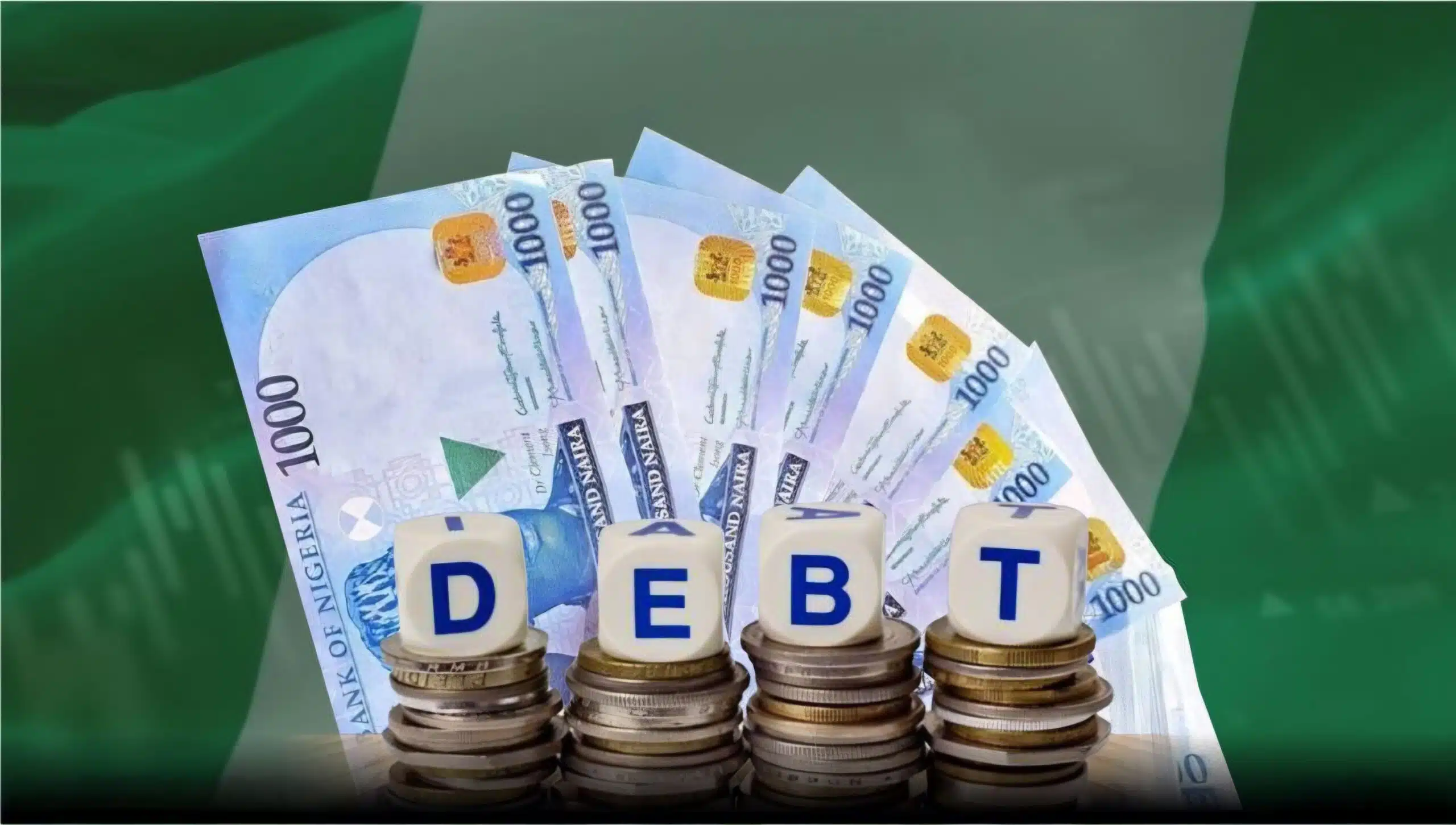
According to the Debt Management Office, total public debt reached around $99.7 billion by June 2025, up slightly from $99.66 billion at the end of March. Despite this, the debt-to-GDP ratio was revised down to 39.4% early in 2025, compared with earlier estimates above 50%. This was not due to falling debt, but because the National Bureau of Statistics rebased GDP, showing a larger economy than previously measured.
The real challenge lies in how debt servicing and revenue volatility squeeze public finances, echoing IMF warnings that weak fiscal frameworks leave countries exposed.
In the first seven months of 2025, 72% of government revenue went to debt payments, leaving limited funds for health, education, and infrastructure. Capital spending was also constrained, with only about $2.3 billion spent on projects compared with a target of $9 billion, highlighting how debt costs crowd out productive investment.
Much of Nigeria’s debt is domestic and denominated in naira, although external lenders such as the World Bank remain important sources of financing. When the naira weakens, the cost of servicing foreign-currency debt rises because more naira is needed to repay dollar obligations. At the same time, high interest rates on domestic borrowing increase repayment costs, leaving the government with less fiscal space for public spending.
Oil remains central to the fiscal story. Weak prices or lower production reduce revenue, forcing heavier borrowing. The federal medium-term budget for 2026 projects a fiscal deficit of about 3.6% of GDP, with debt servicing alone expected to reach ₦15.9 trillion, showing how much of the budget goes to interest payments before any other spending.
The IMF stresses that countries need rules combining spending limits, primary balance targets, and flexibility for shocks. Nigeria is pursuing these through revenue diversification, tax reform, and debt management, but still faces two challenges: expanding revenue beyond oil and controlling borrowing without cutting essential spending.
Kenya
Kenya’s debt story underscores another dimension of the IMF’s concerns about fiscal sustainability in Africa. Like South Africa and Nigeria, Nairobi also faces steadily rising public borrowing, a heavy debt servicing load, and ongoing negotiations with the IMF.
By June 2025, Kenya’s total public debt had climbed to about $91.3 billion, equivalent to roughly 67.8% of GDP, up from about 63% the year before. Domestic debt also accounted for around $49.1 billion, with the rest owed externally to development partners and commercial creditors.
That ratio places Kenya’s indebtedness above commonly cited sustainability thresholds and reflects the combined impact of budget deficits, currency pressures and a rising cost of servicing loans.
Kenya’s mix of domestic and external borrowing creates both opportunities and risks. Domestic debt often carries higher interest rates and shorter maturities, while external creditors which include the World Bank, African Development Bank, China, and Eurobond investors, expose the budget to exchange rate fluctuations. To manage these pressures, Nairobi has turned to tools like debt‑for‑food swaps and liability management operations, easing repayment costs while maintaining access to financing.
IMF engagement highlights these pressures. After a stalled $3.6 billion programme, Kenya is negotiating a new arrangement to stabilise macroeconomic conditions and support reforms. Fiscal discipline is also tightening as Nairobi has capped the 2025/26 deficit at 4.5% of GDP, though past tax proposals triggered protests, showing the political sensitivity of reforms.
Rating agencies such as Moody’s and Fitch warn that, despite Kenya’s steady growth of around 5%, rising debt levels and high servicing costs coupled with weak revenue performance, pose medium‑to‑long‑term stability risks if revenue does not strengthen.
Botswana
Botswana’s fiscal story contrasts with the high-debt trajectories of South Africa, Nigeria, and Kenya, but it is not without its challenges. With public debt historically low, about 21% of GDP in 2025, the government has maintained a reputation for fiscal prudence, yet rising spending and regional pressures are testing this approach.
Much of Botswana’s debt is domestic, with external borrowing limited to development projects. Interest payments remain manageable, absorbing only a small fraction of revenue, which leaves space for capital investment in health, education, and infrastructure.
However, Botswana still faces familiar African debt risks such as dependence on commodity exports, vulnerability to shocks in diamond revenues, and the temptation to borrow for growth initiatives without strong fiscal rules.
The IMF has therefore advised Botswana to codify borrowing limits, strengthen fiscal buffers, and maintain debt sustainability metrics, echoing guidance offered to other African countries.
As Botswana explores funding for energy projects and infrastructure upgrades, policymakers must balance growth ambitions with long-term fiscal credibility, especially as regional debt ratios rise and investor scrutiny increases.
Kitso Mokhurutshe, economist at Kgori Capital, says Botswana’s fiscal caution offers a clear example for the continent. “By keeping debt low and rules clear, the country has avoided pressures others feel, but must stay alert to shocks that could make the path less real,” he told a budget forum.
What lies ahead
Africa’s rising debt pressures highlight both risks and openings for savvy investors and companies. Nations with clear fiscal rules, like Botswana, offer safer environments, while high-debt economies need private partners to fund infrastructure, energy, and development projects. Aligning with countries’ long-term fiscal strategies positions investors to capture growth while supporting sustainable economic stability.