


After two years of inflation firefighting, 2025 became a year of recalibration for African central banks. Disinflation spread across the continent, helped by currency stabilisation in some markets, softer food and energy pressures in others, and a global backdrop that proved less hostile than feared. But the easing cycle was not uniform.
Some countries used the new policy space to cut aggressively and restart credit growth. Others eased cautiously, wary of fragile disinflation and lingering FX risk. A third group largely held rates steady, prioritising credibility, reforms, or liquidity management over headline cuts.
What follows is a country-by-country map of where major policy rates started in 2025, where they ended, and the macro logic behind those endpoints.
African monetary policy 2025: The aggressive easers
Ghana: the continent’s sharpest pivot
- Policy rate: 27.0% (January) → 18.0% (December) (-900 bps)
Ghana delivered Africa’s most decisive easing cycle as its macro anchors improved sharply. Inflation fell from 23.5% in January to 8.0% by October, giving the Bank of Ghana room to shift from stabilisation to growth support. The report also flags a stronger external position—reserves rising to $11.4bn by October and a sharply firmer cedi—as key enablers of the pivot.
Ghana’s story is the cleanest example of the sequencing investors want to see: It was able to build a strong base from an FX buffer, to disinflation, and finally easing lending policies.
Egypt: unwinding a deliberately high-rate regime
- Overnight deposit rate: 27.25% → 20.0% (-725 bps)
Egypt’s cuts were substantial, but the logic was different: a strategic unwinding of very high borrowing costs once inflation moderated. Urban inflation eased to 12.3% in November, while FX liquidity improved on stronger remittances, helping create space for the Central Bank of Egypt to normalise policy. The report notes growth holding around ~5%, giving policymakers confidence that easing would not destabilise the cycle.
Egypt’s easing puts guardrails around it. It’s a bid to stimulate while protecting fragile confidence.
Cautious, consistent easing
Kenya: easing to revive private credit transmission
- Policy rate (CBR): 11.25% → 9.0% (-225 bps)
Kenya cut consistently because inflation stayed contained—4.5% in November, below the midpoint of the central bank’s target band. But the key story is transmission: the CBK used easing to support activity and improve credit flow, reinforced by reforms such as the Risk-Based Credit Pricing Model planned for full rollout in 2026. The report points to lending rates easing and private credit growth improving by year-end.
Kenya’s rate cuts plus market reforms were aimed at making credit cheaper in practice, not just on paper.
South Africa: easing under a tighter credibility framework
- Repo rate: 7.5% → 6.75% (-75 bps)
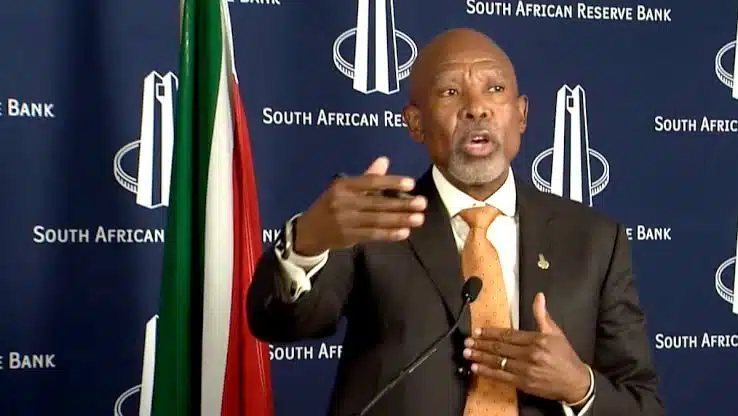
South Africa’s cuts were smaller, but the institutional signal was larger: the SARB shifted from a 3–6% target range toward a 3% point target with tolerance. With inflation around 3.6% in October, the SARB had room to ease cautiously while anchoring expectations for structurally lower inflation over time.
South Africa is effectively trying to “buy” lower long-term rates with credibility—slow cuts, stronger framework.
WAEMU: one cut for the bloc
- BCEAO refinancing rate: 3.5% → 3.25% (-25 bps)
The WAEMU central bank executed a single regional cut as inflation fell sharply across the bloc—down to -1.3% in Q3 per the report. The intent was straightforward: improve credit access and support growth across member states.
A reminder that in monetary unions, the policy story is less about country fundamentals and more about bloc-wide inflation dynamics.
Tanzania: small cut, high confidence
- Policy rate: 6.0% → 5.75% (-25 bps)
Tanzania’s cut was modest because inflation was already well anchored around the 3–5% band, and the policy goal was simply to sustain momentum. The report flags a strong growth outlook (forecast ~6.9%) as context for a supportive stance rather than crisis management.
Angola: late-year de-escalation
- Policy rate: 19.5% → 18.5% (-100 bps)
Angola held tight through mid-year, then began easing as inflation trended down—17.43% in October—and the central bank’s outlook pointed to further disinflation in 2026.
Angola is “wait for proof, then move”—a central bank trying to avoid easing into another FX-driven inflation spike.
Holds and structural shifts
Nigeria: one cut, but still one of Africa’s tightest stances
- Policy rate (MPR): 27.5% → 27.0% (-50 bps)
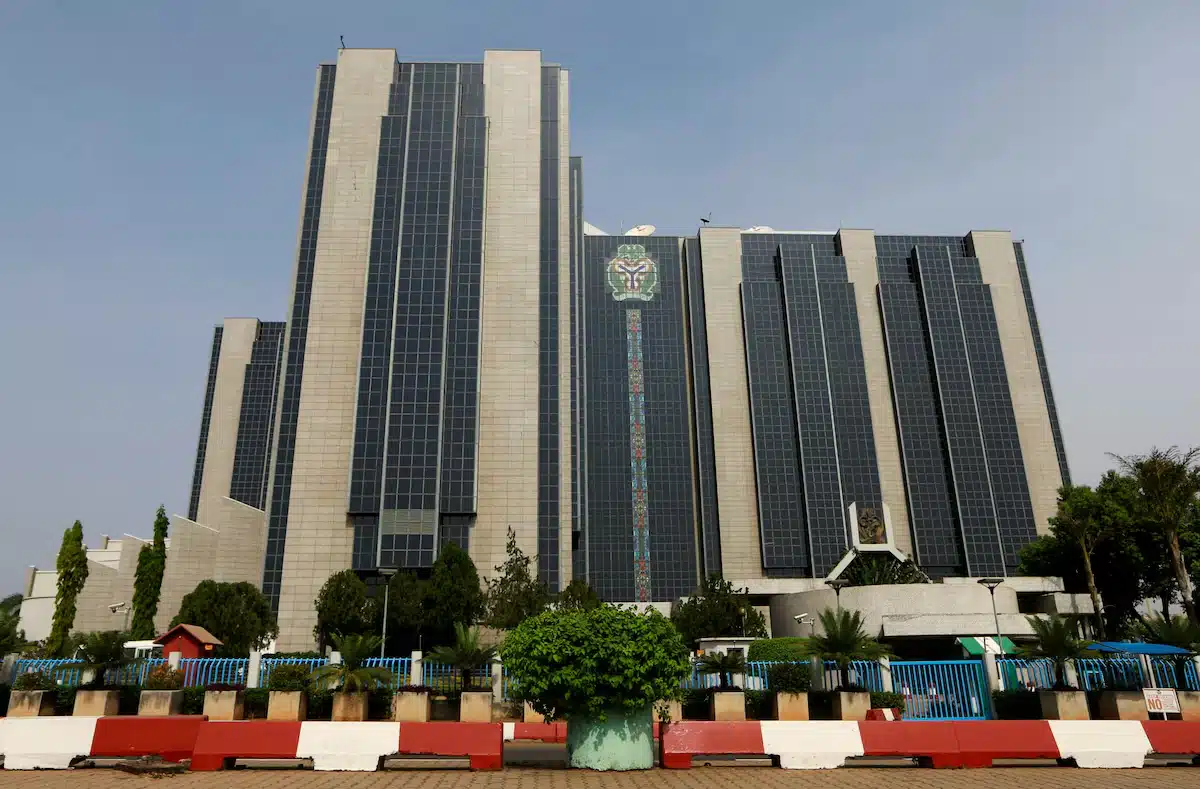
Nigeria barely eased despite disinflation—headline inflation fell to 16.05% in October—because credibility and liquidity management remained the priority. There’s also a stronger reserve buffer ($46.7bn) and the use of corridor adjustments as a form of “stealth tightening” even after the modest cut.
Nigeria didn’t try to confuse disinflation with victory. Policy stayed tight to make the slowdown durable.
Ethiopia: reform-first, rate unchanged
- Policy rate: 15.0% → 15.0% (0 bps)
Ethiopia held rates steady, choosing structural reform over signalling via the benchmark rate. The report points to institutional shifts—from direct to indirect tools—and a higher credit growth ceiling (18% → 24%) as the more relevant levers. Inflation moderation to 13.6% (Aug) supported the stance, alongside improving reserves (about 2.8 months of imports).
Ethiopia’s “hold” was not inactive—it was a different playbook: rebuild the monetary framework, then let rates matter later.
Uganda: stability as strategy
- Policy rate: 9.75% → 9.75% (0 bps)
Uganda stayed on hold because inflation remained comfortably below target (3.45% in October) and the currency strengthened modestly. The Bank of Uganda chose predictability—supporting investment and expectations—over fine-tuning rates.
Morocco: anchoring low inflation
- Policy rate: 2.5% → 2.25% (-25 bps)
Morocco cut once and then held, consistent with low inflation (about 0.8% average early in the year) and solid growth momentum (around ~5% per the report).
What to watch in 2026
2025’s “great recalibration” set Africa up for a more normal monetary debate in 2026: not just fighting inflation, but balancing disinflation against growth, credit creation, and financial stability.
Three forward-looking markers will matter most:
Markets that rebuilt reserves and stabilised currencies (explicitly highlighted in Ghana and Nigeria) gained room to manoeuvre. If global conditions tighten again, reserves will separate “able to ease” from “forced to hold.”
Also, base effects fade. In 2026, durable disinflation will depend more on food supply, fiscal discipline, and exchange-rate pass-through than on statistical momentum.
Even deeper transformation is ongoing. Kenya’s credit-pricing reforms and South Africa’s inflation-target evolution point to a deeper shift: central banks increasingly want policy moves to travel through the banking system efficiently—into lending, investment, and jobs.
Africa’s easing story in 2025 was real but uneven. The more interesting story for 2026 is which countries turn lower inflation into cheaper, broader credit without reopening the inflation trap.