


Crop production reclaimed its position as the largest contributor to Nigeria’s economy in the third quarter of 2025, outpacing trade for the first time since the rebasing of national accounts, the National Bureau of Statistics (NBS) revealed on Tuesday.
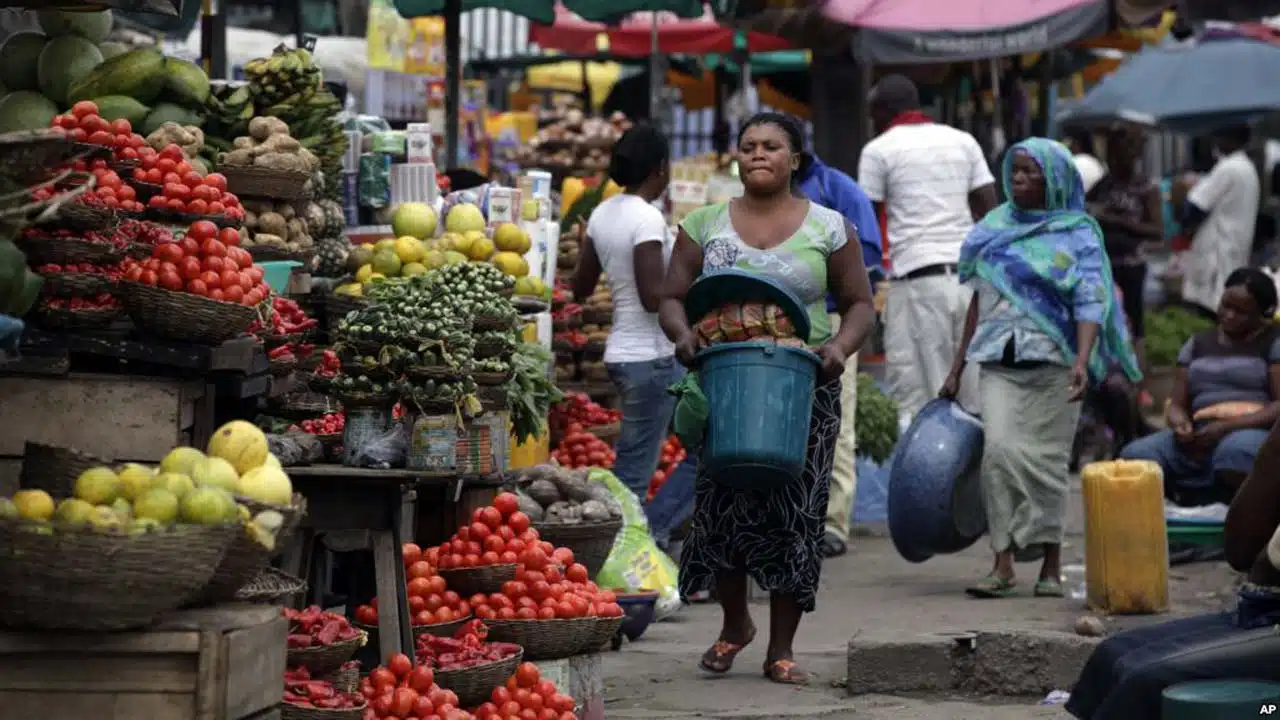
According to the NBS, crop production accounted for 23.2% of gross domestic product (GDP) in Q3, up sharply from 17.8% in Q2 and 17.7% in Q1. By contrast, trade contracted by 1.8 percentage points to 16.4% after two consecutive quarters of growth, post-rebasing.
“Trade’s contribution to GDP was 16.42%, lower than the 16.74% it represented in the previous year, and lower than the 18.28% recorded in the second quarter of 2025,” the NBS said in its latest GDP report.
The rebound in crop production lifted the overall performance of agriculture, which now accounts for 26.8% of GDP, up from 21% in Q2. The sector also grew modestly in real terms, expanding by 0.9% to 3.8%.
Crop production remains the major driver of the agriculture sector, representing nearly 70% of its overall nominal value in Q3.
Trade expands in real terms
Following the rebasing exercise to reflect 2019 prices, Nigeria’s trade data now captures informal activity, a large component of the economy previously underrepresented in official estimates. This expanded coverage could explain trade’s moderate real-term growth in Q3.
“In real terms, trade year-on-year growth stood at 1.98% in Q3 2025, which was 0.29 percentage points higher than the rate recorded in the previous year at 1.69%, and 0.69 percentage points higher than the preceding quarter at 1.29%,” the bureau stated.
Other sectors
Real estate held its position as the third-largest GDP contributor, accounting for 13.6%, up from 12.8% in Q2 — surpassing telecommunications, livestock and construction for the third consecutive quarter.
Meanwhile, the oil sector’s share fell to 3.4%, down from 4.5% in the previous quarter, reflecting Nigeria’s continued push to diversify the economy away from hydrocarbons.
Overall, Nigeria’s GDP grew by 3.9% in the three months ending September, down from 4.2% in Q2, underpinned by persistent structural and economic challenges.
In nominal terms, the economy’s output reached N113.5 billion, up from N96.1 billion in the same quarter last year, indicating a year-on-year nominal growth of 18.12%.The quarterly performance highlights subdued economic activity, weighed down by a contraction in the services sector, despite the notable recovery in agriculture and industry.
The latest GDP figures arrive as Nigeria faces growing US pressure to tackle its security crisis, which continues to disrupt key sectors, including agriculture.
Analysts note that persistent insecurity, which continues to displace farmers and fuel food inflation, could dampen the oil producer’s performance in the next quarter.
With agriculture showing signs of recovery in Q3, market watchers will be closely monitoring whether security challenges undermine the sector’s contribution to the economy in Q4.