
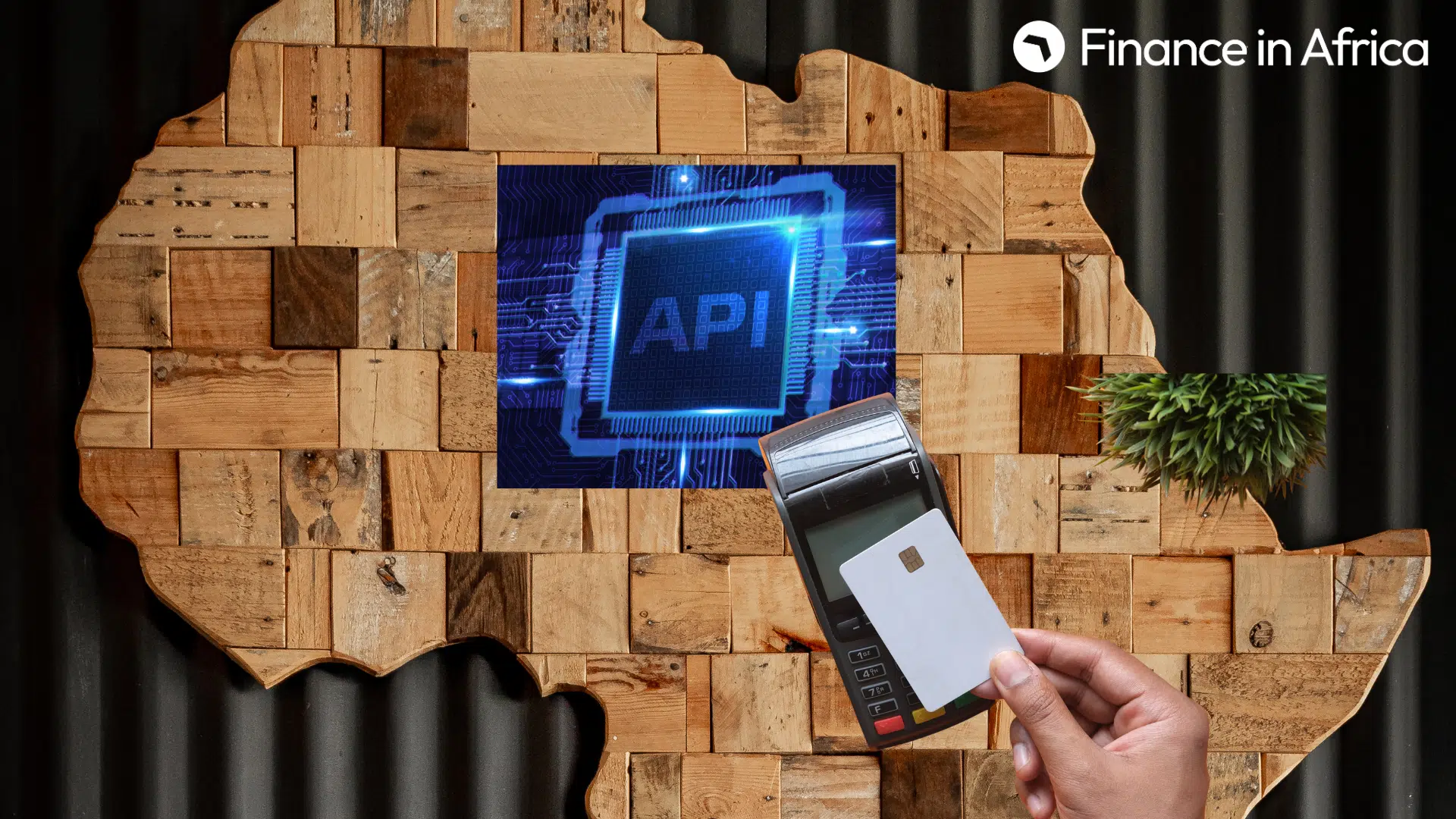


In a co-working hub off Ngong Road, a young developer stares at a line of code that could move a million shillings.
A few keystrokes later, Safaricom’s Daraja API responds, a test transaction runs, and a phone buzzes: “You have received KSh 100.”
With that one call to an endpoint, he has plugged his prototype directly into M-Pesa’s financial nervous system. A decade ago, this would have required corporate negotiations, manual file uploads, and entire back-office teams. Today, it is as simple as authenticating and posting JSON.
Across the continent in Lagos, a fintech engineer pushes code to production. Using Flutterwave’s APIs, she has enabled merchants in five countries to accept cards, bank transfers, and mobile money through a single unified gateway.
payment What used to be a patchwork of rails, local switches, banks, and telcos is now abstracted into programmable building blocks.
From Daraja in Nairobi to Flutterwave in Lagos, APIs are turning money into code. Just as colonial-era railroads once stitched together trade routes across Africa, these new digital rails are weaving together the continent’s financial systems, not with steel but with software.
The new rails
Every thriving economy runs on infrastructure: roads, power, and increasingly digital rails.
In Africa’s financial services ecosystem, Application Programming Interfaces (APIs) have become the quiet engines behind the continent’s biggest shift, moving from paper-based, institution-bound finance to software-defined money.
In traditional systems, connecting one bank or telco to another meant wrestling with legacy protocols such as ISO 8583, custom message formats, and brittle integrations. Each connection was a mini-project: slow, costly, and prone to failure. APIs changed that. They offer standardised, lightweight interfaces that let developers interact with financial services the same way they would query a weather feed or social-media graph.
“In the past, APIs were mostly seen as internal tools meant for an organisation’s own systems,” says Temitayo Adeeyo, Engineering Lead at Chipper Cash. “But that’s changed. Today, APIs have become bridges that connect entire ecosystems.”
This shift, he explains, has allowed fintechs to plug into existing systems for payments, inventory, accounting, and compliance rather than building everything from scratch. The result is not just faster development, but also less duplication and greater scalability. “APIs have shifted fintech from isolated, monolithic setups to modular, interoperable ecosystems, unlocking speed, agility, and scale across borders.”
Safaricom’s Daraja platform, launched in 2017, was the first major proof point in East Africa. It opened up M-Pesa, a network that had until then operated like a closed circuit, to third-party innovation. Suddenly, small businesses could automate payments, confirm transactions in real time, and reconcile accounts without human intervention.
That same spirit spread westward. In Nigeria, Paystack and Flutterwave built developer-friendly APIs that turned the bank-transfer and card-processing maze into simple REST calls. Their documentation read more like startup playbooks than financial manuals. For developers, this was liberation: the ability to build on top of existing financial infrastructure instead of negotiating access to it.
Soon came a second wave: Mono, Okra, and Stitch, pushing the idea of open finance, giving developers permissioned access to users’ banking data to power lending, budgeting, and identity services. Layer by layer, APIs began to do what physical rails once did for commerce: make movement reliable, predictable, and scalable.
In essence, these rails are not just carrying payments; they are carrying possibility, abstracting the hard parts of finance so innovation can run faster on top.
Making money programmable
What does it mean when people say money is becoming programmable?
At its core, it means financial actions that once required people, paperwork, or physical infrastructure can now be automated, triggered, or adapted by code.
In the same way software developers write logic that responds to user input, they can now write logic that moves money, checks identity, or triggers a credit decision.
In practice, programmable money enables systems to communicate without human mediation. A school can automatically collect fees from parents’ phones and reconcile those payments in a dashboard. A ride-hailing platform can pay its drivers as soon as a trip ends. A micro-lender can disburse and collect small loans instantly, guided by data and rules, not spreadsheets or manual uploads.
These processes are invisible to end users, yet they define the smoothness of digital life. Every “instant” payment, every seamless subscription renewal, and every in-app wallet top-up is the result of programmable logic made possible by APIs.
In Kenya, for instance, SMEs utilise Daraja to automate various processes, including invoicing and reconciliation. In Nigeria, small businesses plug into Paystack or Flutterwave to collect payments and track transactions in real time.
In South Africa, Stitch and Yoco are helping developers embed direct bank payments into websites and apps without relying on card rails. Each of these examples demonstrates how APIs have transformed static banking systems into living, responsive financial networks.
For developers, this programmability represents a new frontier of creativity. Instead of waiting for institutions to offer specific financial products, they can now assemble their own.
A logistics startup can integrate location data with payment APIs to release driver payments once deliveries are confirmed. An edtech platform can automate school fee collection and offer payment plans based on attendance or performance. A marketplace can route funds to multiple vendors in seconds, governed entirely by code.
Programmable money is not just about speed. It is about control and design. It lets developers decide how money should move, when it should move, and why. Think of it as an ‘If This, Then That’ flow for money. That flexibility is turning finance into something dynamic and responsive, where innovation can happen at the edges, not just in bank boardrooms.
In effect, APIs are redefining what a financial product can be. Where once the industry offered fixed services like loans or transfers, it now offers functions. A transfer becomes an endpoint.
A verification becomes a call. A lending decision becomes an algorithmic workflow. In this new landscape, every developer is a potential banker, and every app can carry the DNA of a financial institution.
Who builds the rails?
Every infrastructure needs builders. In Africa’s API economy, those builders are a mix of telcos, fintechs, and new open finance platforms. Each plays a different role, but together they form the scaffolding that allows programmable money to move across borders, sectors, and systems.
Telcos: The original gatekeepers turned enablers
The story begins with the telcos. Before banks or startups thought about APIs, mobile network operators had already created closed systems of digital value through mobile money. M-Pesa in Kenya, MTN Mobile Money in Ghana, and Airtel Money across East Africa turned basic GSM phones into cashless wallets.
For years, these systems were guarded closely. Integrations required formal partnerships, long negotiations, and often manual processes. Then came Safaricom’s Daraja, launched in 2017, which flipped that logic.
For the first time, developers could connect directly to M-Pesa through a well-documented, public interface. That single decision unleashed a wave of innovation: from automated bill payments to crowdfunding tools, all built on top of M-Pesa’s trusted backbone.
Daraja showed what could happen when telcos stopped treating their systems as walled gardens and started seeing them as platforms. Other mobile operators soon followed, releasing APIs for payments, airtime, and identity services. The telcos became rail providers, quietly powering fintech growth beneath the surface.
Fintechs: Turning APIs into products
The second generation of builders came from fintech. Startups like Paystack, Flutterwave, and Chipper Cash realised that the real opportunity was not just to access existing rails but to simplify them.
Instead of forcing businesses to integrate with multiple banks, switches, and telcos, these companies offered a single API layer that handled the complexity behind the scenes.
A developer in Lagos could now integrate Flutterwave’s payment API once and immediately process cards, bank transfers, and mobile money across several countries.
Paystack’s APIs made online payments for SMEs as simple as embedding a checkout button. Chipper Cash extended that logic to cross-border remittances, allowing developers to build regional payment experiences through its internal APIs.
These fintechs are more than companies; they are platforms for other platforms, shaping how Africa’s digital economy plugs together. Their business models depend on developer adoption, so their success relies on making APIs intuitive, reliable, and accessible.
Open finance platforms: The next layer
The newest layer of builders focuses on data and connectivity, not just payments. Companies like Mono, Okra, and Stitch are advancing open finance by enabling developers to access users’ financial information securely and with consent. These APIs let fintechs verify income, check account balances, and enable personalised services like credit scoring or expense tracking.
In many ways, this mirrors the evolution of the web. The first wave connected banks and telcos, the second simplified payments, and the third is connecting data, identity, and insight. Together, these layers make the African financial ecosystem programmable from the ground up.
Regulators: Quiet architects of trust
Behind the scenes, regulators have started to shape how these rails operate.
In Nigeria, the Central Bank’s Open Banking Framework sets out how customer data can be shared between institutions, paving the way for structured, secure API use. In Kenya, new digital credit and data protection regulations have started defining how companies can access and use mobile money data. In South Africa, POPIA (the Protection of Personal Information Act) governs how financial APIs handle user consent.
Regulation is not moving as fast as innovation, but it is catching up. The shift from proprietary systems to open APIs requires new forms of trust and oversight. The best regulators now see APIs not as risks to contain but as tools to enhance transparency, interoperability, and competition.
At every layer – telco, fintech, and regulator – a new kind of builder is emerging. Some lay the tracks, others design the trains, and a few set the rules for how traffic should flow. Together, they are constructing the invisible infrastructure that carries Africa’s digital economy forward.
APIs in African fintech — Timeline Visual (Please read on desktop for better experience or scroll sideways to your riught on mobile)
| 2000-2012 | Closed Systems & Manual Integrations | • Switches: Interswitch, eTranzact, UPSL | • USSD & SIM Toolkit apps dominate | • Mobile Money launches (M-Pesa 2007) ───────────────────────────────────────────────────────────── 2013-2016 | First API Wave (Telco-led) | • Early mobile money APIs by MTN, Airtel, Vodacom | • Limited access, unstable, documentation scarce | • NGOs, utilities, remittance firms as main users ───────────────────────────────────────────────────────────── 2017 | The Breakthrough Year — Daraja Launch | • Safaricom opens M-Pesa via the Daraja API | • Self-service portal, REST APIs, sandbox | • Catalyzes the “API mindset” in African fintech ───────────────────────────────────────────────────────────── 2015-2020 | Rise of Developer-First Fintech APIs | • Paystack, Flutterwave, Yoco, PesaPal, Cellulant | • REST APIs, webhooks, dashboards, quick onboarding | • Developers plug into cards, bank transfers,mobile money ───────────────────────────────────────────────────────────── 2019-2022 | Second-Gen APIs (Beyond Payments) | • Identity: Smile ID, YouVerify, Dojah | • Open Banking/Data: Mono, Okra, Stitch, OnePipe | • BaaS & Lending APIs: Anchor, Maplerad, JUMO, Carbon ───────────────────────────────────────────────────────────── 2021-Present | Standardisation & Infrastructure APIs | • Banks launch portals: ALAT, Access, FNB, Equity | • Cross-border APIs: Chipper Cash, Onafriq, Nala | • Regulators push openness (Nigeria 2023 Open Banking rules) | • Sector APIs for payouts, FX, AML, compliance, wallets ───────────────────────────────────────────────────────────── 2023-2025+ | APIs as Financial Infrastructure | • Embedded finance & programmable money (ILP, Mojaloop) | • API aggregators spanning countries & switches | • AI-driven KYC, risk & compliance APIs | • Finance treated as code, not process |
How Developers Monetise
APIs have not only changed how money moves; they have changed who can make money.
For a growing number of African developers, APIs are both a creative tool and a business model, the foundation for a new kind of digital entrepreneurship.
1. Integration and implementation services
The first opportunity lies in integration. Many African businesses want to go digital but lack in-house technical teams. Developers step in to bridge that gap, helping companies connect to payment APIs, automate workflows, and integrate mobile money into their operations.
A developer in Eldoret or Enugu can now build a sustainable business by specialising in API implementation, charging clients per integration or on a retainer basis for ongoing support. Some form small dev shops or consultancies that serve SMEs and NGOs, effectively acting as the connective tissue between legacy systems and modern infrastructure.
These small players rarely make headlines, but collectively they form a powerful ecosystem, the engineers translating API documentation into real economic outcomes for local businesses.
2. Building startups on top of APIs
The second layer of monetisation comes from creating new products and services that sit directly on top of existing APIs.
Instead of offering integration services to others, these developers build their own platforms, powered by API infrastructure.
For example, logistics startups use payment APIs to automate driver payouts and collections. Proptech firms integrate with bank APIs to process rent payments and reconcile records instantly.
Edtech platforms connect to mobile money APIs so parents can pay school fees directly from their phones, while the platform automatically updates student accounts.
Each of these businesses exists because the APIs abstract away the complex aspects of finance, including licensing, settlement, reconciliation, and compliance, allowing developers to focus on solving domain-specific problems. The result is a new wave of “API-native startups”: businesses that could not have existed without programmable finance.
3. Middleware and infrastructure tools
Some developers are going even deeper, building financial middleware that enhances or extends the capabilities of existing APIs.
For example, reconciliation tools that aggregate multiple payment sources into a unified ledger, or compliance modules that use KYC and BVN APIs to automate customer verification.
Others are building embedded finance layers that allow non-financial companies to offer payment or credit features through simple SDKs. A retail platform, for instance, might embed a buy-now-pay-later service powered entirely by third-party APIs, without needing a financial licence.
This level of specialisation shows how mature the ecosystem is becoming. Developers are no longer only consumers of APIs; they are becoming infrastructure builders themselves.
4. Developer ecosystems and marketplaces
As the ecosystem grows, so do communities and marketplaces where developers share, sell, or monetise their innovations. Platforms like Flutterwave’s Developer Hub, Paystack’s community Slack, and Safaricom’s API forums are hubs of collaboration and mentorship. In some cases, developers create open-source libraries or wrappers that simplify API usage for others, then monetise through consulting or support.
A few are beginning to sell API-based microservices – for instance, an endpoint that performs instant forex conversion or risk scoring – built on top of public APIs. This represents the next frontier of monetisation: developers becoming micro-providers in an expanding web of programmable finance.
In each of these models, the API is both the medium and the marketplace.
It offers access, flexibility, and a path to scale. What matters most is no longer ownership of physical assets, but control over logic and experience – how seamlessly a developer can make money move, verify identity, or trigger a transaction.
The African developer economy is still young, but its energy is unmistakable. A new class of digital artisans is emerging, crafting not buildings or roads, but flows of value, one API call at a time.
Flowchart: How developers monetise Africa’s API economy (Please read on desktop for better experience or scroll sideways to your riught on mobile)
| ┌───────────────────────────────────────────────────────────────┐ │ API AVAILABILITY │ │ (Daraja, Paystack, Flutterwave, etc.) │ │ Access to financial infrastructure via APIs. │ └───────────────────────────────────────────────────────────────┘ │ ▼ ┌───────────────────────────────────────────────────────────────┐ │ 1. INTEGRATION WORK │ │ Developers earn directly by connecting existing APIs │ │ to businesses and organisations. │ │ │ │ Examples: │ │ • Freelance devs integrating M-Pesa Daraja for SMEs. │ │ • Consultants linking Paystack APIs for retailers. │ │ • Tech shops automating payment reconciliations. │ └───────────────────────────────────────────────────────────────┘ │ ▼ ┌───────────────────────────────────────────────────────────────┐ │ 2. API-NATIVE STARTUPS │ │ Developers launch new ventures built entirely on APIs, │ │ creating scalable digital products and services. │ │ │ │ Examples: │ │ • Kwara uses open banking APIs for SACCOs. │ │ • Eversend & Chipper Cash enable cross-border transfers. │ │ • Edtech platforms automate school fees via Daraja. │ └───────────────────────────────────────────────────────────────┘ │ ▼ ┌───────────────────────────────────────────────────────────────┐ │ 3. MIDDLEWARE BUILDERS │ │ Developers create tools that enhance or extend │ │ existing API ecosystems for efficiency or compliance. │ │ │ │ Examples: │ │ • Revio builds payment orchestration across APIs. │ │ • OkHi links identity APIs for address verification. │ │ • VertoFX automates FX settlements through APIs. │ └───────────────────────────────────────────────────────────────┘ │ ▼ ┌───────────────────────────────────────────────────────────────┐ │ 4. ECOSYSTEM CREATORS │ │ Developers monetise through community, collaboration, │ │ or selling niche API-based microservices. │ │ │ │ Examples: │ │ • Flutterwave Developer Hub & Paystack Slack channels. │ │ • Safaricom API Portal tutorials & testing. │ │ • Indie devs selling APIs (FX, SMS, data lookups). │ └───────────────────────────────────────────────────────────────┘ |
Frictions and future
For all their promise, APIs are not a silver bullet. Beneath the surface of Africa’s programmable money movement lies a web of frictions, technical, commercial, and regulatory, that still shape how far and how fast developers can build.
The hidden frictions
The first and most common friction is reliability.
While APIs are designed to standardise and simplify, uptime can still be unpredictable. Developers regularly deal with failed callbacks, throttled requests, or undocumented changes in production environments. A single telco outage can cascade across hundreds of small apps that depend on its endpoints.
Then there is documentation and developer support. Some APIs still lack the clear, well-maintained documentation that makes integration seamless. Others require extended approval processes or manual credentials, slowing down experimentation. These small frictions add up, often discouraging developers who might otherwise build innovative products.
According to Chipper Cash’s Adeeyo, fragmentation remains a major challenge, both technically and institutionally. “Many API providers and aggregators, especially in fintech, still face fragmentation challenges, and this isn’t always purely technical. Regulatory inconsistency across countries often makes regional scaling harder.”
He also highlights the need for improved sandbox reliability, developer support, and transparency. “Providers must invest more in uptime reliability, security, and adherence to SLAs,” he says. “Going forward, I’d like to see more unified regional standards, richer developer tooling, and APIs designed with extensibility in mind from the start. Consistency and reliability are what truly earn developer trust.”
Interoperability is another challenge. Many APIs still reflect the silos of the institutions behind them. A fintech integrating M-Pesa in Kenya and MTN MoMo in Ghana must often write two separate codebases and handle distinct compliance flows. True cross-border programmability remains more aspiration than reality.
Beyond the technical, regulatory uncertainty adds complexity. The frameworks for open banking, data protection, and digital credit are evolving unevenly across countries. Developers must navigate not only different technical standards but also different interpretations of what constitutes consent, privacy, or financial licensing.
Signals of change
Despite these constraints, progress is accelerating.
Telcos like Safaricom and Airtel are investing heavily in developer experience, improving sandbox environments and offering near real-time support. Fintechs like Paystack and Flutterwave have matured their API reliability, boasting uptime that rivals global peers.
Regulators are also adapting. Nigeria’s Open Banking Framework, Kenya’s data protection laws, and South Africa’s POPIA show growing recognition that APIs are not just commercial tools but public infrastructure, the digital equivalent of roads and ports.
At the continental level, initiatives like Smart Africa and Pan-African Payment and Settlement System (PAPSS) are beginning to tackle cross-border interoperability, creating the conditions for APIs that truly transcend national boundaries.
However, for Kenyan Computer Scientist and Qhala’s CEO, Dr Shikoh Gitau, describing APIs as Africa’s new financial rails captures both the promise and the peril of our digital future.
Expert view in practice – Gitau
“The financial rails metaphor effectively communicates that APIs are infrastructure; the invisible backbone enabling movement and connection. Just as traditional rails transformed physical commerce, APIs are democratising financial innovation by allowing any developer to build on top of foundational services.
This captures something real: Kenya’s M-Pesa APIs launched in 2011 and fundamentally transformed how fintech founders think about solving problems. Before that, financial services were locked within institutions. With APIs, a boda boda rider’s earnings can flow directly to digital credit, or a micro-merchant can connect to global e-commerce platforms.
The AfCFTA Digital Trade Protocol explicitly aims to harmonise digital trading standards and facilitate cross-border data flows, payments, and regulatory recognition. This protocol is designed to transform fragmented financial rails into a continent-wide digital corridor, supporting interoperability, digital identity frameworks, and cross-border financial services.
It sets the foundation for APIs to evolve beyond mere technical links into vehicles for pan-African economic integration. The protocol’s provisions require participating countries to align technical standards (such as those governing APIs), data privacy protections, and consumer safeguards across borders.
But the metaphor falls short in critical ways. Actual rails are passive; they simply carry what’s placed upon them. APIs, by contrast, are active agents of power, control, and value capture. Rails in the traditional sense were physical, neutral infrastructure.
APIs embed design choices, governance decisions, and commercial interests into their architecture. When M-Pesa opened its APIs, Safaricom didn’t simply become a utility; it became a kingmaker, deciding who builds what and on what terms. The rails metaphor obscures this reality.
Moreover, the metaphor suggests universality and standardisation. But African payment systems remain fragmented. Only about 44% of instant payment systems in Africaprovide for true “all-to-all interoperability” where different mobile money operators, banks, and fintechs can genuinely connect. Kenya, Tanzania, and Uganda have made progress linking domestic systems, but cross-border flows remain complex and expensive. The rails are still largely siloed by country, by institution, and increasingly by platform.
The AfCFTA Digital Trade Protocol, however, directly addresses cross-border interoperability, aiming to dismantle silos and establish legal guarantees for reciprocal market access, regulatory equivalence, and standardised APIs. This is particularly relevant in overcoming costly, complex transnational transfers.
The metaphor also risks overstating technological determinism. APIs alone don’t create financial inclusion; trust, regulation, access to digital identity, data protection, and customer obsession do. The real power doesn’t lie in the technical infrastructure but in how it’s governed and who controls the standards.”
The Next Layer: Programmable Economies
If APIs are today’s rails, what will run on them tomorrow?
The next evolution points toward programmable economies, systems where machines, institutions, and individuals can transact automatically, guided by shared protocols.
Imagine solar microgrids that sell excess power through APIs, or delivery drones that pay for refuelling autonomously. Think of smallholder farmers accessing instant credit when sensors detect soil stress, or educational platforms issuing blockchain-verified certificates after automated fee payments.
As Central Bank Digital Currencies (CBDCs) and AI-powered automation become more mainstream, they will rely on these same rails, exposing APIs for currency exchange, transaction validation, and compliance checks. In this sense, APIs are not only building blocks of today’s fintech but also the connective tissue of tomorrow’s machine economy.
For Kenyan Computer Scientist and CEO of Qhala, Dr Shikoh Gitau, a programmable economy is one where any organisation, formal or informal, can algorithmically orchestrate its economic participation without friction. It means a street vendor can access working capital through code rather than paperwork.
“A farmer can programmatically match harvests to buyers across borders. A woman entrepreneur can instantly invoice customers in any currency and settle in her local one, all via APIs she doesn’t need to understand.
India’s Stack model, a Digital Public Infrastructure itself, provides a reference point: foundational APIs for digital identity (Aadhaar), payments (UPI), and data exchange that democratize access to credit and services at scale. But Africa cannot simply import India’s model. Our contexts demand something different.
A truly programmable African economy would be grounded in three core principles:
First, contextual inclusivity. Most programmable economy proposals assume smartphones, digital literacy, and formal banking relationships. But in East Africa, we still have 350 million unbanked adults; many without formal identity.
A programmable economy here must work for the informal trader who uses agency banking, the grandmother who prefers cash, and the youth in rural areas with intermittent connectivity. This isn’t inefficiency but the reality we must build around. When Qhala worked on data systems, we learned that beautiful digital solutions fail spectacularly when they don’t reflect how people actually behave and what they actually need.
Second, open standards with shared governance. APIs should be designed by consortia of banks, fintechs, telcos, and civil society representatives, not by dominant players alone. This is why MTN Group’s recent open API specification work in Africa, drawing on real use cases and technical expertise from 130 professionals across the continent, matters so much. The Eastern and Southern African Payment System‘s hub-and-spoke architecture, while not perfect, shows what happens when central banks coordinate.
The AfCFTA Digital Trade Protocol institutionalises shared governance by establishing bodies for ongoing consultation on digital economy standards, allowing banks, fintechs, telcos, and governments to co-create cross-border API specifications and regulatory approaches; essential for a programmable continent. A programmable economy requires that we collectively define how money, data, and identity can flow, and that the rules don’t change at the whim of one company.
Third, radical transparency in how algorithms allocate resources. Once you make an economy programmable, you’ve moved from visible human decision-making to automated decisions about who gets credit, how interest is calculated, and which merchants get featured. These deserve scrutiny. As our work on AI policy emphasises, governance structures must be built in from the start, not retrofitted later”
A Future Built on Collaboration
The challenge now is not just technical capacity but governance and collaboration. Developers, fintechs, and regulators must align on shared standards, open documentation, and fair access. The health of Africa’s digital economy will depend on whether these rails remain open, reliable, and inclusive.
If the first decade of African fintech was about building roads, the next will be about what travels on them. From Daraja to Flutterwave, from switches to smart contracts, the continent’s story is shifting from moving money to programming it, one API call at a time.