

Africa’s richest individuals remain an overwhelmingly male cohort, with Forbes’ latest ranking published in March 2026 marking the sixth consecutive year that no woman featured among the continent’s dollar-billionaires.
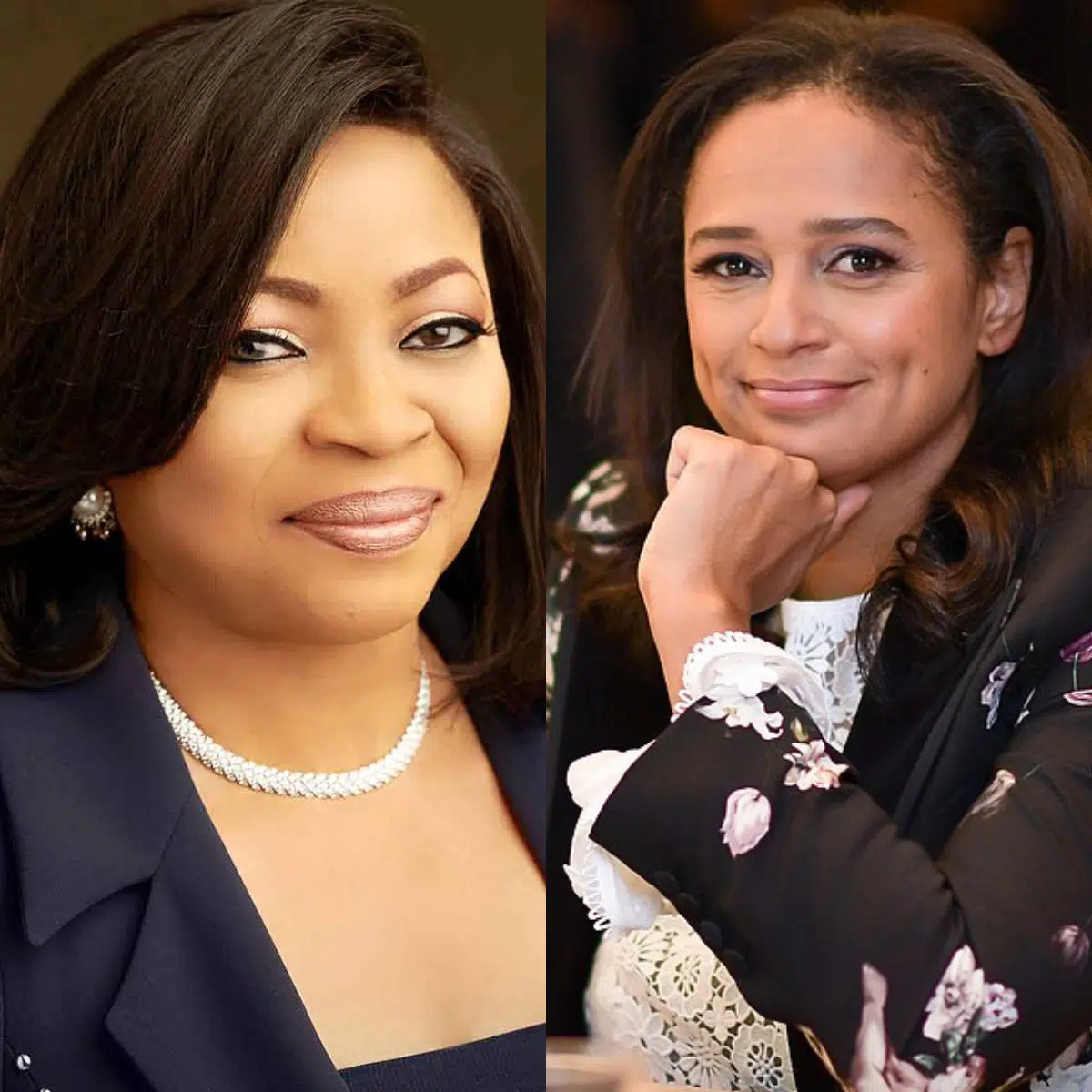
The last time female billionaires appeared on the list was in 2020, when Angolan tycoon Isabel dos Santos and Nigerian oil magnate Folorunsho Alakija were included.
Dos Santos became Africa’s first female billionaire in 2013 when her fortune surged to $3.5 billion, remaining the continent’s richest woman until legal actions and asset freezes in Angola and Portugal removed her from the Forbes list, with her holdings now marked at zero.
Once recognised as the richest Black woman in the world, Alakija had a peak net worth of $3.2 billion in 2014 but fell below the billion-dollar threshold by 2021 due to fluctuations in oil prices and market exposure.
Self-made men over 60 dominate as wealth climbs 21%
Despite the absence of female representation, Africa’s billionaire fortunes rose sharply this year. Forbes reported that the 23 men on the continent’s richest list collectively added $20.3 billion over the past year, lifting combined wealth to $126.7 billion.
“Billionaire fortunes continue to surge in Africa,” the publication noted, buoyed by equity market rallies and more stable currencies.
Fourteen of the 23 billionaires — or 61% — are self-made, having built their fortunes rather than inherited them. All but one are older than 60, with Tanzania’s Mohammed Dewji, 50, the youngest member of the group.
Dangote retains Africa’s richest crown as markets rally
The wealth surge was led by Nigeria’s industrial heavyweight Aliko Dangote, who retained his position as Africa’s richest person with an estimated net worth of $28.5 billion as of March 2026.
Dangote added about $4.6 billion to his fortune after shares of Dangote Cement surged nearly 69%, while the company’s profits doubled in 2025 to a record ₦1 trillion.
The billionaire has also signalled plans to list his oil refinery later this year and recently announced a $400 million deal with a Chinese machinery firm aimed at doubling the facility’s production capacity by 2029.
Among the biggest movers on the list was Nigerian industrialist Abdulsamad Rabiu, whose net worth surged 120% to $11.2 billion, making him the third-richest person in Africa.
The jump was largely driven by a 135% rise in shares of BUA Cement, which outperformed the Nigerian stock market rally over the past year.
The Nigerian Stock Exchange itself has been one of the world’s top-performing markets recently, rising more than 80% as listed companies reported record profits and pension funds increased allocations to equities.
Otedola remains at the bottom
For Nigerian energy and finance magnate Femi Otedola, 2025 brought a $200 million setback.
His net worth fell to $1.3 billion from $1.5 billion in 2024, a 13.3% decline, tying him with Morocco’s real estate mogul , Anas Sefrioui as the lowest-ranked billionaire on the continent, according to Forbes. The drop reflected his sale of a majority stake in Geregu Power at a discount to the public-market price.
Meanwhile, Sefrioui lost $300 million in wealth as shares of his company, Group Addoha, fell by more than 30%.
South African and Egyptian fortunes hold steady
Elsewhere, South African banking entrepreneur Michiel Le Roux saw his wealth climb to about $3.8 billion after shares of Capitec Bank jumped 57%, benefiting from strong investor demand and rising commodity prices.
Egyptian investor Nassef Sawiris was the only member of the list whose fortune remained largely unchanged at $9.6 billion.
He owns a stake in the English Premier League club Aston Villa and roughly 6% of Adidas, where he is expected to become chairman following the shareholder meeting in May.
South Africa remains home to the largest number of billionaires on the continent, with seven individuals on the list, followed by Egypt with five, Nigeria with four, and Morocco with three.
Exclusions and the broader picture
Forbes tracks African citizens who reside on the continent or have their primary business there. This methodology excludes Sudan-born Mo Ibrahim, South Africans Nathan Kirsh and Paul Van Zuydam, and other high-profile African-born billionaires operating abroad, such as Ivan Glasenberg, Clive Calder, and Elon Musk.
Despite a handful of individual declines, including Otedola and Sefrioui, Africa’s billionaire class remains overwhelmingly resilient, with buoyant markets and commodity-driven wealth continuing to swell the fortunes of the continent’s elite.
The combined net worths were calculated using stock prices and currency exchange rates from the close of business on March 1, 2026.