


When Musa, a food commodities trader in southwest Nigeria, secured a buyer in Accra, the distance looked manageable. The route hugged the Atlantic coastline, demand was strong, and the margins worked on paper. Then came the borders.
At Seme, the truck eased to a stop and stayed there, idling for hours under the sun as documents were checked, stamped, and checked again. Crossing into Benin, the delays came with a price: border patrol officers had to be ‘settled’ with payments on the side, and a string of other informal levies that traders along the route have learned to factor in as routine.
By the time the truck reached Aflao, on the Ghana–Togo border, another queue formed, another set of forms appeared, and another stretch of waiting followed. Days later, when the cargo finally arrived, transport costs had risen, and the buyer was pushing to renegotiate. Nothing had gone wrong, really. This was simply how trade moved along the route.
This quiet inefficiency defines much of West Africa’s most economically active zone. For decades, the region’s most productive economies have sat side by side, trading far less with each other than one would expect, given their geographical proximity. Abidjan and Lagos sit within about 1,000 kilometres of each other, yet the current volume of goods exchanged tells a surprising story.
For example, recent foreign-trade data shows that Nigeria’s exports to Côte d’Ivoire, representing the largest share of its trade within ECOWAS, amounted to nearly $2 billion in 2024, while imports from Abidjan were only about $125 million over the same period. By contrast, Berlin and Rome, European capitals about the same distance apart as Lagos and Abidjan, saw combined bilateral trade of over €160 billion (over $170 billion) in 2023.
The Lagos–Abidjan Corridor Highway Project is meant to change that. And in doing so, reshape how West Africa trades, transports goods and people, and competes in the broader African market.
However, whether it becomes a genuine economic catalyst or just another expensive road will depend on far more than asphalt.
A strategic highway through the heart of West Africa
The Lagos–Abidjan Corridor is planned as a six-lane, dual-carriage highway running roughly 1,028 to 1,081 kilometres from Bingerville (near Abidjan) in Côte d’Ivoire to Eric Moore (Mile 2) in Lagos, Nigeria, cutting through Ghana, Togo and Benin, a zone that generates more than half of ECOWAS’ GDP.
In 2025, Nigeria’s economy was projected at about $188 billion, with Côte d’Ivoire and Ghana at roughly $95 billion and $88 billion respectively. Together, the three account for around $371 billion, just over half (about 53%) of ECOWAS’ approximately $700 billion aggregate GDP.
| Country | 2024 Nominal GDP (approx) | 2025 Nominal GDP (projected) |
| Nigeria | ~$252.7 billion | ~$188.3 billion (IMF 2025 projection) |
| Côte d’Ivoire | ~$86.9 billion | ~$94.5 billion |
| Ghana | ~$75.2 billion | ~$88.3 billion (2025) |
| Benin | ~$20.8 billion | ~$22.0 billion |
| Togo | ~$10 billion | ~$10.95 billion |
Backed by ECOWAS and largely financed by the African Development Bank (AfDB) and other development partners, construction is expected to begin in early 2026, with completion targeted around 2030. The project is widely framed as a cornerstone for deeper regional integration under the African Continental Free Trade Area.
Speaking to Finance in Africa, Peter Atsu Dotse, a Ghana-based public accountability and reputation risk advisor who tracks regional infrastructure and trade policy, argues that the economic effects will begin even before the road is finished. “Even at the construction stage,” he notes, “commerce is likely to benefit from increased activity in the transport and logistics supply chain, including demand for materials, services, and cross-border coordination.”
Once completed, he adds, the corridor’s real value lies in reliability. Reduced transit times, lower freight costs, and smoother cross-border movement could materially change how traders plan and price risk. The route links major economic hubs and ports that that together handle millions of containers and tens of millions of tonnes of freight annually.
These include:
- Tema (about 1.9 million TEUs [Twenty-Foot Equivalent Unit] handled in 2024), with expansion capacity toward 3.5–3.7 million TEUs.
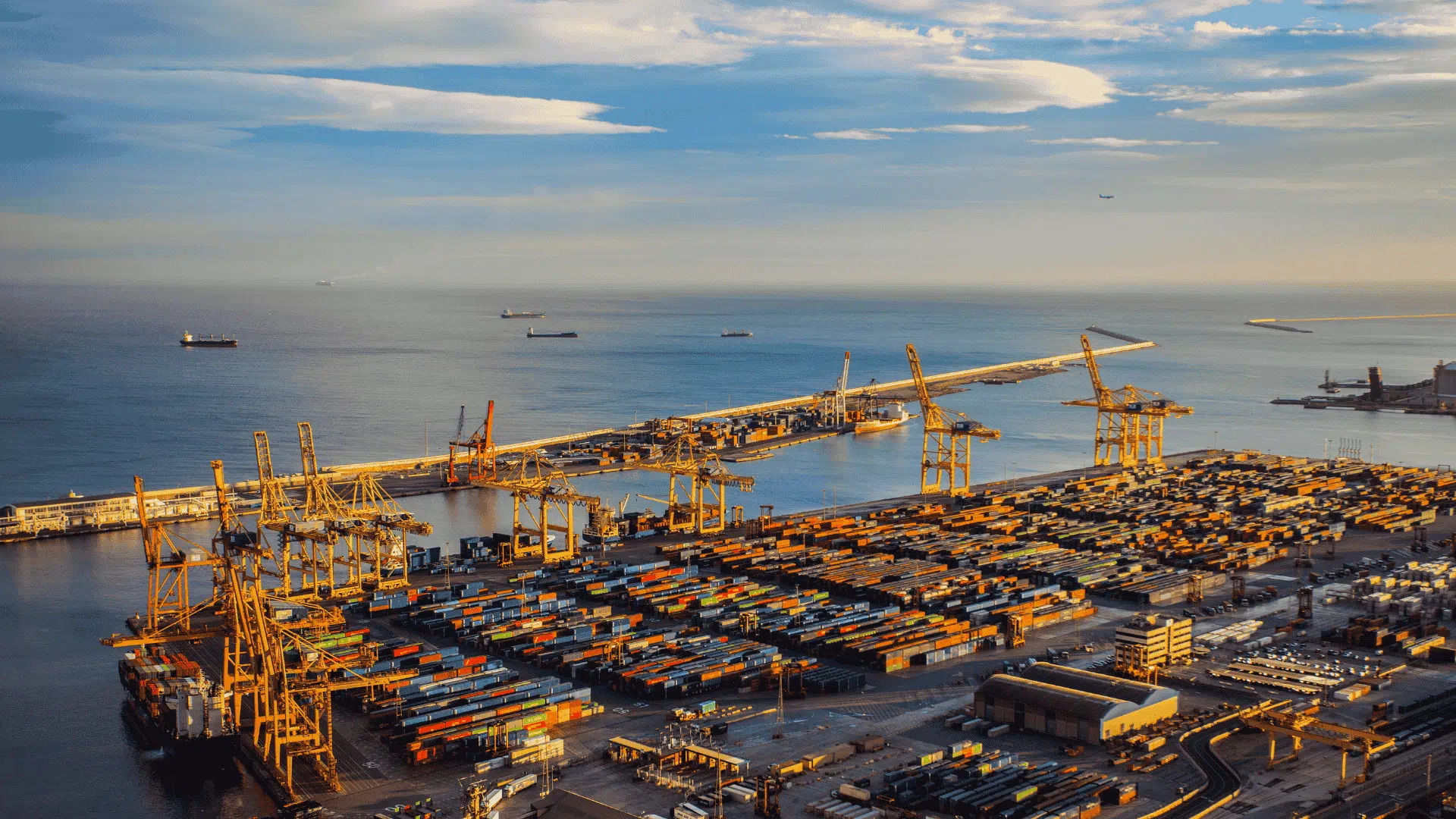
- Lomé (around 2 million TEUs and 30.6 million tonnes of cargo), while upgrading to handle around 2.7 million TEUs annually by 2027.
- Abidjan (1.6 million TEUs and 34.8 million tonnes), while currently building new terminals.
- Nigeria’s Lekki Deep Seaport, which has grown from about 54,000 TEUs in 2023 to nearly 287,000 in 2024 and targeted roughly 500,000 TEUs in 2025, despite operating well below its 1.2 million TEU capacity.
Together, they collectively anchor roughly 75% or more of West Africa’s maritime trade activity and poised for further growth as capacity expands.
For Ghana in particular, Dotse points to stronger connectivity between the ports of Tema and Takoradi and inland production zones. That link, he argues, could allow manufacturers and traders to access regional markets more predictably and at lower cost, a quiet but powerful shift for industrial planning.
Why the corridor matters now
Across the continent, the costs of intra-African shipping remain the highest globally, even five years after AfCFTA. Along the Atlantic coastline in West Africa, traders moving goods confront fractured infrastructure: uneven road quality, congested border posts, and inconsistent enforcement of regulations.
Logistics costs remain a silent killer of West African trade. In West and Central Africa, the cost of moving a container by road is about $2.43 per kilometre, roughly 50–100% above typical freight rates in benchmark markets like the United States or South Africa, where long-haul trucking runs around $1.0–$1.5 per kilometre under normal market conditions.
That means a 1,000-kilometre haul between Lagos and Abidjan can carry a $2,400 transport bill before fuel surcharges or delays. For traders like Musa, these costs directly squeeze margins and pricing risk.
Also, transit times are unpredictable. Data from the Centre for the Promotion of Private Enterprise (CPPE) shows that the corridor carries more than 50 million tonnes of goods and five million vehicles each year, yet trucks can spend up to 52 hours at major border crossings, stretching end-to-end journeys to as long as ten days. These delays amplify into real costs for exporters, importers, and end consumers.
The Abidjan–Lagos Highway is designed to tackle these bottlenecks head-on. Targeted for 2030, with construction beginning in 2026, the roadway, when completed, will be a toll-free, high-capacity highway with four to six lanes and up to eight lanes in Lagos, linked by around 63 interchanges along its route.
The scale of planned upgrades mirrors the density of the region’s economy. Roughly 173 million urban residents are expected to live in corridor cities by 2050, making this stretch one of Africa’s most populous and economically active belts.
Costs, capital, and the finance landscape
At an estimated $15.6 billion, the Lagos–Abidjan Corridor is one of West Africa’s largest infrastructure bets. The African Development Bank has led early financing, providing $25 million for feasibility and design work and anchoring investor mobilisation through the Africa Investment Forum.
Beyond the AfDB, the project has drawn interest from a broad mix of backers, including the ECOWAS Bank for Investment and Development, the European Union, Africa50, the Islamic Development Bank, Afreximbank, the World Bank, and several European bilateral lenders, underscoring the corridor’s strategic importance even as funding commitments are still being translated into bankable structures.
But enthusiasm does not erase complexity.
Dotse cautions that the blended financing model carries familiar risks. “Key issues include the timing and certainty of funding commitments, exposure to currency fluctuations across national budgets, and clarity around risk allocation between public and private partners,” he says.
Investor confidence, he argues, will depend less on headline pledges and more on binding agreements and predictable legal frameworks. While Ghana’s strong institutional relationships with multilateral lenders may reassure investors at the country level, corridor-wide confidence will hinge on how financing commitments are locked in across all five states.
Projected economic impact
Beyond logistics efficiency, the corridor’s economic footprint is expected to be broad. Project modelling suggests more than 70,000 direct and indirect jobs during construction, with longer-term spillovers into manufacturing, agriculture, and secondary cities.
Several private-sector segments appear especially well-positioned. Logistics and transport services stand to benefit first, as freight movement becomes more predictable and cost-effective. Dotse also highlights light manufacturing and agribusiness, where lower input and distribution costs could support the development of regional supply chains rather than isolated national ones.
Trade-linked services are likely to follow. As volumes grow, demand for trade finance, documentation services, and digital platforms is expected to rise, reinforcing the corridor’s role not just as a transport route, but as an economic ecosystem.
Reflecting its regional importance, Chris Appoiah, Director of Transport at the ECOWAS Commission, stresses that the highway is intended not just as asphalt and concrete, but as a trade engine, industrial catalyst and integration platform.
“Our ultimate objective is to ensure that the corridor and the economic activities to be developed along the corridor contribute to the ECOWAS regional integration agenda. It’s an integrated project which, once implemented, will help us to achieve the economic union we desire in our area,” he said.
In the same light, The Director of the Bank’s Infrastructure and Urban Development Department, Mike Salawou, expressed that the corridor is being designed to not only be a transport corridor but also an economic one.
“This economic corridor approach also naturally overlaps with major urban development. It will support the growth of major economic hubs and improve links between large urban centres, secondary cities and rural areas within the five countries. The Bank has launched the Spatial Development Initiative to enable transformative industrialisation right along the highway, to stimulate the growth of major economic clusters,” he stated.
Policy challenges and the way forward
Building the road is only half the challenge. The harder task is coordinating five countries with different legal systems, customs regimes, and administrative capacity. Without that alignment, the corridor risks moving trucks faster to the same border delays.
Customs procedures, vehicle standards, and documentation must be harmonised, supported by joint border posts and interoperable digital systems. Otherwise, paperwork and inconsistent enforcement will continue to undermine efficiency.
Dotse is blunt on this point. “Beyond the physical road, the corridor’s impact on regional integration hinges on policy and institutional alignment,” he says. Harmonised customs procedures, interoperable digital trade systems, and a credible corridor governance authority are essential.
That responsibility sits with the ECOWAS Commission and the planned Abidjan–Lagos Corridor Management Authority, which will oversee trade facilitation and operations.
Private investors will be watching not just engineering timelines but regulatory and institutional follow-through. Moving quickly at this early stage will determine if observers will retain faith in the project.
If managed well, the Lagos–Abidjan Corridor could reshape how West Africa trades, produces, and integrates. If not, it risks becoming another symbol of ambition constrained by execution. The difference will be decided not by declarations of regional unity, but by whether movement across borders finally becomes easier, cheaper, and predictable for people like Musa.