
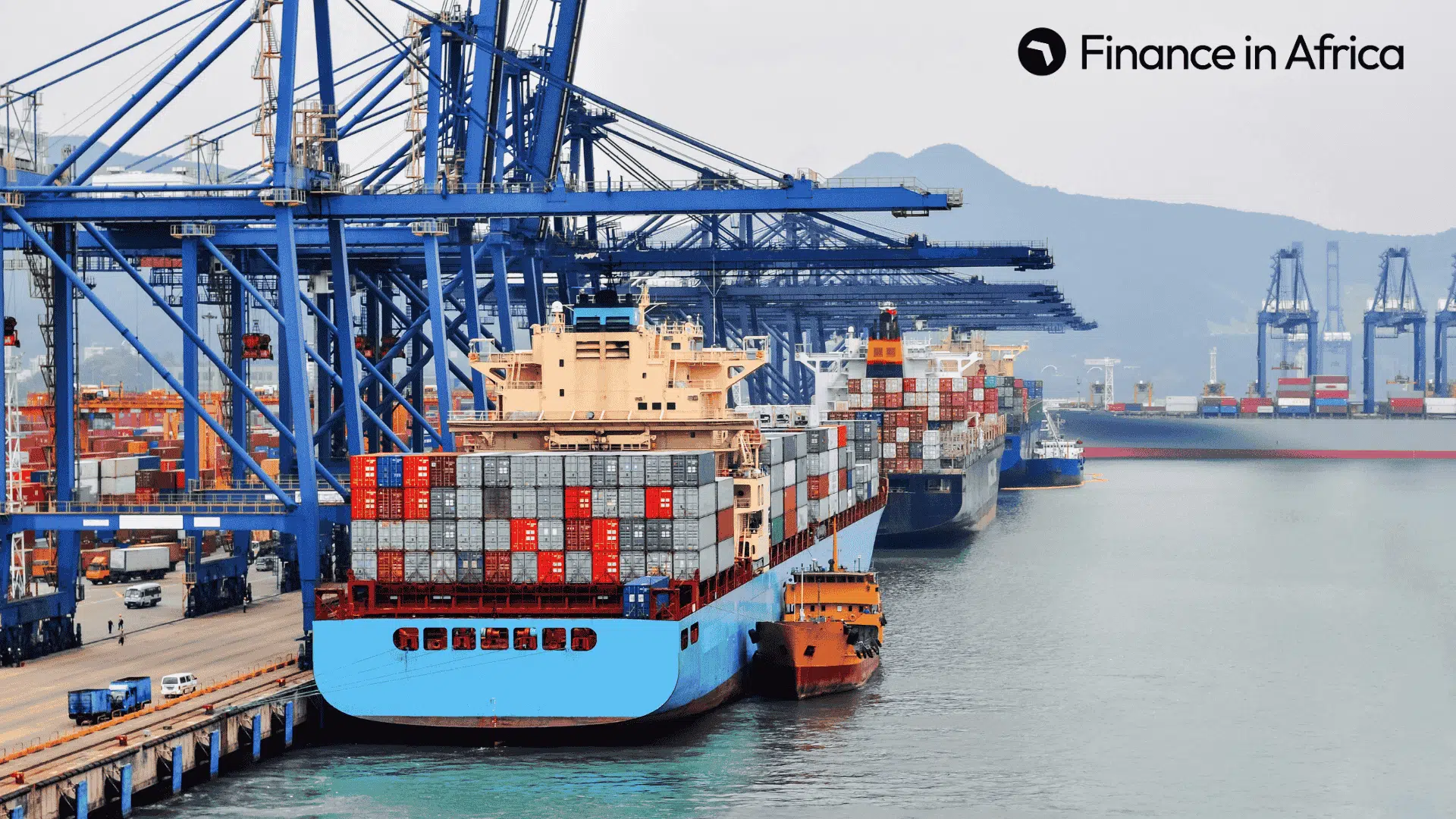


The rapid escalation of the US-Israeli military campaign against Iran, now in its sixth day, is delivering a double blow to African trade through disrupted maritime corridors and a volatile surge in global energy prices.
With the Strait of Hormuz effectively closed amid Iranian attacks on tankers and threats to shipping, and renewed Houthi-linked risks in the Bab el-Mandeb Strait forcing full reroutes around the Cape of Good Hope, Africa’s reliance on imported goods, fuels, and food is turning into a costly vulnerability.
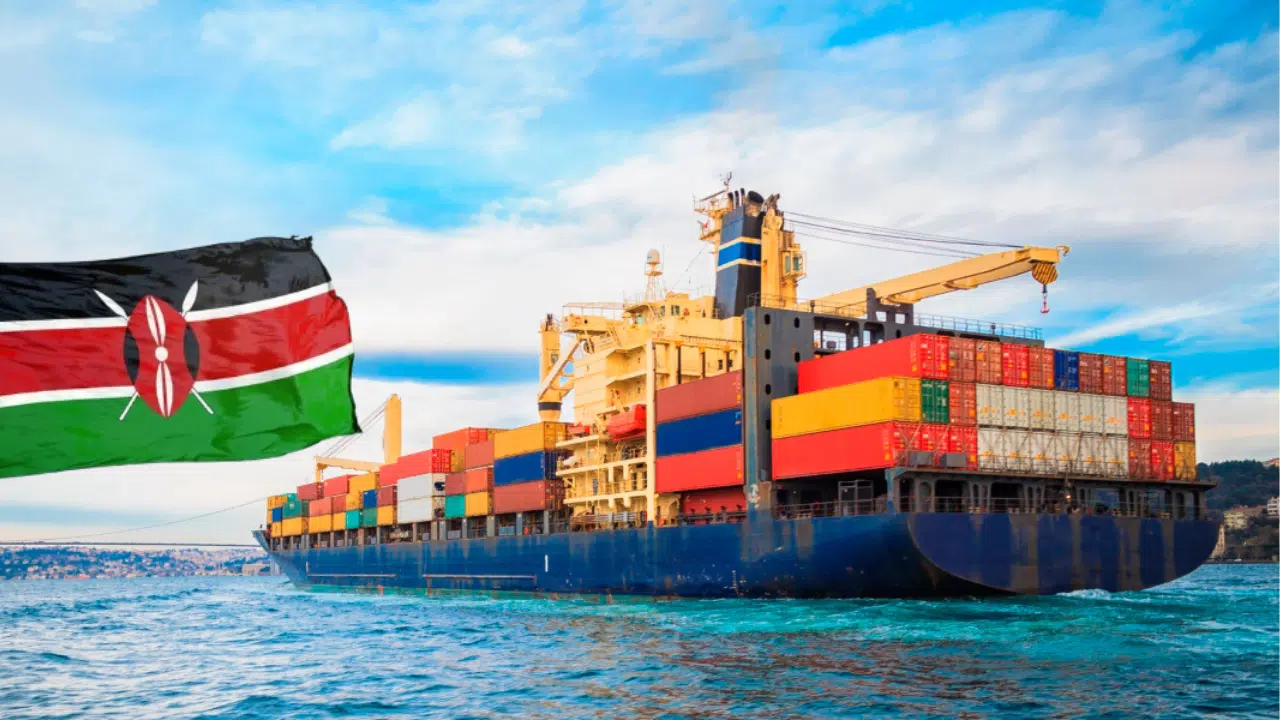
Major container lines—including Maersk, Hapag-Lloyd, CMA CGM, and MSC—have suspended Suez Canal and Red Sea transits, diverting Asia-Europe and Asia-Africa services via the southern tip of Africa.
The detour adds 3,500–4,000 nautical miles and 10–14 days (up to 20 on select legs), spiking fuel costs by roughly $1 million per round-trip voyage and total premiums to $2–4 million when factoring in crew, insurance, and capacity constraints.
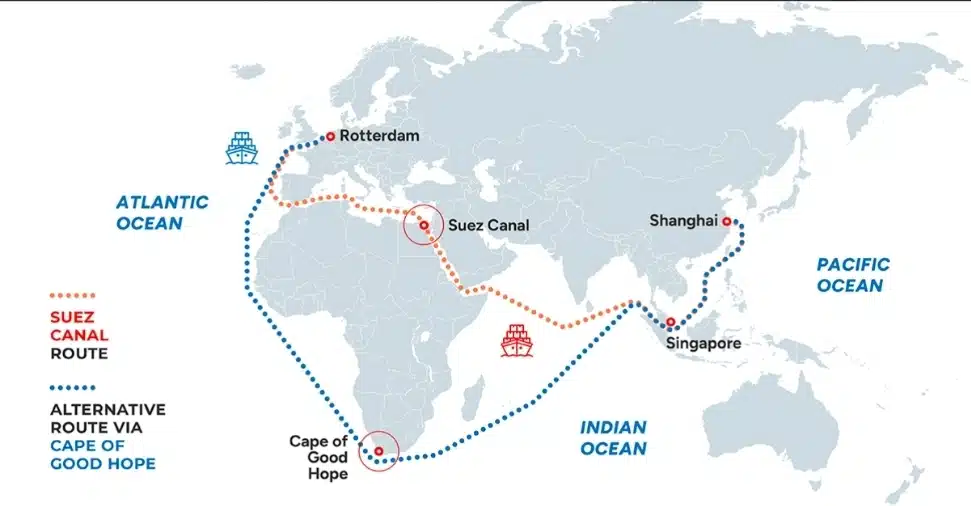
These maps illustrate the stark contrast: the efficient Suez shortcut versus the extended Cape of Good Hope path, dramatically increasing distance and time for key trades linking Asia to Europe and Africa. (Source: docshipper.com)
War-risk premiums have multiplied, with some insurers cancelling coverage for vessels with perceived US or Israeli ties, while carriers impose emergency conflict surcharges of $2,000–$4,000 per container. The longer cycles are absorbing millions of TEU in global capacity, tightening supply and driving spot freight rates higher across affected routes.
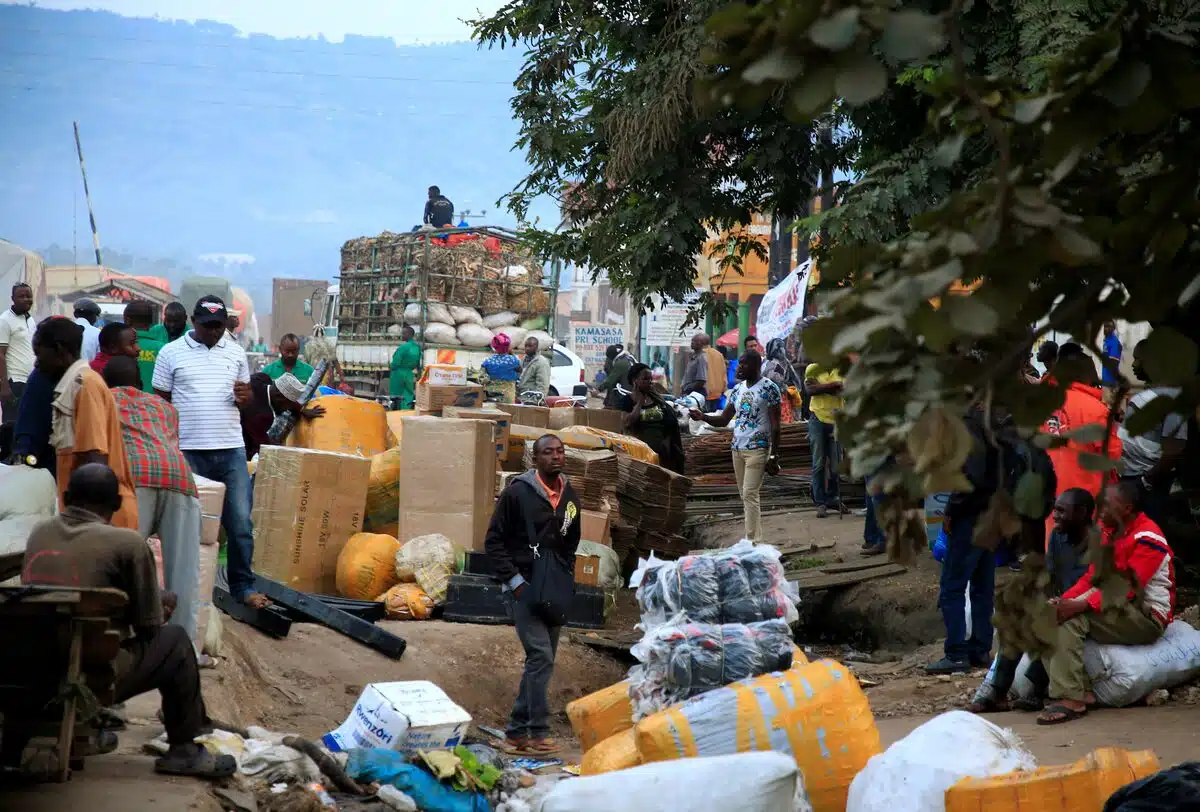
For Africa, the fallout is immediate and uneven. East African ports like Mombasa face delayed inbound shipments of machinery, electronics, vehicles, and staples such as grain and edible oils, pushing up landed costs and feeding inflation. Southern African exporters contend with extended lead times to Europe and Asia, eroding competitiveness in time-sensitive markets.
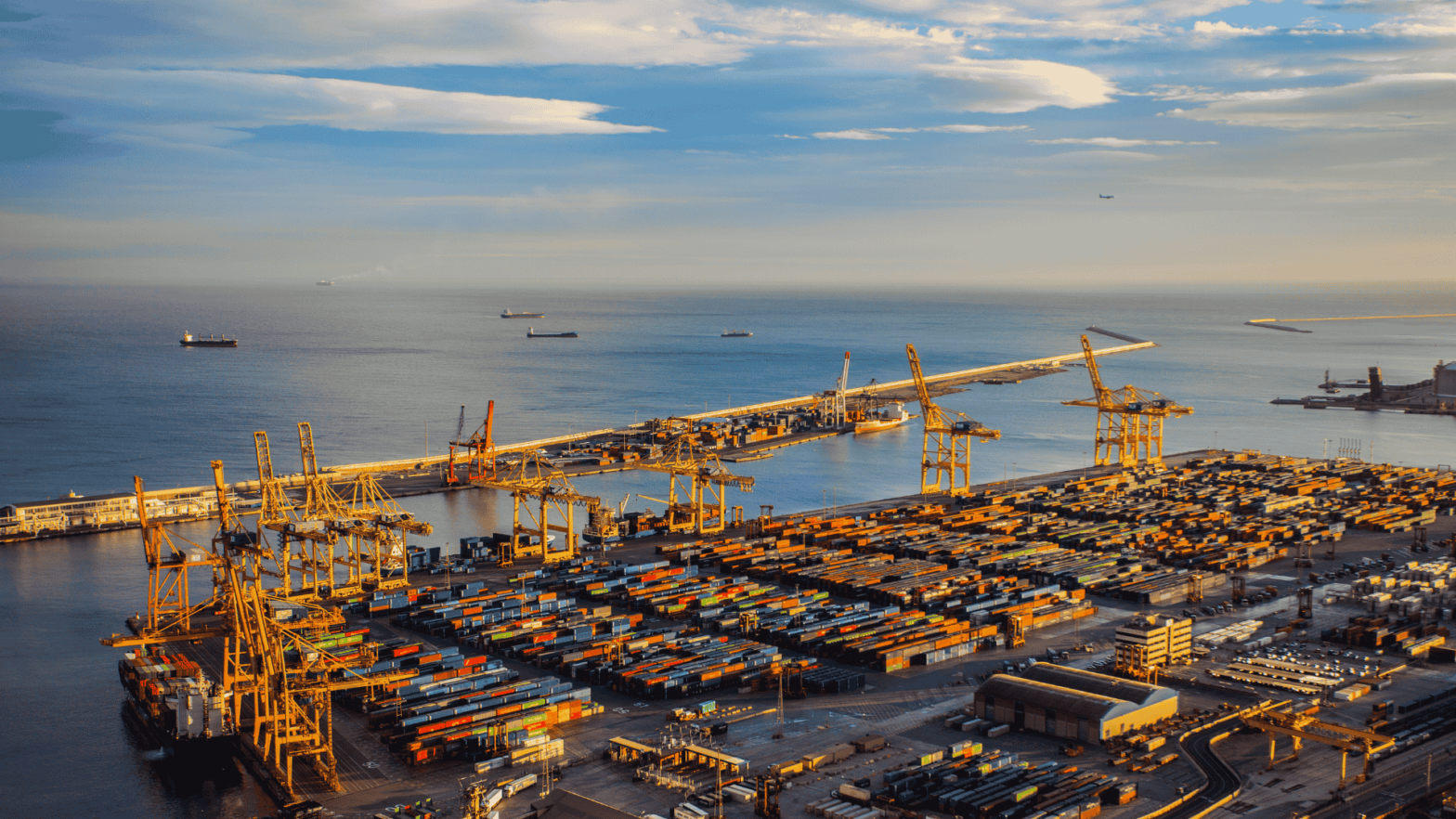
South African hubs Durban and Cape Town are experiencing a traffic boom as rerouted vessels call for bunkering and provisioning, but the surge risks repeating past congestion crises that have overwhelmed facilities.
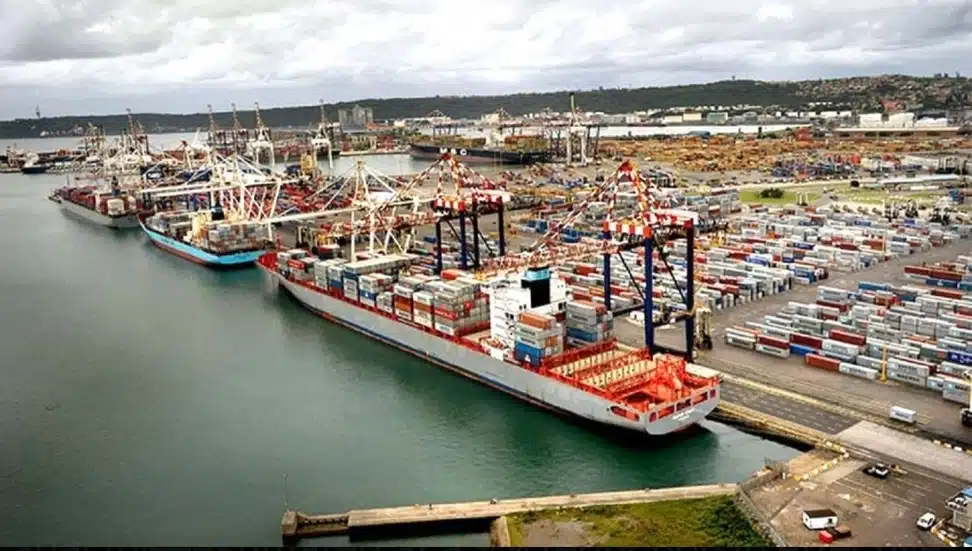
Congested scenes at Durban Port during earlier rerouting episodes highlight the strain on infrastructure, with stacked containers and busy berths signalling potential bottlenecks amid the current wave. (Source: witness.co.za)
Compounding the logistics shock is the oil market upheaval. Brent crude has climbed more than 15% since late February, trading above $82–$83 per barrel on Tuesday after touching highs not seen since mid-2024. Iranian strikes have damaged tankers, halted flows through Hormuz (20% of global seaborne oil and LNG), and triggered production stoppages across the Gulf.
Net oil importers: the majority of African economies, including Kenya, South Africa, Ghana, and Senegal, face ballooning import bills, currency depreciation risks, and higher transport/food/manufacturing costs.
Refined product dependence on Gulf supplies amplifies the pass-through. Exporters like Nigeria and Angola enjoy short-term revenue windfalls but remain exposed to domestic fuel price volatility and export infrastructure strains.
Analysts warn of broader ripple effects: imported inflation, widened trade deficits, strained fiscal buffers, and potential growth drags. UNCTAD-style assessments from prior crises suggest such dual disruptions can add meaningful upward pressure on core goods prices, hitting vulnerable populations hardest.
While some African ports gain from increased traffic, the net impact tilts negative for the continent’s trade-dependent model. Central banks and finance ministries are eyeing contingency measures like strategic reserves, subsidies, and sourcing diversification amid AU and regional calls for swift de-escalation.
Shipping equities have rallied on sustained rate expectations, but prolonged conflict risks are amplifying supply-chain costs by 40% or more in critical sectors. Markets remain on edge: freight indices, Brent benchmarks, and African port data will dictate the next phase.