
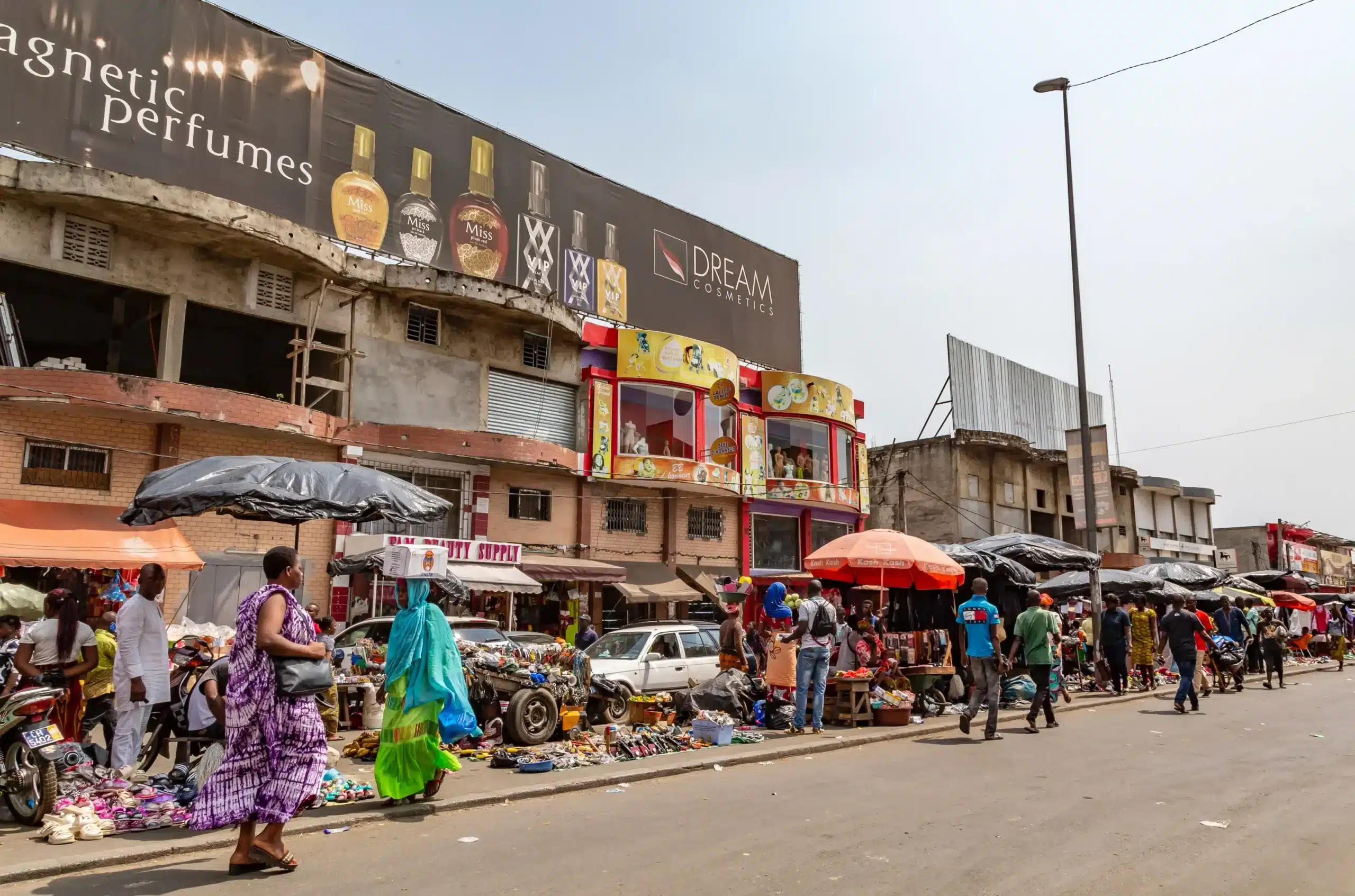


On a Tuesday morning in Ibadan’s famous Bodija market, Mariam sits behind a pyramid of bucket-stacked tomatoes that should, by all accounts, be a symbol of a recovering economy. For the first time in three years, the price of her crate hasn’t jumped overnight. The Nigerian Naira is no longer a falling knife, and the headline inflation rate that once choked the country at 34% has plummeted to a more manageable 14.45%.
Yet, Mariam’s ledger tells a different story. Her regular customers, mothers who once bought by the bucket, now either buy by the heap or relentlessly haggle for fractions of buckets. According to Mariam, the price has been stable for the last few months, but it is hard to deny that people have less money, and purchasing power is low.
On the news and on paper, the country’s economy is recovering and stabilising, but it appears that people’s bellies and traders’ inventories are yet to see this in reality.
Mariam is the human face of Nigeria’s 2026 paradox. After years of volatility, the dashboard of the Nigerian economy is flashing green. Foreign exchange is stable, reserves are up, and inflation is trending down. But for 61% of the population living in poverty, the engine of the economy is still sputtering.
Nigeria’s economic dashboard
Nigeria has spent the last decade bouncing from one macroeconomic shock to another. Currency crises, inflation spikes, oil price collapses, capital flight, and policy reversals. For years, volatility was the defining feature of the Nigerian economy.
By the end of 2025, that volatility had largely receded.
And the figures reflect this.
2026 began on a good note as those at the helm of Nigeria’s economy achieved what many thought impossible a year and a half before: they have tamed the beast of volatility. The Central Bank of Nigeria (CBN) and the fiscal authorities have successfully navigated a stabilization phase that has restored a sense of order to the markets.
To sum up data from a recent PwC report, 2026 Nigeria Economic Outlook, the interesting angles of the Nigerian economy tell an informative story:
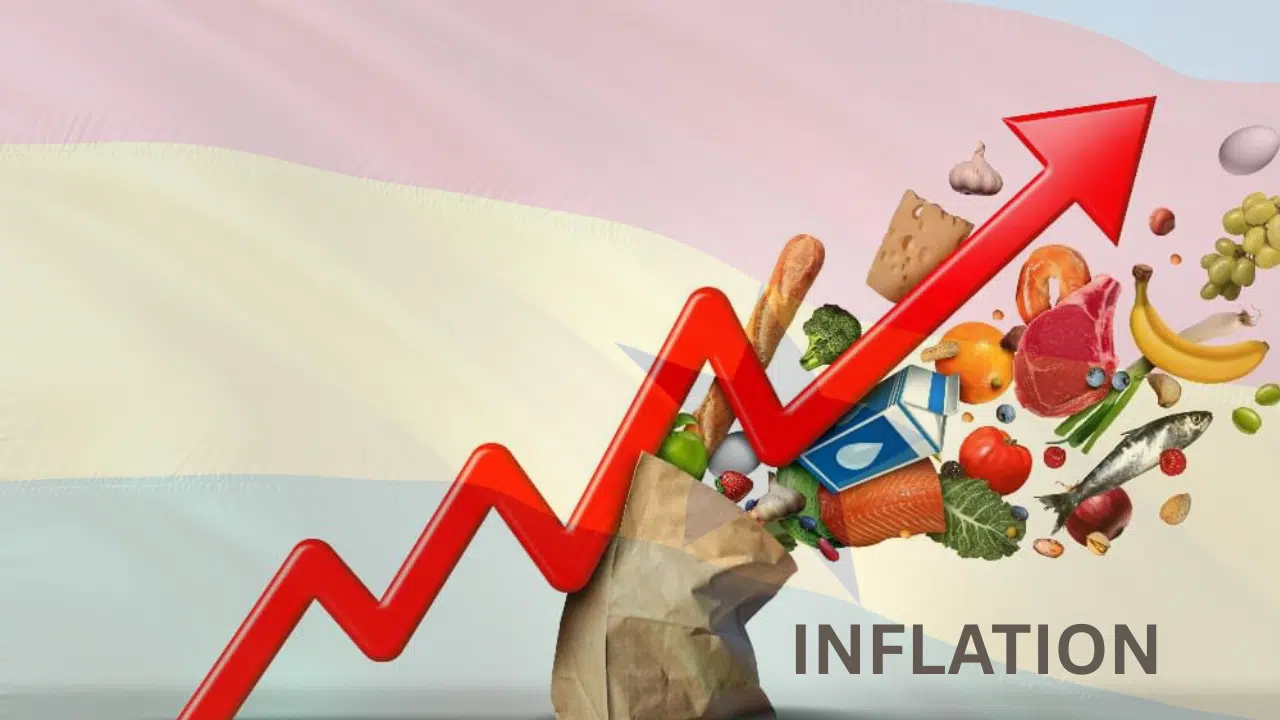
- The descent of inflation: From a peak of over 34% in late 2024, headline inflation dropped to 14.45% by November 2025. Interestingly, forecasts from the Chartered Institute of Bankers of Nigeria (CIBN), in its 12th National Economic Outlook, project an optimistic single-digit inflation rate of 9.84% for 2026.
- FX equilibrium: The wild swings of the Naira have been replaced by a crawling stability. After years of disorderly depreciation, the currency stabilised and even appreciated, ending the year at an official rate that stood at ₦1,436.31/$ in December 2025, with the parallel market gap narrowing to a mere 1.09%.
- Strengthened reserves: External reserves have climbed to $45.45 billion, providing a buffer that hasn’t been seen in years. Newer projections from the CBN suggest they could reach $51.04 billion by the end of 2026.
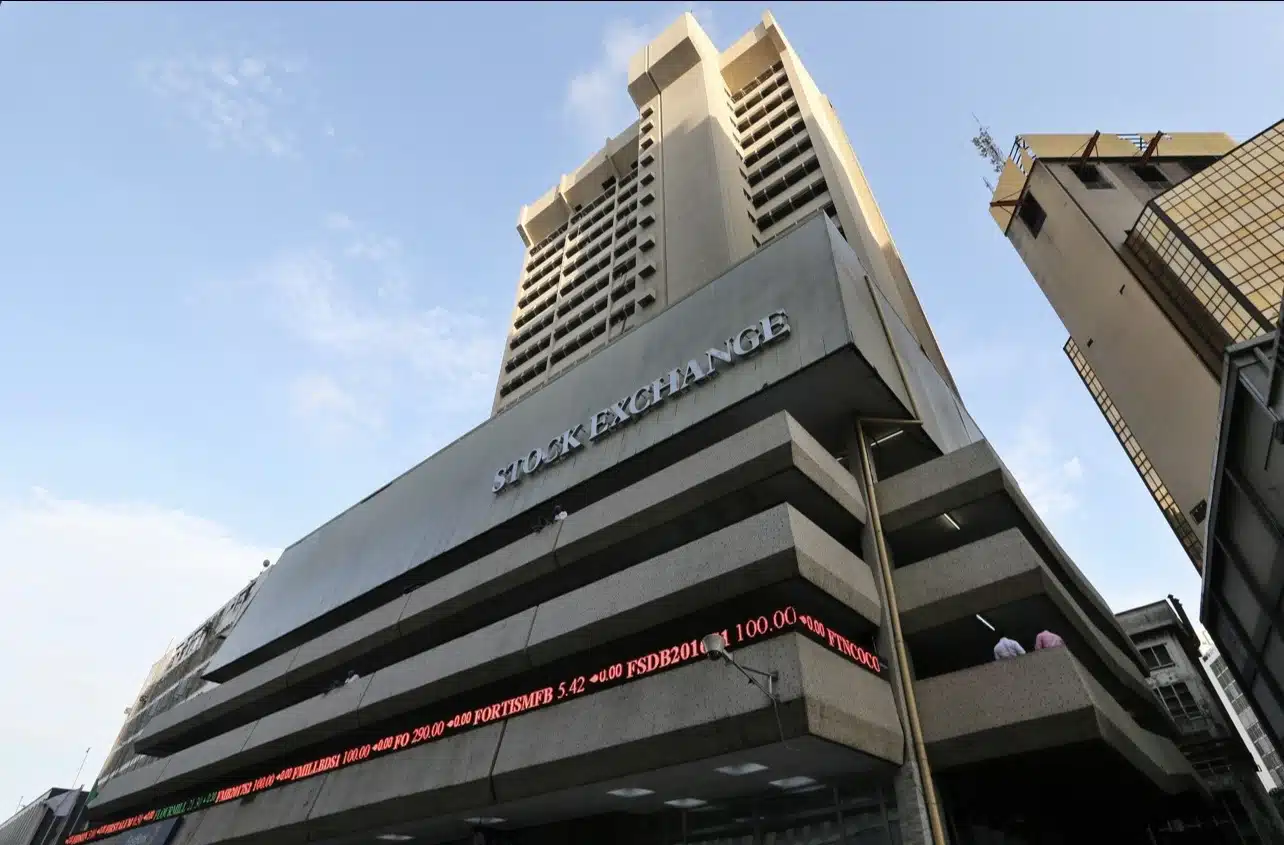
- Investor trends: Other financial sources also point to a stock market surge on the Nigerian Exchange. Total market capitalisation on the Nigerian bourse climbed from about ₦62.8 trillion ($42.3 billion) to roughly ₦99.4 trillion ($66.9 billion) in 2025, a 58.4% year-on-year jump, making a strong case for stock market performance.
Government bond auctions were also oversubscribed, showing strong investor demand in 2025 auctions. Bids reached a height of around 120% of the offer size, which was at ₦460 billion ($310 million); whereas investors collectively submitted bids totalling about ₦657 billion ($442 million).
Data from the PwC report shows that while Nigeria looks calmer, more predictable, more investable on paper, the economy is revealing something different beneath the surface.
As of the end of 2025, poverty levels had risen, and household demand remained weak. Private-sector credit barely moved, restricting local lending. Job creation lagged. For millions of Nigerians, macro stability did not feel like recovery. It felt like stasis.
Poloum David, a media expert at the 31st Nigerian Economic Summit, admits this. “Leaders say Nigeria’s economy may be showing signs of recovery, but for many citizens, the benefits of growth are yet to be felt. With inflation still high, living costs soaring, and millions of young people out of work, concerns remain about inclusive growth,” she stated.
The price of stability
The stability Nigeria has achieved comes at a high price. And it was paid with politically costly reforms and sustained policy discipline.
On one hand, the Central Bank effectively mopped up cash from the economy by hiking interest rates to a staggering 27.5%, to stop the Naira from sliding. While this makes it nearly impossible for local businesses to afford loans, it has created a perfect playground for global investors. They can now put their money into Nigeria, enjoy massive returns, and sleep soundly knowing the currency won’t crash overnight.
Speaking at the PwC Executive Roundtable on Nigeria’s 2026 Budget and Economic Outlook, Olusegun Zaccheaus, Partner at PwC Nigeria, noted the impact of this stability on Nigeria’s business environment. “The monetary policy environment is where we have the most stability and we expect that stability to continue into 2026. But it’s going to be at a price because interest rates will not go down as fast as desired.”
On the other hand, fuel subsidies, which have been a fiscal sinkhole for long, were removed. Also, exchange-rate unification ended years of multiple pricing and opaque allocation.
From a distance, it looks like a momentous turnaround.
But now, the big question is: If the engine has been fixed, why isn’t the vehicle moving faster?
Because stability is not the same thing as growth. And financial calm does not automatically translate into economic momentum.
Why real growth is absent
The disconnect in Nigeria’s new-found stability lies in the quality of growth. While GDP growth is projected to reach 4.3% in 2026, up from 3.98% in 2025, it remains unevenly distributed.
The growth is currently driven by two main pillars: a recovering oil sector (benefiting from improved security and the Dangote Refinery ramp-up) and a services sector. For context, the finance and insurance sector grew to 19.63% in late 2025, with projections of sustained momentum in 2026, according to the PwC report. However, these are capital-intensive rather than labour-intensive sectors.
In contrast, the labour-driving sectors that employ the most Nigerians, agriculture and manufacturing, remain hampered by structural legacy issues. Insecurity in the food-belt states continues to haunt the supply chain; conflict-related fatalities actually rose from 9,897 in 2024 to 10,894 in 2025.
For a farmer in the North-Central region, macro-stability means little when 287 farm-conflict incidents were recorded in a single year (2024), disrupting planting and harvests. According to the PwC report, the increase of conflict-related fatalities is due to the rise in kidnappings, insurgency, communal violence and politically linked unrest.
The Armed Conflict Location & Event Data Project (ACLED) projects that these conflict-related fatalities will persist in 2026 as security-related shocks worsen existing insurgency, banditry and communal-violence risks.
So, while the GDP is growing steadily, the poverty rate continues to increase. For this reason, consumption has failed to make a rebound.
Although inflation slowed, prices did not fall. They merely rose more slowly. Years of high inflation had already eroded real incomes. Wage growth lagged while prices increased, and job creation remained insufficient in an economy adding millions of people each year.
For many households whose incomes stayed the same despite the oscillations of inflation, the recent stability feels no different from stagnation.
The divergence: Global optimism vs. local scepticism
There is a clear point of divergence between international financial institutions and local economic observers. Similar to the PwC report on Nigeria’s economic outlook, the World Bank and IMF have both upgraded Nigeria’s growth outlook for 2026, both forecasting a 4.4% GDP growth due to existing reforms.
However, local think tanks like the Nigeria Economic Summit Group (NESG), in its 2026 Macroeconomic Outlook, warn that Nigeria is entering a “critical 18-month window” that would determine if the current reforms will hold. They argue that without a shift from the services sector toward agro-processing and manufacturing, the current growth will remain “modest, uneven, and concentrated,” failing to impact household incomes.
As the PwC report shows, the recorded growth in Nigeria’s economy is unevenly distributed across finance and insurance, ICT, and real estate while critical sectors like agriculture, manufacturing, and trade continue to lag. If this persists in 2026, the projected GDP growth would be unattainable.
The World Bank itself admits a grim reality in its report, Nigeria Development Update. While global growth is stable, it is “unlikely to reduce extreme poverty” in developing nations like Nigeria, making the 2020s potentially the weakest decade for poverty reduction since the 1960s.
How to achieve ‘real’ growth
There is no question that Nigeria is better positioned today than it was two years ago. The chaos has eased. The rules are clearer. The macro picture is more coherent.
To move beyond stability, it is necessary to transition from a defensive stance to a productive one. The 2026 Nigeria Economic Outlook report implies several strategic imperatives:
- Broadening the growth base (Sectoral breadth):
Currently, Nigeria’s growth is “uneven and concentrated” in a few sectors like Finance, ICT, and Real Estate, while critical labour-absorbing sectors like Agriculture and Manufacturing continue to lag.
To achieve sustainable growth, the government must move beyond being a revenue collector and become an enabler of productivity. This involves resolving the structural bottlenecks, specifically energy costs and logistics, that currently make Nigerian-made goods more expensive than imports.
- Fixing the flow of credit:
A major barrier to real growth is that the “dashboard stability” hasn’t reached the average business. With the Monetary Policy Rate (MPR) at 27%, credit is effectively out of reach for the small and medium enterprises (SMEs) that drive the economy.
- Responding to shocks efficiently:
Olusegun Zaccheaus, while largely optimistic, pointed out that a major outlook for the Nigerian economy in 2026 is the issue of macroeconomic shocks and how dealing with them, both preemptively and effectively, can make all the difference for the economy. “One of the most important things to pay attention to in 2026 is the issue of shocks…however, whichever way you look at it, I think it’s a positive outlook.”
Ultimately, “real” growth will only be achieved when headline statistics translate into household welfare.
Nigeria in 2026 is a country of two stories. On the computer screens of traders in London and New York, it is a turnaround success story. Across major markets in Nigeria, Bodija in Ibadan, Mile 12 in Lagos, Ariaria in Abia, it is a story of waiting for the stability to morph into growth.
N.B: Figures originally reported in Nigerian naira and converted using the average exchange rate of ₦1,485/$1 as of Tuesday, January 27, 2026.