


Nigeria’s capital markets regulator has raised minimum capital requirements for market operators by a combined $74.8 million (₦106.1 billion), as part of a sweeping overhaul aimed at strengthening the financial resilience of regulated institutions.
The revised thresholds, announced in a circular issued on Friday by the Securities and Exchange Commission (SEC), apply across a wide range of market participants from brokers and infrastructure firms to fintechs and digital asset service providers.
The topline figure represents the cumulative difference between the previous capital regime implemented in 2015 and the newly approved requirements across all affected categories.
An analysis by Finance In Africa shows that market infrastructure institutions recorded the largest increase by segment, with capital thresholds collectively rising by $16.8 million (₦23.85 billion).
The jump was driven by sharp revisions to requirements for central counterparty clearing houses (CCPs) and composite securities exchanges, both of which play a critical role in market stability.
However, among individual classes, non-bank custodians were the most affected.
Another notable shift was observed in the digital asset segment, where operators that previously faced no capital thresholds are now required to meet minimum levels ranging from $211,714 (₦300 million) $705,714 to (₦1 billion), depending on the scope of their activities.
The SEC latest overhaul, which takes effect on June 30, 2027, reflects a broader and aggressive restructuring of Nigeria’s financial regulatory framework aimed at promoting overall market stability.
It follows recent moves in the banking and insurance sectors, where authorities have raised capital floors to boost financial buffers and operational resilience.
“This review is informed by the need to strengthen market resilience, enhance investor protection, align capital adequacy with the evolving risk profile of market activities, and ensure that regulated entities possess sufficient financial capacity to discharge their obligations in a sustainable manner,” the commission said in the circular.
Biggest winners
Capital market consultants (individual) — $1,411
Individual capital market consultants faced the mildest adjustment under the new regime, with minimum capital raised to $1,411 (₦2 million) from $352 (₦500,000). The group includes solicitors, reporting accountants, estate surveyors and valuers providing advisory services. The modest increase reflects their lower risk profile and limited balance-sheet exposure.
Nominee companies — $3,529
Nominee companies now require $3,529 (₦5 million) in minimum capital, up from a near-zero threshold previously. The relatively small adjustment mirrors their largely custodial role. Major Nigerian banks such as Zenith, Stanbic IBTC and Standard Chartered operate nominee subsidiaries that hold securities on behalf of local and foreign investors.
Sub-brokers (individuals), investment advisers (individuals) and consultants (partnerships) — $7,058
Minimum capital for individual sub-brokers, individual investment advisers and partnership-based consultants was raised to $7,058 ₦10 million from $1,411 (₦2 million). The change comes as SEC moves to flush out inactive and undercapitalised operators while strengthening firms and agents that interact directly with retail and institutional investors.
Commodities dealers — $14,117
Capital requirements for commodities dealers rose to $14,117 (₦20 million) from $2,117 (₦3 million), reflecting higher operational and settlement risks in the classification. These firms link producers of agricultural goods, energy and metals to buyers, playing a growing role in Nigeria’s capital market as commodities trading deepens.
Capital market consultants (corporate) — $17,645
Corporate capital market consultants must now hold at least $17,645 (₦25 million) in capital, up from $3,529 (₦5 million) previously. The rule affects advisory firms involved in facilitating IPOs and mergers and acquisitions, while raising entry barriers to ensure only financially stable operators continue to function in the market.
Biggest Losers
Non-bank custodians — $35.2 million
Under the revised framework, non-bank custodians are required to maintain $35.2 million (₦50 billion) plus 0.1% of assets under custody from zero previously — marking the sharpest increase recorded.
By safeguarding client assets independently, these financial institutions reduce the risk of mismanagement or theft, supporting investor confidence and enabling both local and foreign capital to flow more securely into Nigeria’s markets.
Composite securities exchanges — $7.1 million
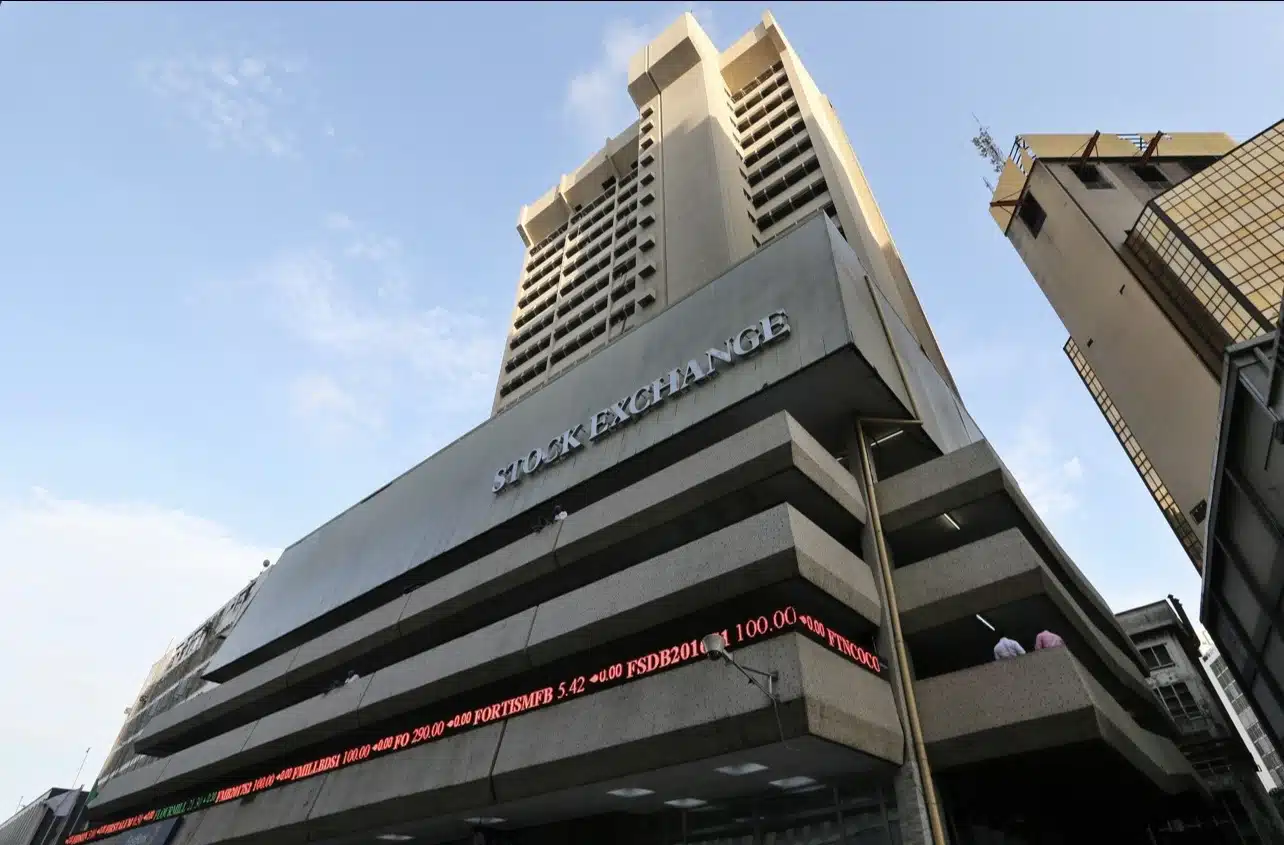
Nigerian Exchange Limited, FMDQ Securities Exchange and other composite exchanges now face a $7.1 million (₦10 billion) capital requirement, up sharply from $352,950 (₦500 million). The sharp increase underscores the critical role these institutions play in supporting market liquidity and shielding investors from operational and systemic risks.
Central counterparties (CCPs) — $7.1 million
As part of efforts to improve market stability, the SEC doubled the capital requirement of central counterparties to $7.1 million (₦10 billion) as against the $3.5 million (₦5 billion) held since 2015, marking another steep adjustment under the market infrastructure category. The significance of this class to Nigeria’s financial markets is underscored by its function in absorbing the credit exposure of individual traders and preventing cascading defaults.
Tier 2 issuing houses — $4.9 million
According to the SEC, Issuing Houses with Underwriting that offer a ‘one-stop-shop’ for issuers, provide underwriting services, lender advisory and product development services are required to have $4.9 million (₦7 billion) minimum capital, up from $141,213 (₦200 million) held previously.
Clearing and settlement companies — $3.5 million
Formerly set at $141,213 (₦200 million), the minimum capital threshold for clearing and settlements firms has been raised to $3.5 million (₦5 billion), highlighting the growing focus on reducing counterparty risks. The hike strengthens their capacity to maintain liquidity, prevent chain-reaction defaults, and uphold confidence in market transactions.
Decisive shift amid rising risks
The SEC’s latest reforms signal a decisive move toward a more risk-sensitive capital regime, reflecting the growing size and complexity of Nigeria’s capital market.
By raising thresholds for historically low-capital roles, such as individual advisers and sub-brokers, the regulator is sending a clear message: operators must have the financial capacity to meet obligations sustainably.
As firms race to meet the June 2027 deadline, analysts expect a surge in capital-raising activity and a wave of consolidation, with smaller entities either exiting the market or merging to strengthen their balance sheets.
“The implication of this is that the wave of capital raising activities will intensify,” said Unwanaobong Ekanem, an M&A lawyer.
“More rights issues, private placements, and public offers are expected, subject to SEC compliance guidelines. Additional mergers and business combinations are also likely,” she added.
NB: The local currency figures were converted using ₦1,417/$1 — the CBN’s official rate as of January 16, 2026