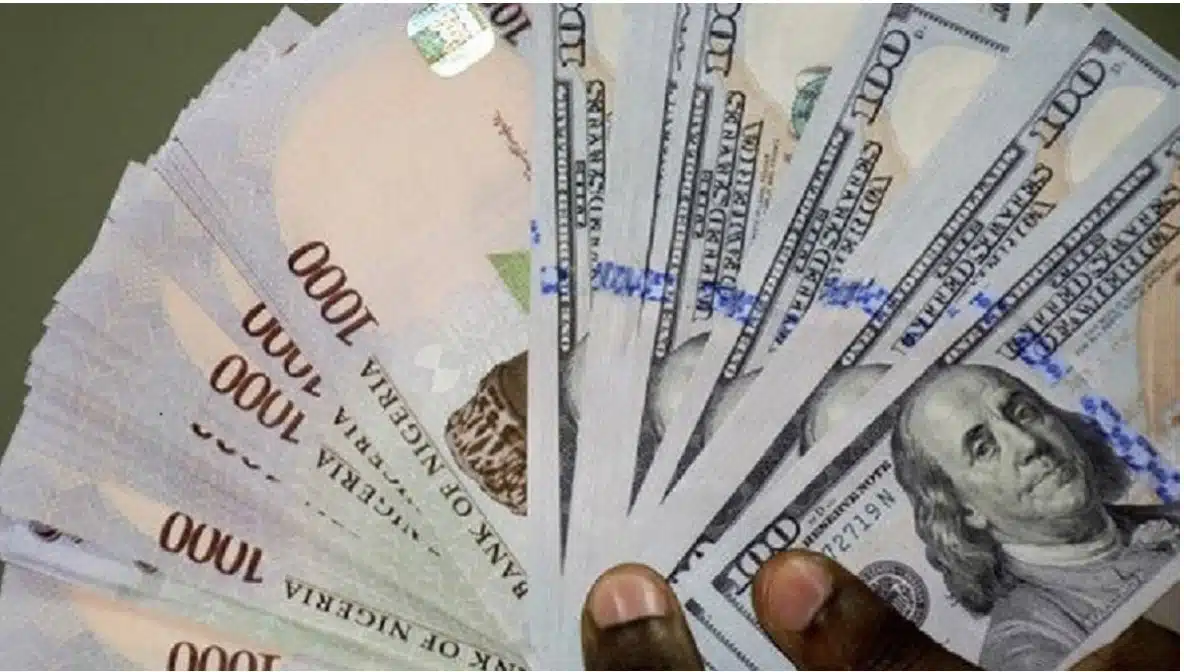




Foreign capital inflow into Nigeria surged in the first nine months of 2025, buoyed largely by a sharp upturn in portfolio investments that has reawakened concerns about investor appetite for longer-term commitments in the West African economy.
Data from the National Bureau of Statistics (NBS) compiled and analyzed by Finance in Africa shows that between January and September last year, Nigeria received $11 million (N16.6 billion) in total capital importation, up 156% in dollar terms from $4.3 million (N6.3 billion) at the end of the same period in 2024.
Quarterly naira-denominated figures buttress the scale of the uptick. Total inflows crossed the ₦5 billion mark in Q1 2025 for the first time in five years, before rising to ₦6 billion in Q3, up from ₦5.1 billion in Q2 and ₦1.25 billion in Q3 2024.
The surge was overwhelmingly driven by foreign portfolio investments (FPI) involving short-term financial market commitments, which rose 217% year-on-year to $9.5 million (₦14.2 billion) in 2025, representing around 86% of total inflows.
By contrast, foreign direct investment (FDI) in low liquidity assets remained subdued. FDI accounted for just 3.4% of total capital importation, increasing from $177,000 (₦253 million) in 2024 to $377,800 (₦565.3 million) last year, underscoring the continued caution from investors seeking deeper, long-lasting exposure.
This weariness is further highlighted by the gap between fresh FDI and foreign loan inflows recorded during the review period.
Categorised as “Other Investments” by the NBS, external lending and other claims absorbed roughly 12% of total capital imports, even as transactions slowed to $1.3 million (₦1.9 billion) in 2025 from $1.6 million (₦2.4 billion) in the prior year.
Analysts warn that while the headline jump in investments signals renewed foreign interest in Nigerian assets, the dominance of “hot money” suggests that the economy remains susceptible to short-term capital volatility, which could reverse quickly if global or domestic conditions shift.
“The biggest risks are susceptibility to external shocks, said Dayo Adenubi, a Lagos-based analyst.
“If a COVID-like event occurs, you get massive capital calls which could create a balance of payments crisis.”
High-return environment
For yield-hunting investors, Nigeria holds strong appeal, Adenubi argues, as returns on local assets such as government bonds and equities continue outstrip both the country’s risk profile and yields available in advanced markets.
“If you look at the spread between Nigeria’s sovereign risk premium and the yields available in local financial markets — particularly money-market instruments such as Treasury bills, OMO bills issued by the Central Bank of Nigeria, commercial papers and other short-dated notes — the returns are very high,” he said. “The same logic applies to equities.”
This spread is reflected in the sovereign bond market.
As of October 2025, the extra compensation investors demanded to hold Nigeria’s 10-year bond rather than the US Treasury benchmark widened to about 11.5 percentage points, based on yield differentials. Nigeria’s 10-year bond yielded 15.5% at the time, compared with 3.99% on the US equivalent.
Cheap asset valuations, elevated interest rates and recent foreign-exchange reforms have also been linked to the growing investor appetite for Nigeria’s financial markets.
“Relative to alternatives such as US Treasuries or Eurobonds, real returns in Nigeria remain significantly higher”, Adenubi said, “leaving local debt and equities trading below perceived fair value and drawing in foreign portfolio investors.”
Speculative territory
While interest in short-term investments has strengthened, longer-term commitments remain elusive in Africa’s most populous nation, reinforcing fears that investors’ confidence in Nigeria’s economic trajectory remains fragile.
“The marginal growth we’re seeing in Nigeria’s FDI signals that the economy is still in speculative territory and not yet ready for a sustained long-term investment cycle,” Adenubi said.
He noted that FDI typically comes from strategic investors such as multinational corporations or private equity firms pursuing greenfield projects or acquisitions with investment horizons of at least 10 years.
“To commit capital for that long, investors must be sure of macroeconomic stability, improvement in market fundamentals, regulatory certainty and responsible fiscal and monetary management,” he said.
“Nigeria is simply not there yet but we’re making steady progress,” Adenubi added, alluding to reforms introduced under President Bola Ahmed Tinubu’s administration.
A tight monetary stance has helped rein in inflation from the highs seen in 2023 and 2024, providing some relief for households and businesses.
As of January 2026, headline inflation stood at 15.10%, down from a peak of 24.3% last March, marking the tenth consecutive monthly slowdown, aided in part by easing food prices.
The naira has also shown signs of stabilisation, hovering around ₦1,400 per dollar for much of 2025 after a sharp depreciation in 2024 wiped out more than 100% of its value. This momentum was carried into 2026. Earlier this month, the naira traded at ₦1,347, supported by waning global trust in the US dollar and rising foreign reserves — marking its strongest gain in two years.
Still, policy inconsistency, persistent security challenges and a heavy public debt burden continue to keep the West African giant firmly in high-risk territory, dampening its appeal to strategic, long-horizon investors.
Skewed inflows heighten vulnerability
As the gaping divide in Nigeria’s capital flows deepens, economists warn that recent economic gains remain at risk.
Sudden reversals in FPI, which are typical with high liquidity assets, could strain the country’s external account, drain reserves and erode exchange rate stability, Adenubi said.
On the policy front, a sharp exit of investors could restrict the central bank’s room for manoeuvre, limiting its ability to adjust interest rates to support growth or tame inflation without triggering further capital flight.
“Another risk is that the central bank can become beholden to portfolio investors when foreign-exchange inflows are overly dependent on capital importation,” he warned.
The heightened vulnerability strengthens the case for policymakers to fast track reform efforts geared towards improving macroeconomic conditions, entrenching policy consistency and addressing structural weaknesses.
NB: ₦1,479/$1 —average exchange rate, September 2025 ;₦1,497/$1 — average exchange rate for 2024