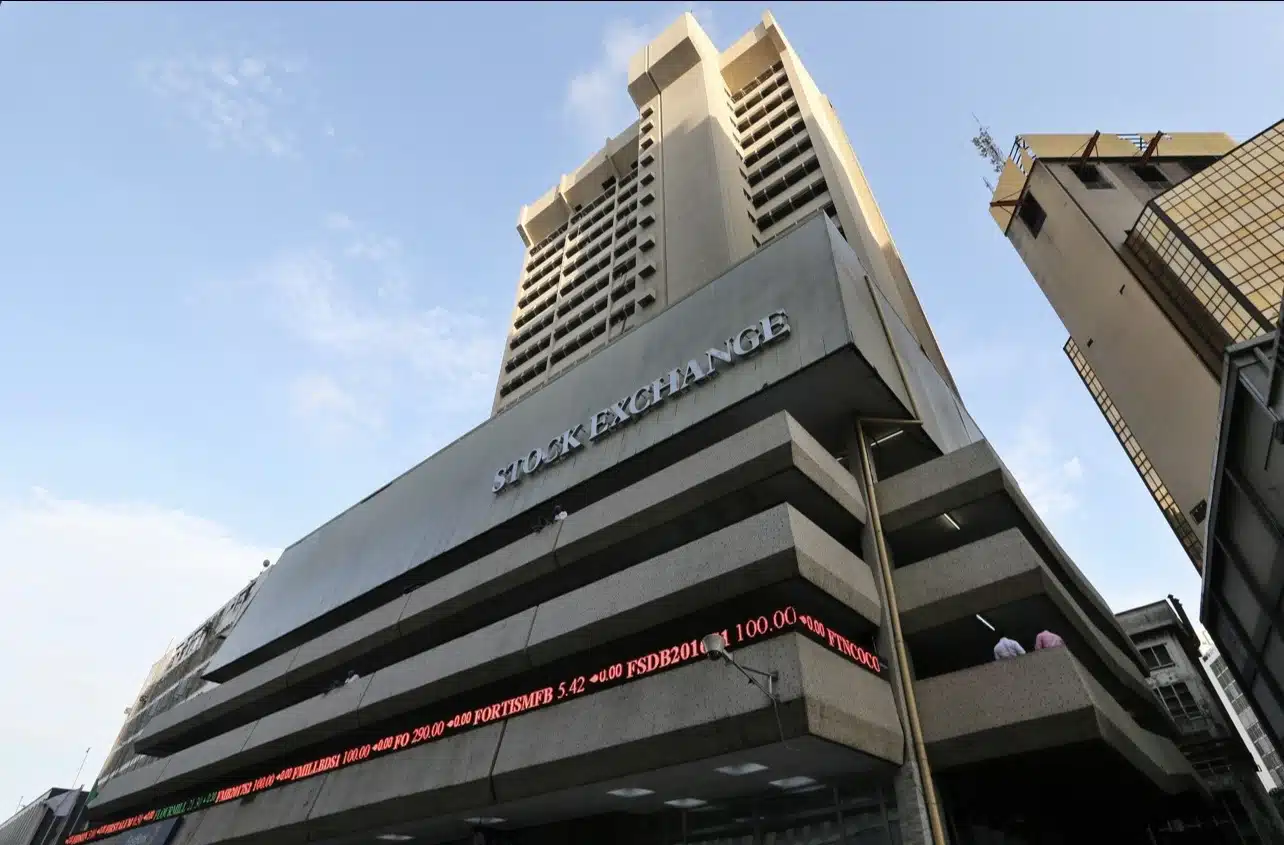



In a striking turnaround that few would have predicted just a few years ago, foreign investors are pouring back into Nigeria’s equities market with unprecedented force. International deal volumes on the Nigerian Exchange (NGX) surged to a staggering $1.97 billion (N2.65 trillion) in 2025, the highest in 19 years and a powerful vote of confidence in Africa’s largest economy.
This isn’t just a rebound, it’s a re-rating. Global capital is betting that President Bola Tinubu’s aggressive economic overhaul is finally delivering the stability and opportunity Nigeria has long promised.
The numbers tell a dramatic story.
Here’s the scale of the shift (using an approximate exchange rate of ~1 USD = 1,345 NGN, reflective of early 2026 levels around February):
- 2025 foreign transactions: $1.97 billion (N2.65 trillion, or precisely N2.648 trillion) up 211% from $633 million (N852 billion) in 2024.
- Long-term leap: A massive 329.87% jump since 2007, when foreign activity was a modest $458 million (N616 billion).
- Market share: Foreigners now account for over 22% of total trading activity (up 696 basis points), making them a major force alongside dominant domestic players.
- Total NGX turnover: Exploded to $8.86 billion (N11.92 trillion) in 2025, more than doubling from $4.16 billion (N5.59 trillion) in 2024, driven by both foreign and domestic frenzy.
- Net flows: Foreign inflows hit $1.04 billion (N1.40 trillion), comfortably outpacing outflows of $922 million (N1.24 trillion), delivering a net inflow of $120 million (N161 billion), a sharp reversal from the $44 million (N59 billion) net outflow in 2024.
Domestic investors still led the charge with $6.89 billion (N9.27 trillion) in trades, but the foreign surge provided critical liquidity, depth, and international validation.
What’s behind the flood of capital?
While we’ve seen this type of rally before, the surge didn’t happen in a vacuum. Three powerful forces converged:
FX market liberalisation:
The unification of exchange rates and removal of multiple windows eliminated the crippling distortions that had scared off foreigners for years. Naira liquidity improved dramatically, reserves climbed, and the fear of trapped capital evaporated. Suddenly, repatriating profits became feasible again.
Attractive yields in banking and energy:
Nigerian banks delivered eye-popping returns amid high interest rates and strong corporate earnings, offering some of the most compelling dividend yields in emerging markets.
The energy sector, oil & gas upstream, power players like Transcorp and Geregu, and the ripple effects of the Dangote Refinery benefited from rising production, local content push, and fiscal incentives under the Petroleum Industry Act.
Global investors chasing yield in a high-rate environment found Nigeria hard to ignore.
Broader macro reforms & policy clarity:
Fuel subsidy removal, tighter fiscal-monetary coordination, removal from the FATF grey list, and the landmark Investments and Securities Act (ISA) 2025 strengthened market regulation and investor protection.
NGX Group Managing Director Temi Popoola credited “policy consistency, purposeful reforms, and technology investments” for building resilience. Analysts at ASHON and GTI Capital pointed to the All-Share Index’s 136% rise from 2023–2025 as proof that reforms are translating into real value. As one expert put it, Nigeria has “successfully redefined its value proposition to international stock investors.”
Deeper analysis: A cautious but convincing comeback
This isn’t blind euphoria, it’s calculated conviction. Foreign participation remains selective and episodic: block trades, index rebalancing, and tactical bets drove much of the volume. Net inflows were modest relative to gross flows, and several months still saw net exits amid profit-taking.
Yet the direction is unmistakable. After years of net outflows during FX chaos and policy flip-flops, foreigners are now net buyers. The market has moved from being a “high-risk, low-reward” story to one where risk is finally being rewarded.
The implications extend widely.
Deeper liquidity tempers volatility and lowers companies’ cost of capital. It bolsters naira stability and reserve accumulation while serving as a strong signal to long-term foreign direct investment if portfolio money is returning, direct investment should follow. Above all, it validates the “pain-before-gain” reform agenda, potentially paving the way for more listings, capital raises, and growth in 2026.
Risks remain real
However, Insecurity, potential policy reversals ahead of future cycles, global interest rate shifts, and the need for more new listings and clearer capital gains tax rules could test this momentum. Foreign appetite is improving but still cautious, one bad FX month or security headline could trigger outflows.
The road ahead: Sustaining the momentum
Nigeria’s capital market is at an inflexion point. With total transactions at an all-time high and foreigners back in force, the stage is set for a virtuous cycle: more listings → deeper liquidity → higher valuations → more capital.
Experts are calling for continued reforms, new IPOs, infrastructure spending, and security improvements to turn this portfolio surge into structural growth.
For global investors, the message is clear: Nigeria is no longer just a story of potential. In 2025, it became a story of proven delivery.
The giant is awake, and the world is finally taking notice. The question now is whether policymakers and market operators can sustain the momentum into 2026 and beyond. If they do, this record may soon look like just the beginning.