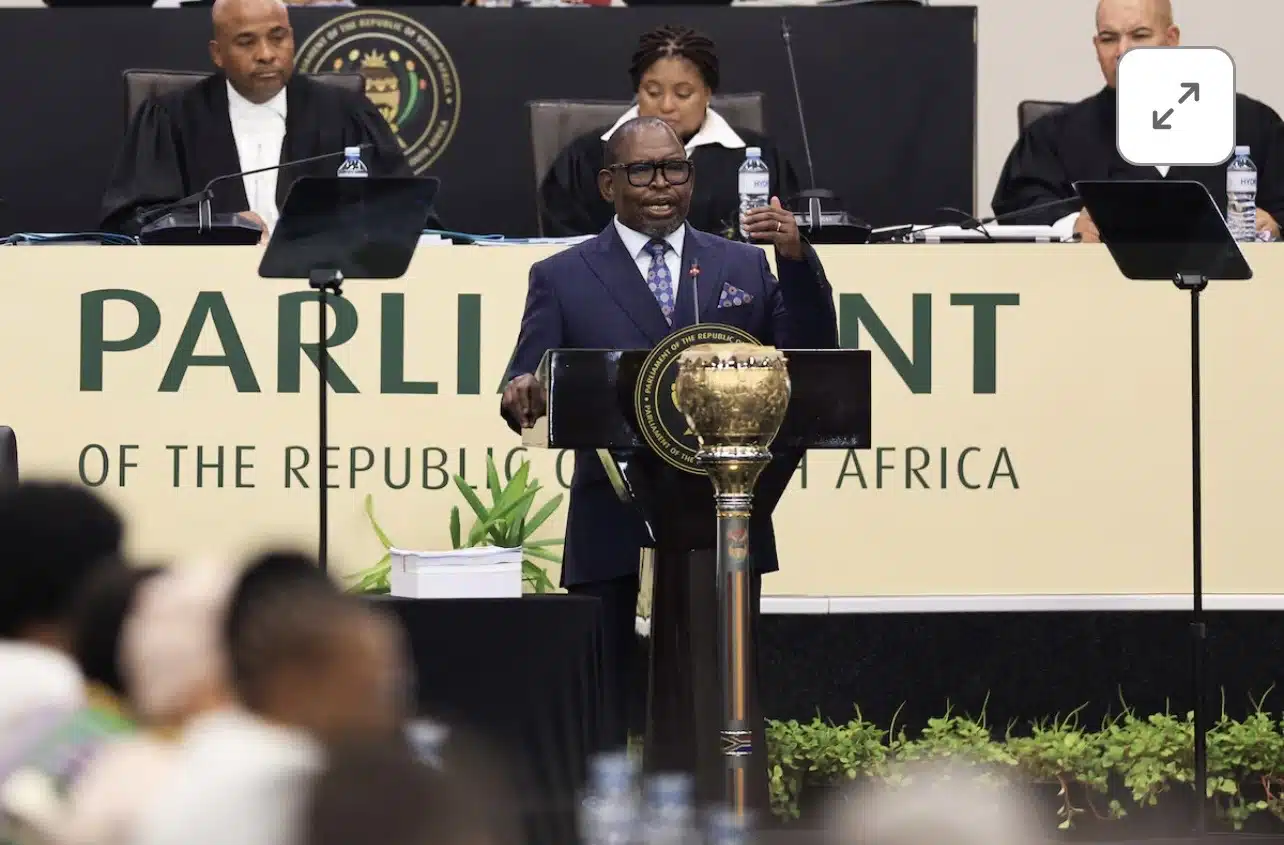

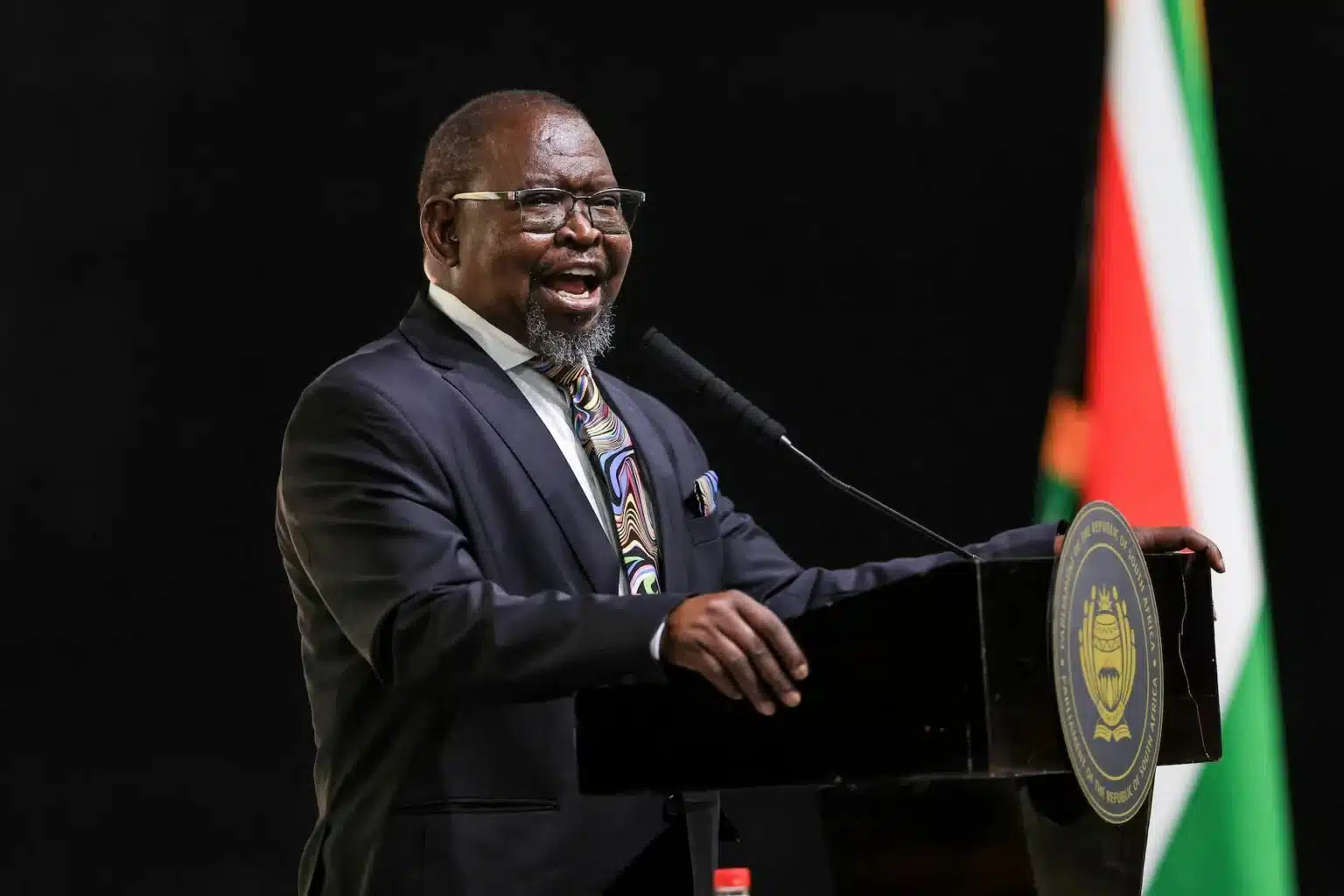


With commodity prices, especially gold and platinum-group metals, delivering an unexpected revenue tailwind in South Africa, Finance Minister Enoch Godongwana steps into Parliament on Wednesday, February 25, armed with the strongest set of fiscal numbers in years. Markets are pricing in a credible consolidation plan that could finally stabilise public debt and open the door to sovereign credit rating outlook upgrades.
This will be Godongwana’s second budget under the Government of National Unity (GNU) and comes at a delicate political moment. With 2026 shaping up as a year of heightened electoral sensitivity, the minister is widely expected to avoid any repeat of last year’s bruising VAT controversy. Analysts across the board, from PwC and Oxford Economics Africa to Nedbank and Bank of America, see little chance of headline tax rate increases.
The numbers tell a better story
National Treasury projections, as sketched in the November Medium-Term Budget Policy Statement, already show the consolidated budget deficit narrowing from an estimated 4.7% of GDP in the current fiscal year to around 2.9% by 2028/29.
The primary budget surplus, the key metric watched by rating agencies, is forecast to improve markedly from 0.9% of GDP in 2025/26 to 2.5% by the end of the medium-term expenditure framework.
Gross national debt, long stuck above 75% of GDP, is now projected to stabilise at 77.9% this year before declining toward 70% in the medium term and an ambitious long-term target of 60%. From April 2027, the government intends to formalise a fiscal anchor, essentially a debt-ceiling rule backed by the IMF, that will bind future spending.
The wind beneath these sails is unmistakably the mining boom. Surging gold prices (still hovering near record levels above $4,800–$5,000/oz in recent weeks) and strong PGM prices have resulted in a large increase in tax and royalty income for the government.
Mining tax intake is on track to roughly double to around $5 billion (R80 billion) this year and climb further in 2027, according to sector analysts. Sibanye-Stillwater CEO Richard Stewart captured the mood: “It will be a significant contributor to the fiscus if these commodity prices hold.”
What the markets are watching
The rand has already begun to price in optimism. On Monday it gained 0.4% to trade around $0.0625 (R15.99/$), supported by both the impending budget and a favourable global backdrop after the U.S. Supreme Court’s tariff ruling.
The benchmark 2035 government bond yield eased 2.5 basis points to 7.97%. Local investors are betting that a clean budget delivery will sustain the currency’s recent strength and keep borrowing costs in check.
Credit rating agencies are on high alert. Bank of America and Standard Chartered have publicly flagged the possibility of positive outlook revisions if Godongwana confirms debt stabilisation and faster deficit reduction. S&P’s upgrade in November 2025 already signalled improving confidence; a further notch higher would be a major psychological and financial win for the GNU.
Walking the tight rope
None of this is without risk. Spending pressures remain intense as youth unemployment, crumbling infrastructure, and the sudden termination of significant USAid support for HIV/AIDS programmes all demand attention. Growth forecasts for 2026 remain modest at 1.2–1.4%, with inflation expected to ease to around 3.5%.
Tax policy will therefore be about enforcement, not extraction.
Expect continued emphasis on the VAT Modernisation project (real-time invoicing), higher carbon tax rates from April 1 (headline rate rising 30.5% to $19.25/tCO₂e (R308)), modest excise duty increases on alcohol and tobacco, and tighter rules on trusts, crypto-assets, and transfer pricing.
Personal income tax relief, if any, will be modest and targeted enough to signal responsiveness in an election-sensitive year, but not enough to derail consolidation.
As PwC chief economist Lullu Krugel put it, the budget is likely to confirm debt stabilisation and lay out a credible path lower, exactly the language rating agencies and foreign investors want to hear.
Bottom line – A potential turning point
If Godongwana lands the speech cleanly on Wednesday, South Africa will have taken another meaningful step out of the fiscal danger zone that has haunted it for the better part of a decade. The combination of a commodity-driven revenue surprise and visible GNU discipline offers a rare window to rebuild credibility, lower risk premia, and free up fiscal space for the structural reforms the economy desperately needs.
For local asset managers, global emerging-market funds, and ordinary South Africans tired of load-shedding and stagnant growth, this week’s budget is more than numbers on a page; it is a litmus test of whether the post-2024 political reset can finally translate into tangible economic progress.
The rand, the bond market, and the rating agencies will deliver their verdict within hours of the minister sitting down. For once, the starting position looks favourable.