



Standard Bank Group, Africa’s biggest lender by assets with total assets of approximately $217 billion (R3.62 trillion) in 2025, is targeting compound annual headline earnings per share (EPS) growth of 8% to 12% from 2026 to 2028.
Accompanying targets include revenue growth of 7% to 10%, return on equity (ROE) of 18% to 22%, a dividend payout ratio of 45% to 60%, and credit loss ratios of 70-100 basis points.
However, weak South African growth and rising sovereign risk across Africa raise questions about how achievable those returns are.
2025 results supported by lower impairments and non-interest revenue.
The Johannesburg-headquartered group posted headline earnings of $2.97 billion (R49.2 billion) in 2025, an 11% increase year-on-year, with headline EPS rising 12% to 3,026 cents. ROE reached 19.3%, at the upper end of the prior 17-20% target range, while the cost-to-income ratio improved to 50.2%.
Credit impairment charges declined 5%, driving the credit loss ratio to 73 basis points from 83 basis points previously. Retail and business portfolios benefited from a somewhat stabilising South African environment and improved collections.
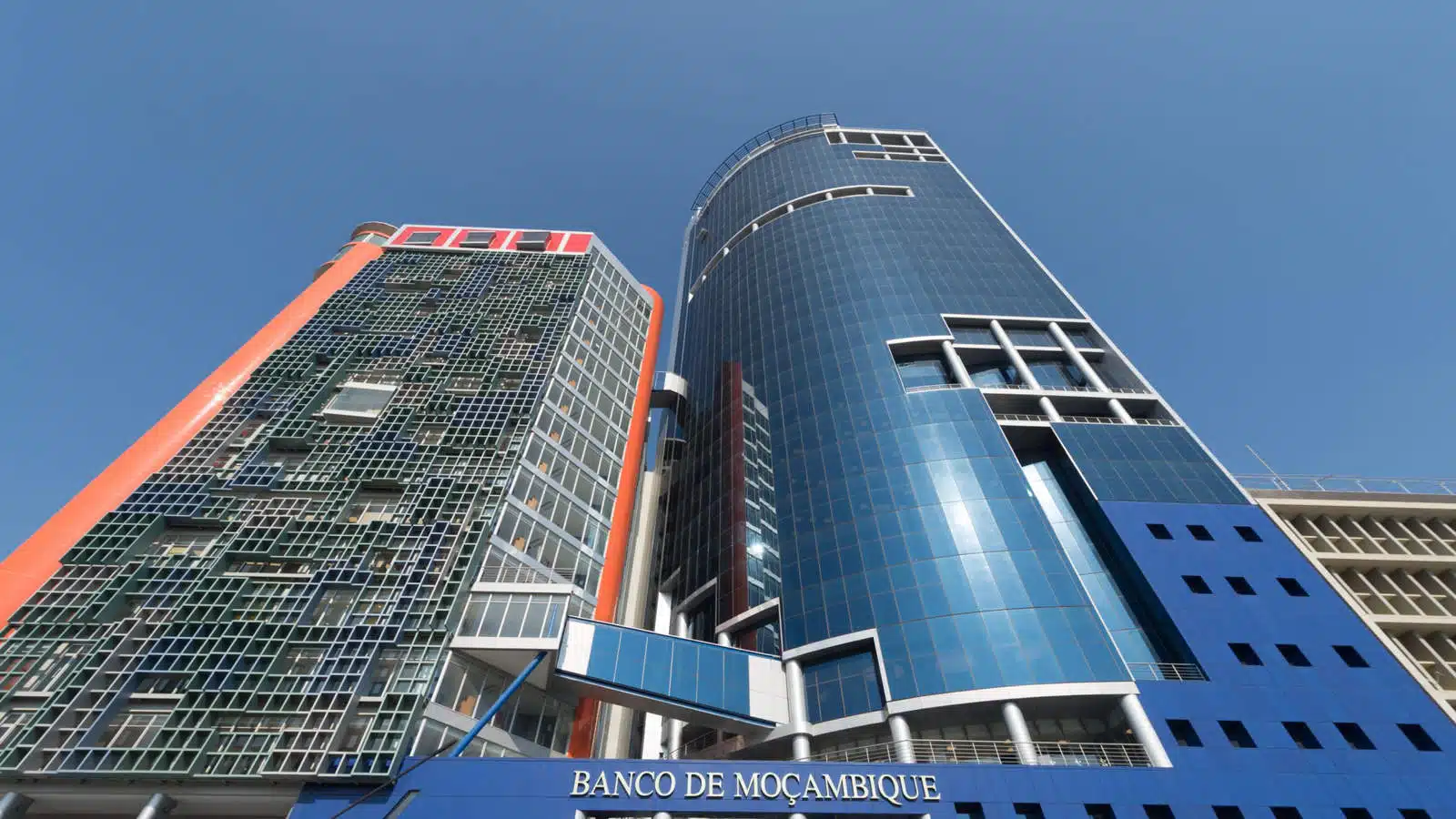
However, impairments rose in the corporate and investment banking book, largely due to sovereign credit deterioration in South and Central Africa, particularly Mozambique. Non-interest revenue advanced on fees and trading income, offsetting modest net interest income growth amid margin pressures.
Assets under administration and management increased 15% to $108 billion (R1.8 trillion). Operations outside South Africa accounted for roughly 40% of headline earnings and delivered faster constant-currency growth than the domestic market. The Common Equity Tier 1 ratio stood at 13.8%.
Medium-term targets challenged by weak economic indices and regional risks
The 8-12% EPS growth projection assumes continued profitability momentum but faces testing conditions. South African GDP growth registered 1.3% in 2025 and is forecast at around 1.4% for 2026, well below sub-Saharan Africa’s projected 4.6%. Domestic lending growth is likely to stay moderate at 7-9%, constrained by structural bottlenecks, unreliable energy supply risks, slow reforms, and subdued consumer and corporate demand.
Rest-of-Africa operations, a material contributor to earnings, introduce heightened volatility. Sovereign debt distress affects numerous countries across the region, with 21-22 low-income sub-Saharan nations classified as high risk of, or in, debt distress.
Currency depreciation, geopolitical tensions (including Middle East conflicts impacting supply chains and inflation), commodity price swings, and potential balance-of-payments pressures could elevate credit costs beyond the guided 70-100 basis points. Impairments tied to sovereign exposures have already materialised, and further deterioration in markets like Mozambique signals ongoing vulnerability.
Global banking ROE typically ranges 9-12%; Standard Bank’s 18-22% ambition sits well above this benchmark and will require sustained non-interest income growth, tight cost discipline, and contained impairments amid uneven regional performance and possible tighter global financial conditions.
Investment and economic implications amid elevated risks
For investors, the targets provide forward visibility but rest on assumptions of macro stabilisation that current indices only weakly support. Delivery risks include higher-than-expected credit losses from sovereign or corporate stress, adverse currency movements eroding earnings translation, and slower revenue realisation in volatile African markets. These factors could compress the dividend payout ratio and strain capital generation, despite the solid 13.8% CET1 position.
Economically, as the continent’s largest lender, Standard Bank’s balance-sheet expansion could facilitate incremental credit to corporates, SMEs, and households. Yet with South African growth remaining in the low 1% range, its role in driving broader recovery or rapid financial inclusion appears limited rather than catalytic.
Persistent regional risks; debt sustainability challenges, climate shocks, conflict, and external financing squeezes may constrain lending capacity and amplify systemic pressures across sub-Saharan markets.
Further details on assumptions will emerge at the group’s Capital Markets Day. The projections reflect the bank’s diversified franchise but demand close scrutiny given persistently low domestic GDP forecasts, elevated sovereign and currency risks in key African operations, and the significant gap between targeted ROE and global banking norms. Investors must weigh the potential 8-12% EPS compounder against these material downside risks and external uncertainties.