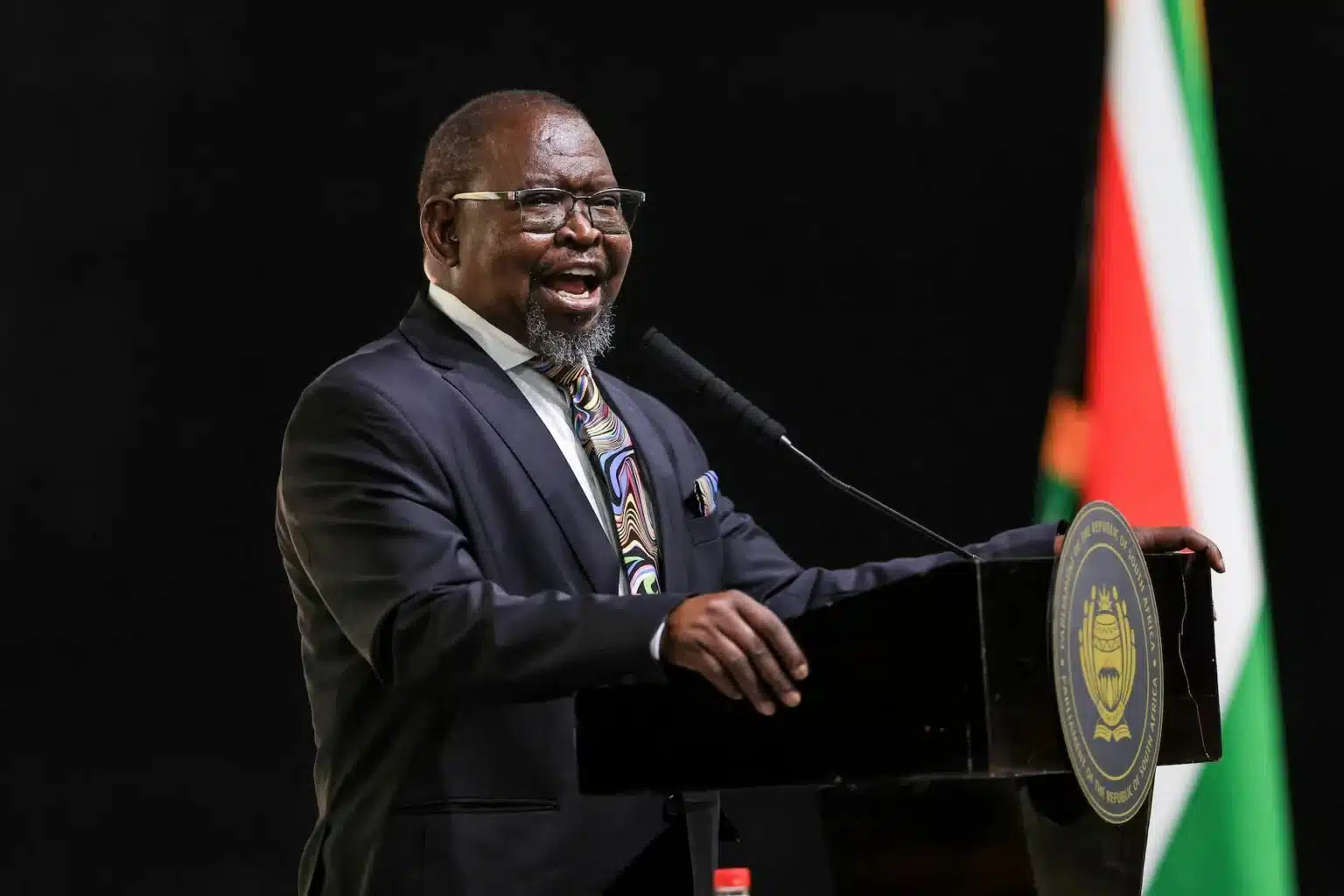

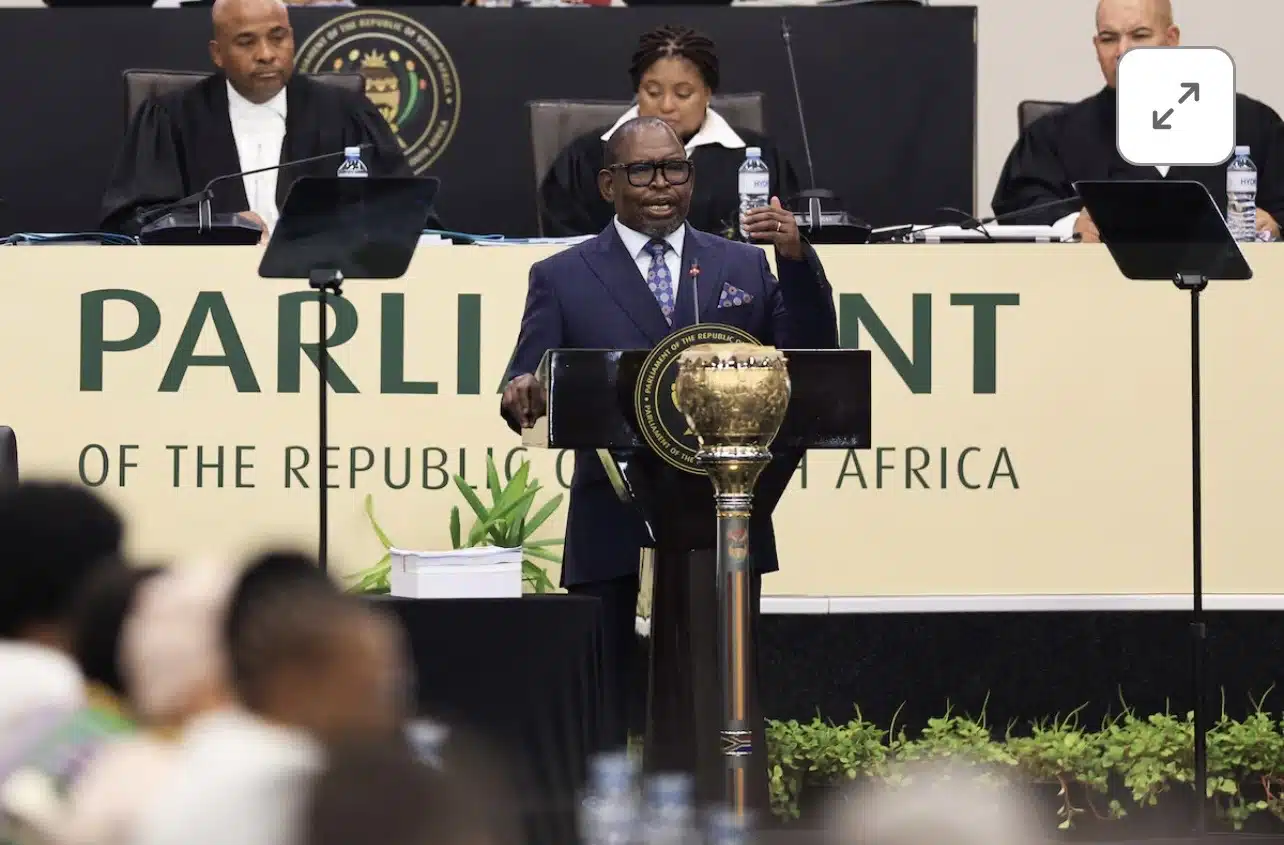


On Wednesday, Finance Minister Enoch Godongwana tabled South Africa’s R2.3 trillion ($144.84 billion) budget for the 2026/2027 fiscal year, setting the tone for what could be a pivotal period for the continent’s most industrialised economy.
The plan signals a government determined to consolidate fiscal gains while supporting growth.
From withdrawing contentious hikes in value-added tax (VAT) to proposing a new fiscal anchor and expanding savings incentives, the budget reflects an administration keen to rebuild credibility after years of debt strain and subdued expansion.
With revenue outperforming projections and debt stabilisation now in sight, Pretoria is attempting a careful balancing act to protect public finances without choking economic momentum.
1. VAT hike scrapped as revenue outperforms
A proposed VAT increase, which previously sparked heated parliamentary debates and compelled multiple iterations of last year’s budget, has been withdrawn after stronger-than-expected tax collections boosted the fiscal outlook.
Gross tax revenue for 2025/26 was revised upward by R21.3 billion ($1.34 billion) compared to the 2024/25 Budget estimate, supported by improved VAT, corporate income tax and dividends tax receipts.
“The improving fiscal position allows us enough room to withdraw the proposed tax increases, without putting fiscal sustainability or economic activity at risk,” Godongwana told lawmakers.
The reversal follows earlier attempts by the finance ministry to introduce a staggered 0.5% VAT increase over a two-year period after parliament rejected a 2% proposal.
2. Third consecutive primary surplus within reach
Africa’s largest economy is on track to post its third straight primary budget surplus, a key milestone in restoring fiscal credibility.
The primary surplus is projected at 0.9% of GDP in 2025/26, rising to 1.6% in 2026/27 and 1.9% in 2027/28, before reaching 2.3% by 2028/29. A primary surplus occurs when tax revenues exceed non-interest spending, marking a crucial step in slowing debt accumulation.
For investors, sustained surpluses suggest improved fiscal discipline, signalling a shift from emergency stabilisation toward gradual consolidation. For policymakers, they provide breathing room against rising debt-service costs.
3. Fiscal anchor to entrench long-term discipline
In a landmark move, the Treasury plans to introduce a principle-based fiscal anchor in the upcoming Medium-Term Budget Policy Statement, aiming to formalise fiscal discipline in law.
“Just as inflation targeting provided clarity and credibility to monetary policy, the fiscal anchor aims to entrench fiscal credibility,” the minister said.
Unlike rigid numerical caps, the proposed framework will focus on principles, allowing flexibility while safeguarding sustainability.
Authorities have warned that without sustainable public finances, debt-repayment costs would increasingly crowd out productive investment, highlighting the urgency of the regulation.
4. Debt stabilisation finally in sight after 17 years
South Africa’s public debt is projected to peak at 78.9% of gross domestic product in 2025/26 before stabilising to 77.3% in 2026/27 for the first time in 17 years.
Godongwana attributed the slightly higher debt last year to weaker nominal GDP growth and increased issuance amid strong investor demand, adding that debt ratios are expected to ease further to 76.5% by 2028/29.
If maintained, the return to stable debt levels could significantly lower borrowing costs and reinforce confidence among ratings agencies and global investors.
As debt pressures cool, the consolidated budget deficit is expected to continue to narrow from 4.8% previously estimated to 4.5% in 2025/26, to 4% and 3.1% over the next two years.
5. Savers and households get relief
To ease financial pressure and boost national savings, the government will fully adjust personal income tax brackets and rebates in line with inflation.
The annual tax-free investment limit rises from R36,000 ($2,267.00) to R46,000 ($2,897.98), while the retirement fund deduction cap increases from R350,000 ($22,040.30) to R430,000 ($27,079.35).
Officials argue South Africa’s savings and investment rates remain too low to support long-term capital formation. By incentivising household savings, the Treasury hopes to deepen domestic investment pools and reduce reliance on external financing, a strategic move in a volatile global environment.
6. Small businesses gain breathing room
The compulsory VAT registration threshold will increase from R1 million ($62,972.29) to R2.3 million ($144,836.27), offering relief to smaller enterprises grappling with rising costs.
In addition, the capital gains tax exemption for the sale of a small business by older owners rises from R1.8 million ($113,350.13) to R2.7 million ($170,025.19), applying to businesses valued at up to R15 million ($944,584.38).
The changes aim to stimulate entrepreneurship and improve succession planning in the small-business sector, a critical employment engine. By raising thresholds and exemptions, authorities are signalling a pro-growth stance while acknowledging inflation’s erosion of previous limits.
7. Sin taxes and fuel levies rise with inflation
Excise duties on tobacco and alcohol will increase in line with inflation, alongside adjustments to fuel levies.
The tax on a 20-pack of cigarettes rises to R23.58 ($1.48), while a 750ml bottle of spirits increases by R3.20 ($0.20). Fuel levies will also edge higher, with petrol rising by nine cents per litre and diesel by eight cents.
The government argues that illicit trade threatens jobs and fiscal revenues, prompting intensified enforcement efforts. While inflation-linked hikes are modest, they underscore South Africa’s effort to protect revenue streams without imposing broad-based tax shocks.
8. Infrastructure and social spending dominate allocations
Total spending for 2026/27 is set at R2.67 trillion ($168.14 billion), with more than 60% of non-interest spending directed to the social wage. Education remains the largest expenditure item at 23.7%, while health and social protection continue to absorb substantial allocations.
Infrastructure spending will exceed R1 trillion ($62.97 billion) over the medium term, led by state-owned companies. Transport and logistics account for the lion share, reflecting the government’s push to unlock growth bottlenecks.
By tilting spending toward infrastructure while protecting social programmes, the African nation is attempting to balance redistribution with long-term productivity gains.
A cautious but improving outlook
South Africa’s growth outlook is strengthening as fiscal reforms gain traction and debt pressures ease.
The country’s removal from the Financial Action Task Force grey list last year and its first credit rating upgrade in 16 years have bolstered investor sentiment.
Encouraged by the current momentum, the government now expects GDP growth at 1.6% in 2026, up from 1.4% in 2025, averaging 1.8% over the medium term and reaching 2% by 2028.
Still, risks persist, including logistics bottlenecks, fragile infrastructure and the recent outbreak of foot-and-mouth disease.