


Zimbabwe has moved faster than markets anticipated, suspending exports of all raw minerals and lithium concentrates with immediate effect, including consignments already in transit.
The decision, announced on Wednesday by Mines and Mining Development Minister Polite Kambamura, marks a sharp acceleration of Harare’s long-standing push to force more mineral processing to take place at home.
“Government expects cooperation of the mining industry on this measure, which has been taken in the national interest,” Kambamura said in a statement.
He added that authorities remain committed to transparency, in-country value addition and accountability in mineral exports.
The move effectively brings forward a lithium concentrate export ban that had initially been scheduled for January 2027, signalling a harder line on resource policy in one of Africa’s most mineral-rich economies. There are no indications as to when the suspension could be lifted.
What’s driving the ban?
At its core, the decision is about capturing more value from Zimbabwe’s vast mineral wealth.
By exporting raw ores and concentrates, the country earns a fraction of what it could generate if those materials were processed and refined domestically into higher-value products.
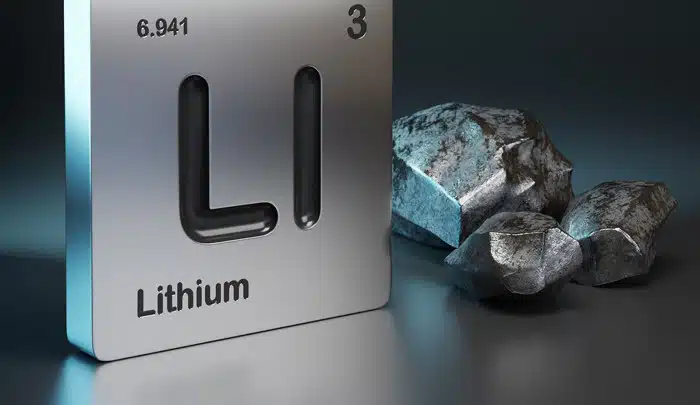
Zimbabwe is Africa’s largest lithium producer, with exports of lithium-bearing spodumene concentrate reaching 1.128 million metric tonne in the year ended December 2025, an 11% increase from the previous year.
Most of that material is shipped to China, where it is refined into battery-grade lithium chemicals used in electric vehicles and renewable energy storage.
While volumes have surged, policymakers argue that exporting unprocessed minerals leaves significant revenue and employment potential offshore.
Beneficiation, officials say, would deepen industrial linkages, expand the tax base and create skilled jobs across processing, logistics and services.
In a letter dated February 17 to the Chamber of Mines of Zimbabwe and seen by Reuters, the ministry cited concerns about “continued malpractices during the exportation of minerals” and said export procedures would be realigned. The review, it noted, is aimed at curbing leakages and improving efficiency within the system.
The clampdown also fits into a broader global pattern. As competition for strategic minerals intensifies, producing countries are tightening oversight of supply chains to prevent revenue losses and ensure domestic participation in processing industries.
Lithium, rare earths and other critical minerals are increasingly viewed not just as commodities but as strategic assets central to energy transition and industrial policy.
Industry response and investment implications
The mining sector, which accounts for 14.3% of Zimbabwe’s gross domestic product according to the World Bank, now faces pressure to accelerate downstream investment.
Chinese firms have driven much of the recent expansion in spodumene output, including Zhejiang Huayou Cobalt, Sinomine, Chengxin Lithium Group and Yahua.
Some companies have already begun shifting toward local processing. Huayou recently commissioned a $400 million lithium sulphate plant, an intermediate processing step that brings Zimbabwe closer to battery-grade production. Sinomine has announced plans for a $500 million lithium sulphate facility at its Bikita mine.
By tightening export rules, Harare is effectively raising the cost of inaction. Companies that delay beneficiation investments risk losing access to export channels. At the same time, authorities have signalled engagement rather than confrontation. “Zimbabwe will be engaging the industry in the near future on new expectations and way forward,” Kambamura said.
The policy introduces short-term uncertainty for exporters, particularly those reliant on established overseas refining networks.
However, it may also accelerate capital deployment into domestic processing plants, potentially reshaping Zimbabwe’s role in global battery supply chains.
Does the timing matter?
The suspension comes at a time when Zimbabwe’s macroeconomic indicators are showing tentative signs of stabilisation.
In January, the Southern African nation recorded its first single-digit local currency inflation rate in more than two decades, with the ZiG inflation rate falling to 4.1%, down sharply from 15% in December and 19% in November 2025.
Analysts attribute the improvement to tighter monetary policy and more stable foreign exchange conditions supported by a gold boom.
Bullion output is also expected to exceed the record 38.4 tonnes achieved in 2024, buoyed by firm prices and renewed investment.
Caledonia Mining Corporation, last month, disclosed plans to spend about $132 million in 2026 to advance development of what could become Zimbabwe’s largest gold mine, with production targeted for 2028 and steady-state output of around 200,000 ounces annually from 2029.
Against this backdrop, the export halt appears calibrated to consolidate recent economic gains.
By seeking to anchor more value domestically at a time of improving stability, authorities may be attempting to lock in revenue growth and strengthen foreign-exchange buffers.
Still, the success of the strategy will hinge on implementation.
Expanding processing capacity requires reliable power, efficient logistics and regulatory clarity. If managed effectively, the ban could deepen Zimbabwe’s integration into higher-value segments of global mineral supply chains. If not, it risks disrupting exports without fully realising the intended economic dividends.