



Kenya has secured a $509 million loan package from the African Development Bank (AfDB) to finance key infrastructure projects under the country’s economic transformation agenda, a top finance ministry official said on Monday.
The funding forms part of the lender’s Country Strategy Paper for 2024–2028, a framework designed to support Kenya’s medium-term development priorities by directing capital toward high-impact sectors.
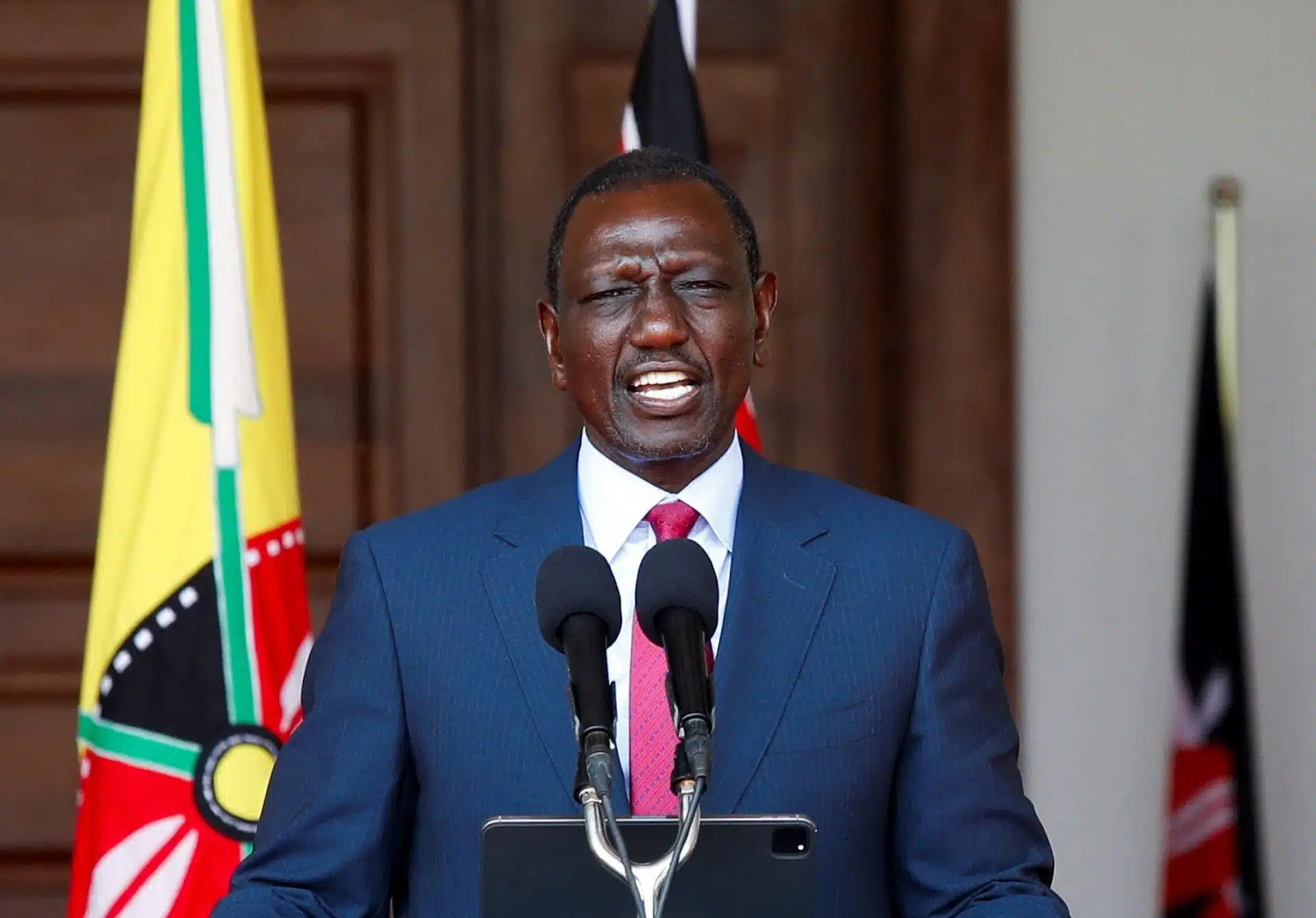
Chris Kiptoo, Principal Secretary at the National Treasury of Kenya, disclosed the agreement following a joint technical mission to review progress under the strategy alongside Alex Mubiru, Director General for East Africa at the AfDB.
“The African Development Bank has extended financing amounting to USD 509 million in support of Kenya’s development priorities, reinforcing our partnership under the current Country Strategy framework,” Kiptoo wrote in a recent X post.
He added that discussions focused on accelerating delivery of major projects across critical sectors.
“Discussions covered key flagship interventions, including investments in the health sector, water and road infrastructure, transmission networks, and the need to fast track projects through regular portfolio reviews to enhance absorption and impact,” he said.
The financing is expected to help address infrastructure gaps that continue to constrain productivity, while supporting the government’s efforts to sustain growth and improve public services.
Nairobi returns to global bond markets
The AfDB facility comes just days after Kenya successfully raised $2.25 billion through a dual-tranche Eurobond issuance, signalling renewed investor appetite for African sovereign debt.
The East African nation issued $900 million in seven-year bonds at a yield of 8.1% and $1.35 billion in 12-year notes at 8.95%, according to details reported by Bloomberg, citing a person familiar with the transaction.
Proceeds from the bond sale will be used to support government spending and refinance existing debt, including buyback offers of up to $350 million on its 8% amortising notes due in 2032 and up to $150 million on its 7.25% bonds maturing in 2028.
The move reflects a wider shift among African sovereigns returning to international capital markets earlier than expected, taking advantage of easing global borrowing conditions and narrowing spreads relative to US Treasury yields.
Credit upgrades and investor confidence
Kenya’s renewed access to external financing has been reinforced by improving sovereign credit ratings, which have helped ease investor concerns about near-term repayment risks.
Moody’s recently upgraded Kenya’s rating to B3 from Caa1, citing reduced default risk and improved external liquidity conditions, while maintaining a stable outlook. Similarly, Fitch Ratings affirmed the country’s B- rating with a stable outlook, signalling cautious confidence in the government’s reform trajectory.
More broadly, S&P Global Ratings said African sovereign credit quality has improved to its strongest level since late 2020, supported by policy reforms, stronger growth and stabilising external balances, although it cautioned that fiscal vulnerabilities remain.
Analysts say Kenya’s continued access to concessional and market-based financing could help stabilise the shilling and ease near-term external financing pressures.
However, structural challenges persist. Weak tax collection and a heavy public debt burden continue to weigh on Kenya’s fiscal outlook, highlighting the importance of maintaining budget discipline even as the government ramps up development spending.
The AfDB loan provides an additional buffer as Kenya seeks to balance its infrastructure ambitions with fiscal sustainability, ensuring that investment-led growth does not come at the expense of long-term debt stability.