


Kenya’s inflation eased to 4.4% in January from 4.5% in December, marking its slowest reading since August 2025 even as the country contends with severe food shortages brought on by one of the worst droughts in decades.
In its latest Consumer Price Index and Inflation report released on Friday, the Kenya National Bureau of Statistics (KNBS) said the moderation partly reflected base effects, following relatively higher prices during the same period last year.
Food, transport and utilities — which together account for more than 57% of the consumer price index basket — remained the main contributors to headline inflation in January. On a month-on-month basis, consumer prices rose by 0.6%, unchanged from December.
Kenya’s inflation remained largely contained through 2025, averaging around 4% and staying below the midpoint of the Central Bank of Kenya’s (CBK) 2.5%–7.5% target range.
The subdued inflation environment gave policymakers room to ease monetary conditions successively.
The latest reading mirrors a broader disinflation trend across major African economies, including Ghana, Ethiopia, Zambia and Zimbabwe, where improving macroeconomic conditions have helped cool price pressures.
Food inflation moderates despite drought
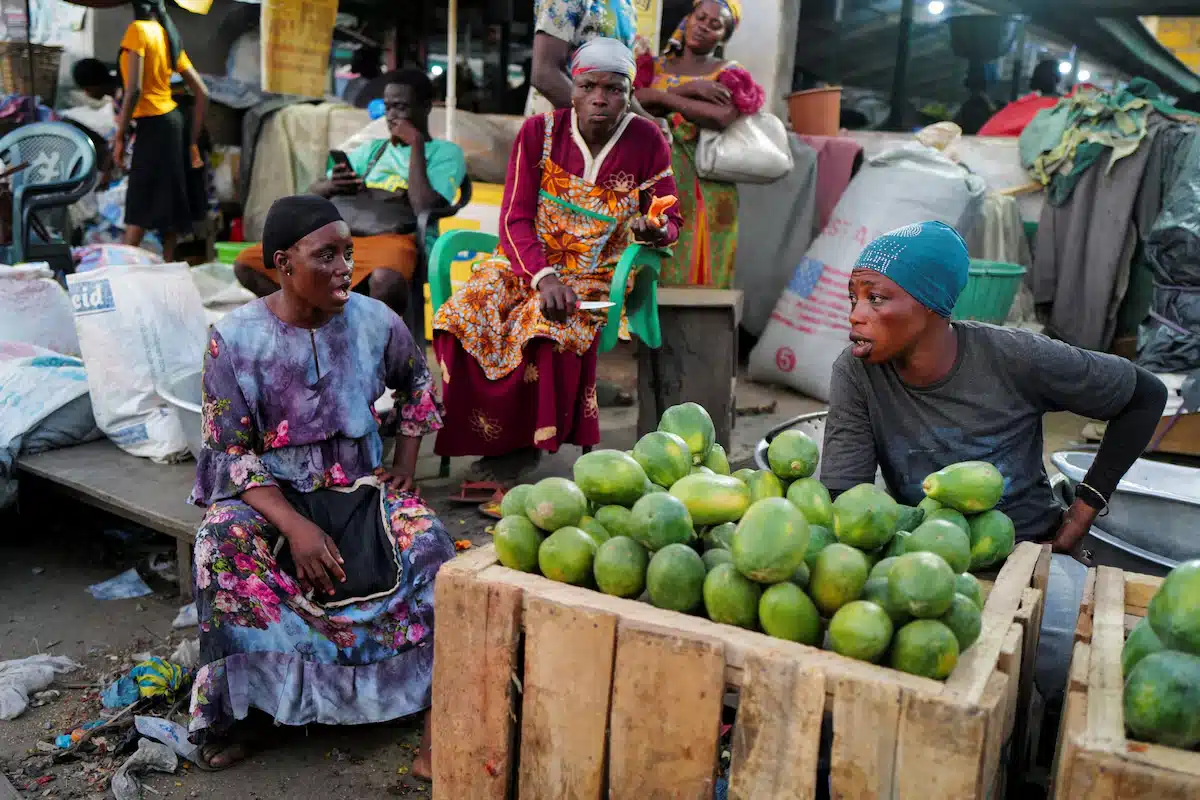
Food inflation slowed to 7.3% in January from 7.8% in December, despite a worsening food crisis following the shortest October–December rainfall season since 1981.
Eastern Kenya has been hit hardest by drought, with humanitarian agencies reporting mass livestock deaths, acute food and water shortages, and rising public health risks.
Already, the National Drought Management Authority has placed nine of the country’s counties on alert as food insecurity deepens.
With about 3.5 million people expected to require food assistance through May 2026, analysts warn that food prices could come under renewed pressure in the coming months.
Food inflation remains a major driver of headline inflation, accounting for more than 32% of the CPI basket.
Other price drivers and core inflation
Transport inflation eased to 4.8% in January from 5.2% in December, reflecting softer fuel costs. By contrast, inflation in housing, water, electricity, gas and other fuels accelerated to 2.2% from 1.6%, pointing to persistent pressure in household utilities.
Core inflation — which excludes volatile food and fuel prices — edged up to 2.2% from 2.0% in December. The increase reflects firmer prices for manufactured food products, health and education services, and information and communication technology, signalling mild underlying inflationary pressures.
Policy outlook
Despite the drought, the CBK said at its December policy meeting that inflation is expected to remain within target in the near term, supported by lower processed food prices, stable energy costs and a relatively steady currency.
The bank also expects economic growth to strengthen, with gross domestic product projected to expand by 5.2% in 2025 and 5.5% in 2026, underpinned by robust services activity, a rebound in agriculture and continued recovery in industry.
“This outlook is subject to risks, including adverse weather conditions, elevated trade policy uncertainties, and geopolitical tensions,” the CBK said.
On the back of these expectations, the central bank cut its policy rate to 9%, marking its ninth consecutive reduction aimed at stimulating credit growth and supporting economic activity.
However, the worsening food situation poses a renewed risk to the inflation outlook, potentially narrowing the scope for further easing. As policymakers prepare for their next meeting in February, markets and businesses will be closely watching how the CBK weighs drought-related dangers against its growth-centered agenda.