
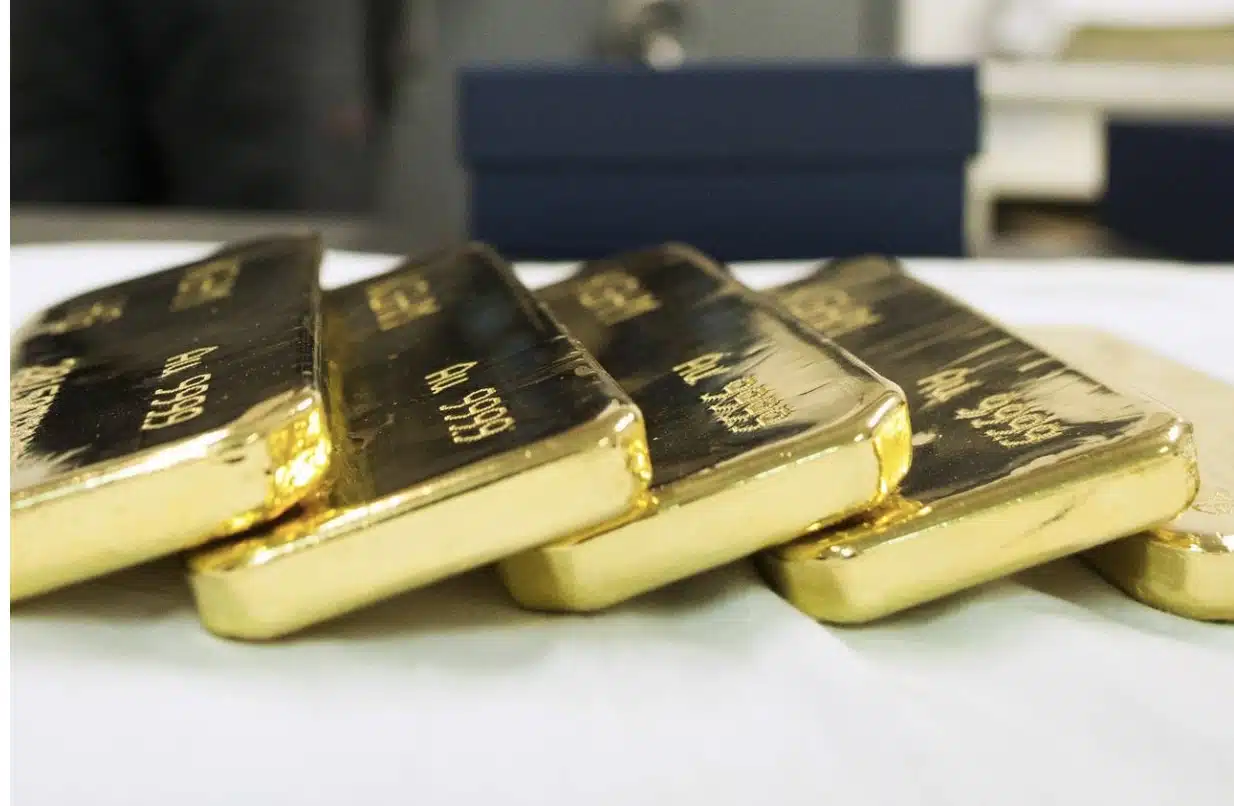


Uganda’s central bank announced on Monday that it will commence a domestic gold purchasing programme this month. This move will make the East African country join other policymakers worldwide who are building up their gold holdings after a surge in the metal’s price.
The plan, which was first discussed two years ago, would help to boost Uganda’s reserves and cushion the economy from risks in international financial markets.
Adam Mugume, the bank’s Executive Director for Research and Economic Analysis, told Reuters that they were finalising contracts with gold refineries to carry out fire assaying and refining of the gold to the required purity levels. “If all goes as planned, we should be able to purchase at least 100 kg of gold between March and June 2026.” He said.
Regional strategy for economic safety and growth
Global spot gold prices climbed over 2% to a record $5,395.99 per ounce on Monday, triggered by a flight to “safe-haven” assets following U.S.-Israel military strikes on Iran.
Against this backdrop of geopolitical volatility, Uganda follows in the footsteps of Kenya and the Democratic Republic of Congo (DRC), both of which recently moved to diversify their wealth through gold.
The shift comes as Uganda’s gold industry sees explosive growth:
- Export Surge: Gold exports hit $5.8 billion last year, a 76% increase over 2024.
- Industrial Shift: While “wildcat” artisanal miners still lead production, the country recently opened its first large-scale, Chinese-owned mine capable of refining 1.2 tons of gold annually.
Uganda set up its first bullion processor, Africa Gold Refinery, in 2017, and several others have since been established, processing both locally produced gold and shipments from neighbouring Democratic Republic of Congo.
The true Hard Currency
Market experts suggest that the current climate has decoupled gold from its usual relationship with the U.S. dollar. Even as the dollar remains strong, investors are sprinting toward “hard assets” like precious metals and oil to hedge against global instability.
As analyst Paul Dobson noted to Bloomberg earlier today, while a prolonged conflict might eventually drive investors toward Treasuries, gold currently stands as the preferred shield against economic drag.