



Nigeria’s food inflation rose for the second consecutive month to 14.3% in March, up from 12.1% in February, hitting a five-month high as energy market volatility filters through the economy.
The latest reading marks the highest level since November and extends a reversal of the brief easing seen late last year. By January, food inflation had returned to single digits for the first time in over a decade, reflecting better supply conditions.
Nigeria remains heavily exposed to global energy shocks despite being Africa’s largest oil producer and home to the continent’s biggest refinery, as it continues to rely significantly on imported refined fuel. That exposure has become more pronounced amid recent disruptions in global oil markets linked to geopolitical tensions and constrained energy shipping routes.
Since the escalation of the Iran conflict in late February, petrol prices have risen by more than 50%, while diesel is up over 70%, increasing transport and logistics costs across supply chains.
Transport costs continue to play a significant role in food inflation given Nigeria’s structural logistics challenges, including weak cold-chain infrastructure and heavy reliance on road freight for inter-state food movement.
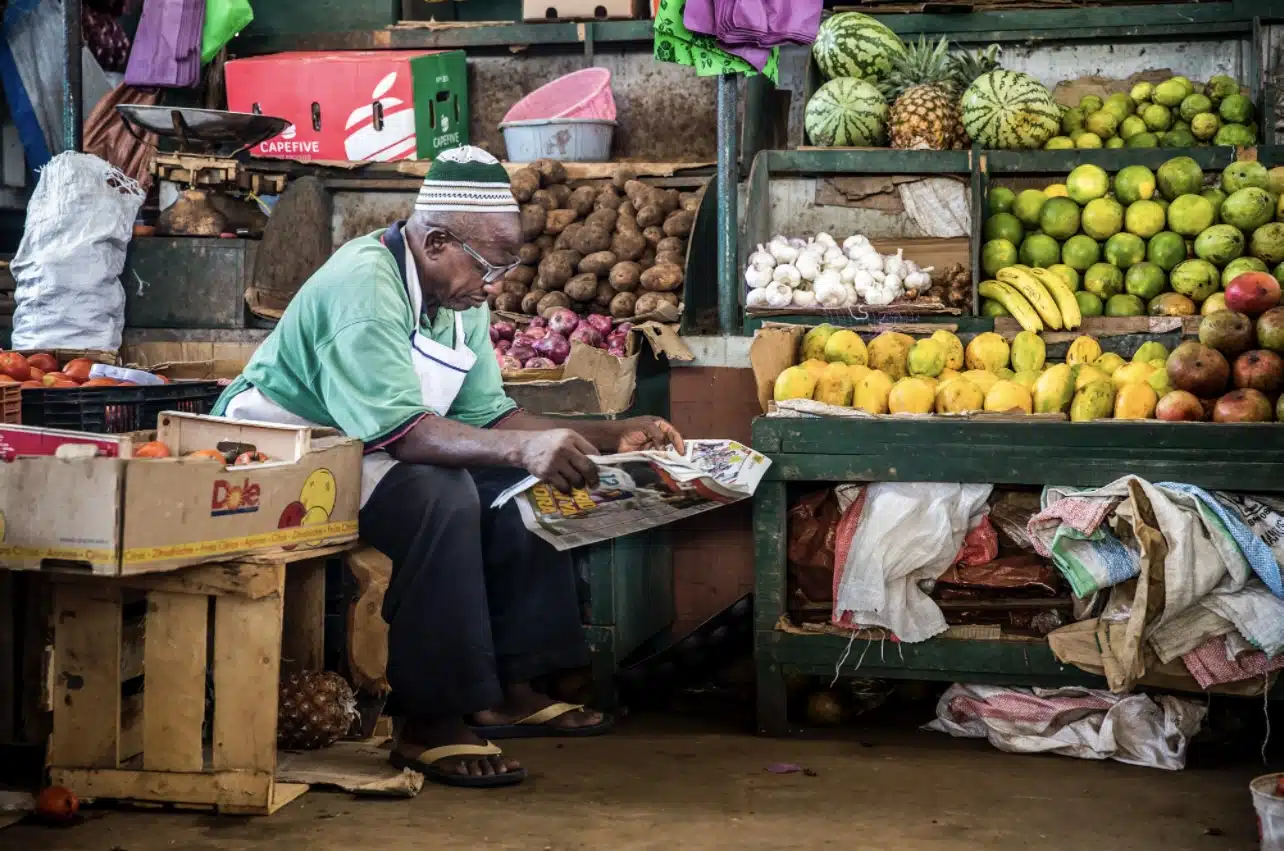
According to new data from the National Bureau of Statistics, the renewed uptick in food inflation was driven largely by higher prices of key staples including yam, ginger, cassava tuber, shelled groundnuts, Irish potatoes, dried unground rice, fresh tomatoes and cassava flour.
These price increases likely reflect a combination of supply constraints, seasonal agricultural patterns and elevated distribution costs.
Monthly momentum eases, but annual pressures persist
While annual food inflation continued to rise, monthly momentum showed a slight easing. Month-on-month food inflation slowed to 4.17% in March from 4.69% in February, suggesting a modest cooling in short-term price pressures even as the broader trajectory remains upward.
Headline inflation also rose for the first time in a year, increasing to 15.38% in March 2026 from 15.06% in February, signalling a renewed acceleration in overall price pressures across the economy.
The most striking detail in the March report was the sharp jump in monthly headline inflation, which rose to 4.18% from 2.01% in February, more than doubling within a month and pointing to a pickup in underlying price momentum.
Core inflation signals broader underlying pressure
Core inflation, which excludes volatile food and energy items, also pointed to deeper inflationary pressures. It rose to 16.21% year-on-year in March from 15.8% in February, though still significantly below the 27.12% recorded in March 2025, reflecting the broader disinflation trend over the past year.
On a monthly basis, core inflation surged to 4.03%, compared with 0.89% in February, a 3.14 percentage point increase that suggests non-food, non-energy goods and services are increasingly contributing to price acceleration.
Policy outlook tightens as inflation risks rebuild
The latest data complicates the near-term outlook for the Central Bank of Nigeria ahead of its next monetary policy meeting.
At its previous meeting, the central bank cut rates to 26.5%, citing sustained disinflation, relative stability in fuel prices and improving food supply conditions — assumptions that now face renewed pressure.
The latest reading also moves against the bank’s broader objective of returning inflation to single digits in the near term, raising the likelihood that monetary policy will remain restrictive for longer than previously anticipated.
Lagos-based Cordros Research had projected headline inflation at 15.4% for March, with monthly inflation expected at 4.2%, as geopolitical tensions and energy market volatility feed into domestic price dynamics.
Despite coming in slightly below some expectations, the March data reinforces the view that inflationary pressures remain entrenched, with fuel costs and exchange rate risks continuing to shape Nigeria’s price trajectory.