
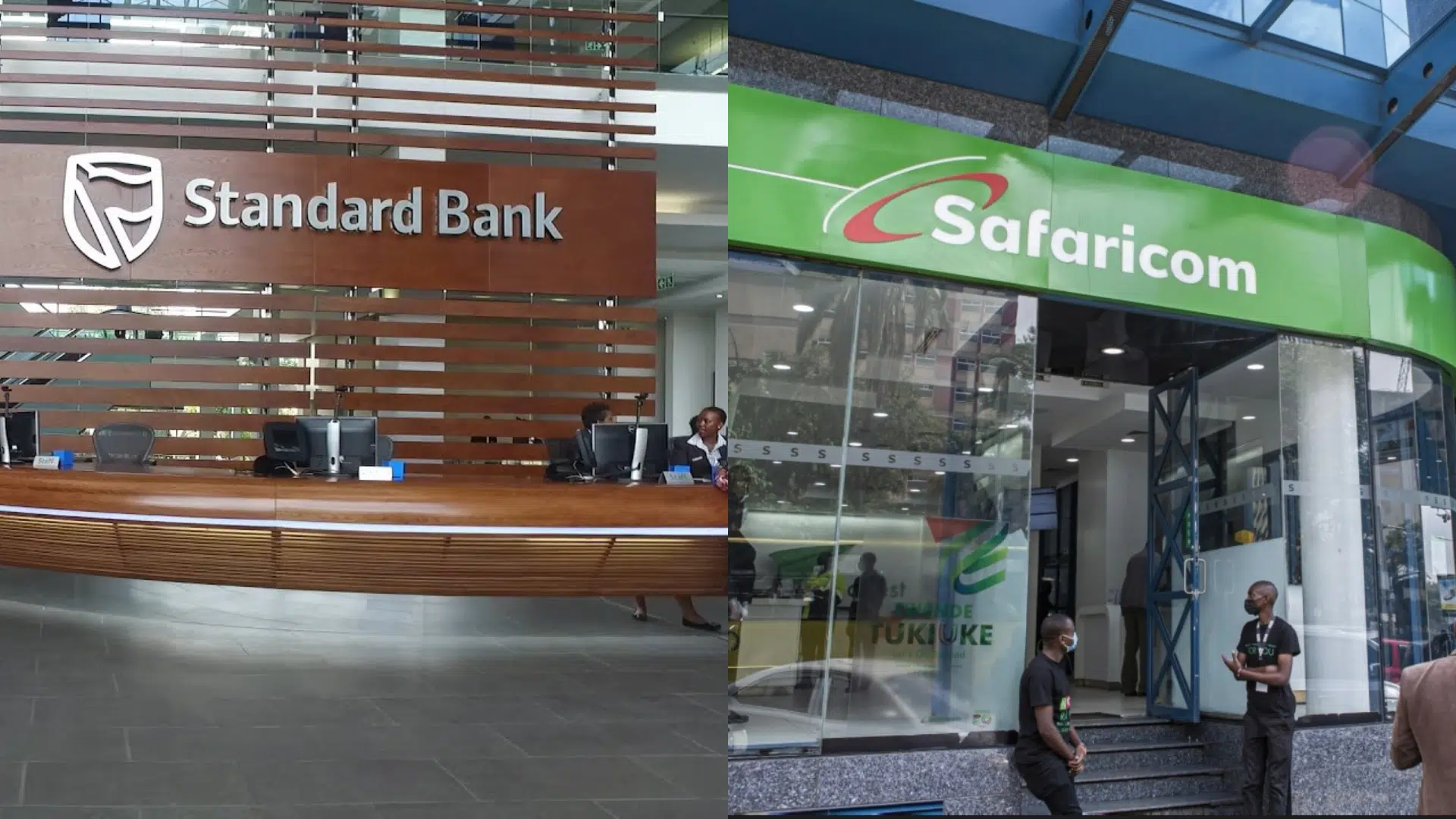


Standard Bank Group has agreed to provide a $138 million funding facility to Safaricom Telecommunications Ethiopia, supporting network expansion and service rollout in the country, the companies announced.
The financing, arranged and funded solely by Standard Bank, will be used to accelerate infrastructure deployment and deepen coverage as Safaricom Ethiopia scales its operations in Africa’s second-most populous country.
“We are honoured to have partnered with Safaricom again in enabling and supporting their ongoing vision of driving digital transformation and inclusion in Ethiopia,” said Anthony Ndegwa, executive vice president for telecoms, media and technology at Standard Bank’s corporate and investment banking unit.
Kenyan-owned Safaricom entered the Ethiopian market in 2021 after securing a telecom licence under the country’s long-awaited liberalisation programme. The unit has since grown to more than 10 million 90-day active customers, according to company disclosures, marking one of the fastest telecom rollouts in a market long dominated by the state-owned incumbent, Ethio Telecom.
From reform promise to bankable scale
Ethiopia’s telecom opening was initially viewed as a high-risk policy experiment. Currency controls, limited capital-market depth and regulatory uncertainty made long-term commercial financing difficult, leaving equity as the primary source of funding for new entrants.
That profile has begun to shift as Safaricom Ethiopia’s operating scale improves. Ethiopia has an estimated 85.4 million mobile connections, yet internet penetration remains at roughly 21% of a population of about 134 million, according to World Bank-aligned data, underscoring both the scale of demand and the depth of under-penetration.
Ethio Telecom still dominates the sector, reporting around 83 million subscribers, but Safaricom’s growing footprint has intensified competition in pricing, data services and customer experience.
For lenders, subscriber traction matters. Telecom projects typically become debt-financeable only once revenue visibility improves and operating costs stabilise. The move from equity-led funding to structured debt suggests Safaricom Ethiopia has crossed an early threshold of commercial viability.
Why Standard Bank stepped in
For Standard Bank, the transaction reflects a strategic bet on digital infrastructure as a core driver of African growth.
Telecom networks increasingly underpin payments, data services and digital financial products in Africa. Safaricom’s M-Pesa is easily Africa’s biggest mobile money success story, and it’s not alone. The likes of MTN in Ghana have MoMo, and Orange Money in Francophone Africa.
The lender is positioning itself upstream of future growth in mobile money, merchant payments and enterprise connectivity. Sectors that depend heavily on network infrastructure.
Standard Bank’s recent activity points to a strategy centred on regional scale and big-ticket infrastructure finance.
In November 2025, the group launched a Representative Office in Egypt, extending its corporate and investment banking footprint into North Africa’s largest economy. In parallel, it has been active in Kenya, including exploratory merger discussions involving NCBA, as it looks to deepen its presence in high-growth markets.
On infrastructure, the bank has positioned itself at the centre of some of Africa’s largest recent transactions. It acted as adviser and facilitated funding for the R11.5 billion fibre transaction underpinning the Vodacom–Maziv joint venture, a cornerstone deal in South Africa’s digital infrastructure build-out.
It also served as joint financial adviser, sole mandated lead arranger and underwriter on the R23 billion acquisition of logistics group Barloworld by NewCo, a transaction that reshaped the company into a majority black-owned business.
Safaricom’s expansion logic
For Safaricom, the facility provides growth capital without shareholder dilution at a critical stage of market build-out.
“As a business, we are guided by innovation and strategic partnerships,” said Peter Ndegwa, chief executive of Safaricom Plc. “This enables individuals, communities and businesses to access affordable financial products and services that meet their needs.”
The Ethiopian unit remains loss-making, but group disclosures show those losses have narrowed sharply over the past year, reflecting improving operating leverage as customer numbers rise and network utilisation deepens.
Recent half-year results from the company show the net loss was sharply reduced by over 50% from Ksh 28.2 billion to Ksh13.3 billion year-on-year. Service revenue more than doubled to Ksh 6.19 billion, showing that revenue growth is outpacing operational costs.
This move is the latest in a series of strategic moves for Safaricom. On December 4, 2025, Vodacom Group announced plans to increase its stake in Safaricome to 55%, in a $1.6 billion mega-deal.
Risks remain, particularly on FX
The financing does not remove Ethiopia’s structural risks. Foreign-exchange availability remains constrained, and capital repatriation is still tightly managed despite ongoing reforms. Any hard-currency exposure into the country carries embedded FX risk that lenders must actively price and manage.
Local banking executives acknowledge both the opportunity and the challenge.
“Digital and financial inclusion in the African market has been one of the key objectives to break barriers and enable individuals, communities and businesses to access affordable financial products and services,” said Taitu Wondwosen, head of Standard Bank in Ethiopia.
Regulatory risk also persists. Telecom liberalisation remains politically sensitive, and the state continues to play an outsized role through Ethio Telecom’s infrastructure ownership and market position.
Why the deal matters beyond Safaricom
The significance of the transaction extends beyond one operator.
Debt financing typically returns before equity in frontier markets. When commercial banks are willing to provide long-dated funding, it signals growing confidence in cash-flow durability rather than short-term policy optimism.
The deal also highlights a shift in African banking. Large pan-African lenders are increasingly willing to underwrite project-level risk in frontier markets, rather than waiting for multilateral lenders to lead.
That confidence could influence financing conditions for other Ethiopian infrastructure sectors, including data centres, energy transmission and logistics, which face similar FX and regulatory constraints.
The deal reinforces the credibility of Ethiopia’s liberalisation agenda at a time when attracting private capital remains a policy priority. For African banks, it underscores a broader shift toward funding the continent’s digital rails rather than purely transactional corporate lending.