
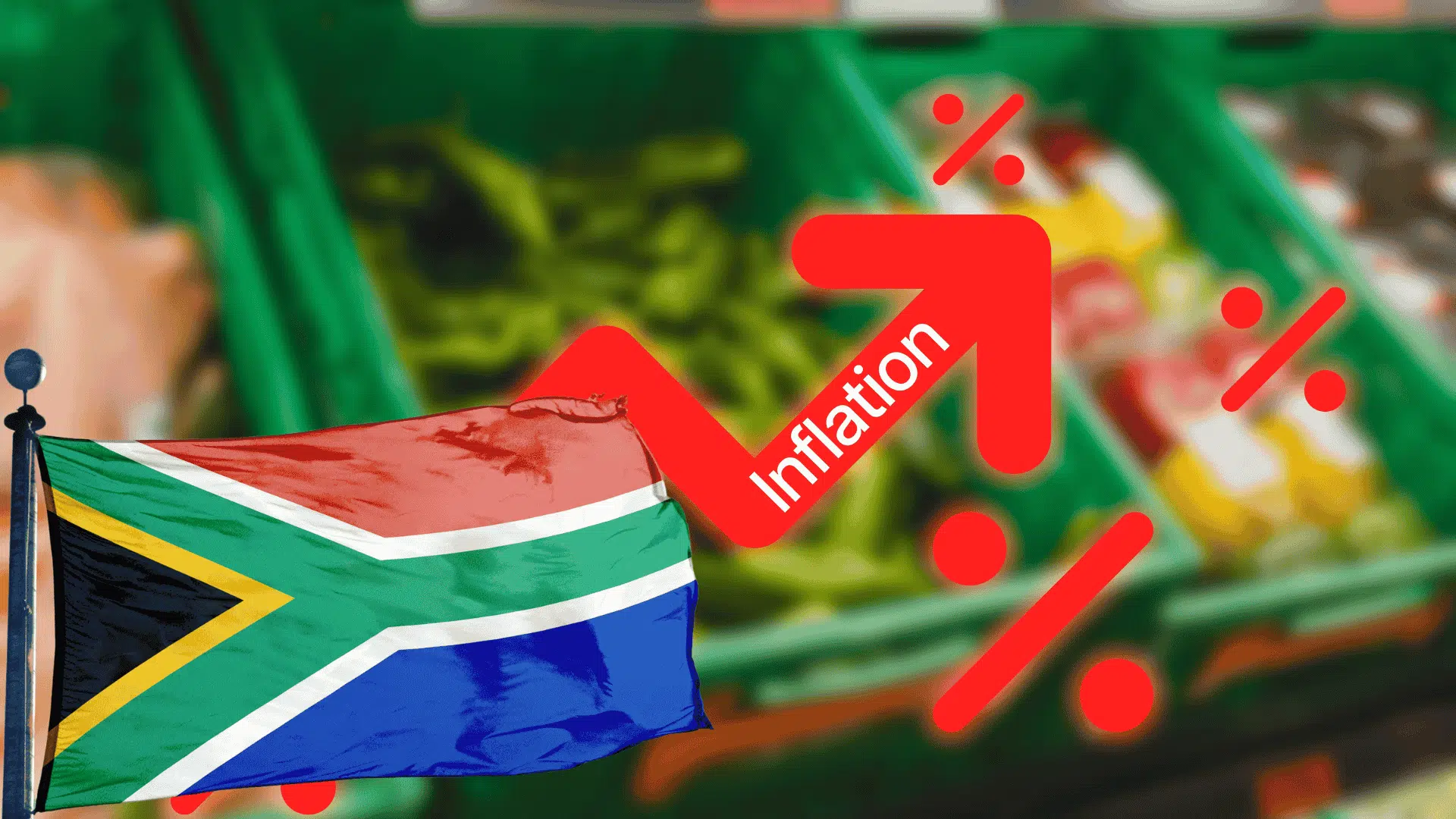


South Africa’s headline consumer price index rose to 3.1% year-on-year in March 2026, up from 3.0% in February and exactly in line with economist forecasts, according to data released by Statistics South Africa on Wednesday.
The print keeps inflation comfortably within the South African Reserve Bank’s target range of 3% plus or minus 1 percentage point. On a monthly basis, the CPI accelerated to a 0.6% gain from 0.4% the previous month.
Key category drivers
Housing and utilities provided the strongest upward push, rising to 5.1% from 4.8% in February. Insurance and financial services edged higher to 4.6% from 4.5%, while food and non-alcoholic beverages eased slightly to 3.6% from 3.7%.
Transportation costs continued to weigh on the headline figure but with less drag, narrowing to a 1.6% decline from 2.1% the month before.
Core inflation, which strips out food, non-alcoholic beverages, fuel and energy, also climbed to 3.2% from a seven-month low of 3.0%, signalling modest underlying price momentum.
The South African Reserve Bank kept its repo rate unchanged at 6.75% at its March meeting by a unanimous decision that reflected upside inflation risks stemming from the ongoing war in Iran. Prime lending rates remain at 10.25%.
April acceleration expected
Analysts warn that April’s inflation reading will likely show further upward pressure. Domestic fuel prices have already jumped sharply this month following global oil market turbulence tied to Middle East tensions and a weaker rand. Additional factors include a new 21 cents per litre fuel levy and Eskom’s 8.76% electricity tariff increase implemented on 1 April.
Economists now project headline inflation to average around 4.0% for 2026 overall, a notable upward revision from earlier estimates. Transport, which carries significant weight in the CPI basket, is seen pushing fuel inflation toward 8% or higher in coming months, with second-round effects potentially feeding into food production and broader services.
Market implications
For global investors, the data reinforces South Africa’s relatively contained inflation backdrop compared with many emerging markets, yet highlights vulnerability to external shocks. With rates on hold and the forward curve pricing in limited near-term easing, attention shifts to the May monetary policy meeting and the extent to which fuel-driven pressures alter the policy trajectory.
The rand showed limited reaction to the March CPI release, consistent with the print matching expectations. However, sustained oil price volatility and currency weakness could keep imported inflation elevated, testing the central bank’s ability to look through first-round effects while safeguarding the inflation anchor.
Broader context
March’s modest uptick marks a pause in the disinflation trend seen earlier in 2026, when headline CPI had cooled from 3.5% in January to 3.0% in February. Six of the 13 main CPI categories recorded higher annual rates in March, underscoring a broadening albeit still mild price impulse.
Investors and corporates will watch April’s release closely for early evidence of pass-through from higher pump prices to consumer goods and services. Any breach toward the upper end of the target band could delay anticipated rate cuts well into 2027.