
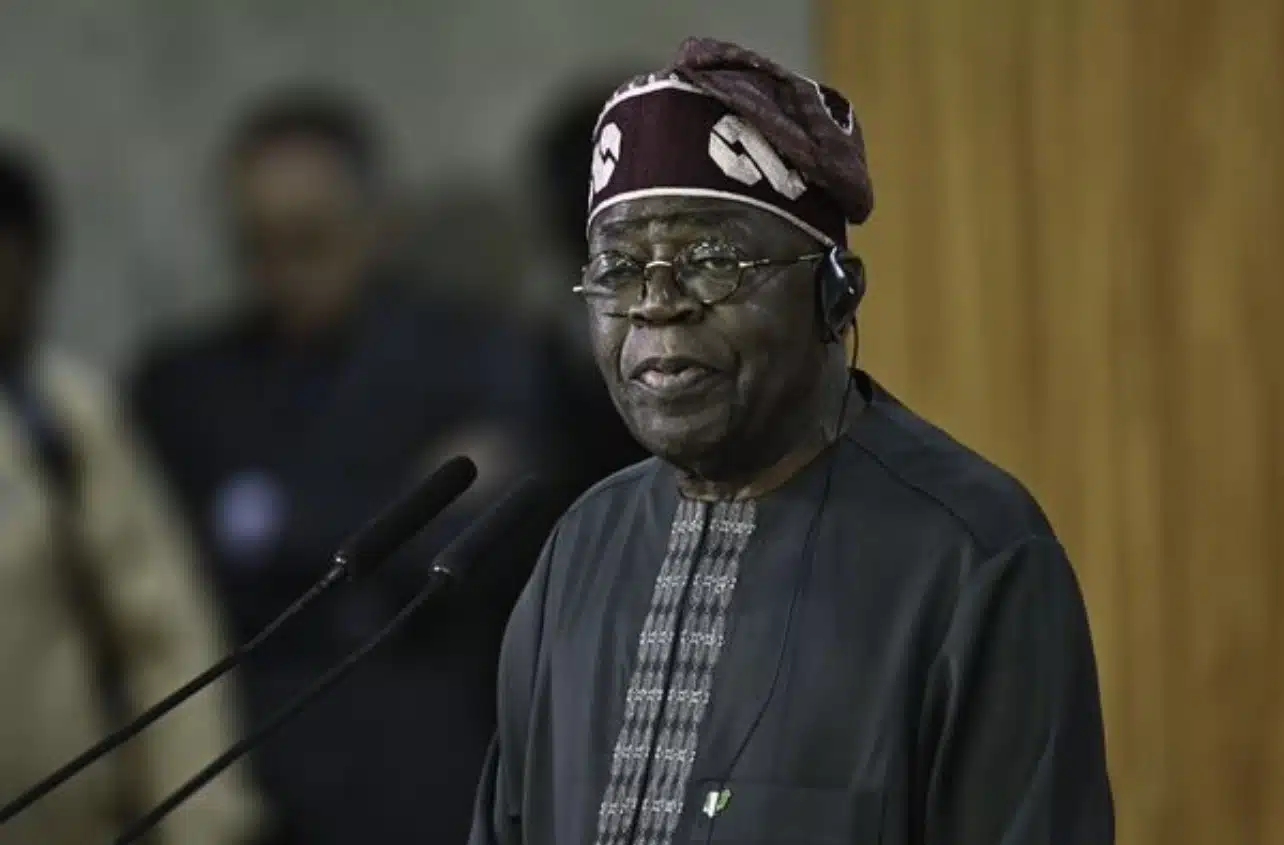


Nigerian President Bola Tinubu on Thursday formally requested parliamentary approval for a $516.3 million syndicated foreign loan to finance the initial 120 kilometres of the long-planned Sokoto-Badagry Superhighway.
The flagship project is designed to forge a modern economic corridor between Nigeria’s agrarian northwest and the bustling commercial hub of Lagos.
Led by Deutsche Bank and backed by a partial risk guarantee from the Islamic Corporation for the Insurance of Investment and Export Credit (ICIEC), the insurance arm of the Islamic Development Bank, the facility carries a nine-year tenor including a three-year grace period and interest capped at CME SOFR plus 5.3% per annum. The federal government will provide counterpart funding of approximately $166 million (₦265.5 billion) for land acquisition, compensation and ancillary works.
The proposed six-lane highway, part of a broader 1,000- to 1,068-kilometre greenfield corridor, will run from Illela in Sokoto State through Kebbi, Niger, Kwara, Oyo and Ogun states before terminating in Badagry, Lagos.
Once complete, it is expected to slash travel times dramatically (some officials have cited potential reductions of up to 48 hours between Sokoto and Lagos), lower haulage costs, ease logistical bottlenecks, stimulate internal trade and bolster food security by speeding the movement of agricultural produce from northern breadbaskets to southern markets.
The request, read in the Senate on Thursday by President Godswill Akpabio, forms part of Tinubu’s medium-term borrowing strategy for critical transport infrastructure under his “Renewed Hope” agenda. It follows closely on the heels of a $747 million Deutsche Bank-led syndicated loan secured last July for the first phase of the separate 700-kilometre Lagos-Calabar Coastal Highway, Nigeria’s largest-ever single road-financing deal at the time.
Debt context and fiscal calculus
Nigeria’s public debt stock stood at roughly $111 billion (₦159 trillion) at the end of 2025, yet the country’s debt-to-GDP ratio remains relatively contained at around 32.3% in 2026 according to projections by the International Monetary Fund, well below many emerging-market peers. That relative fiscal space has given the Tinubu administration room to pursue ambitious borrowing for growth-enhancing capital projects, even as debt servicing consumes a growing share of government revenue amid elevated global interest rates and naira volatility.
Analysts note that foreign-currency loans of this nature carry exchange-rate risk, particularly given the naira’s post-2023 float. However, the involvement of a top-tier international arranger and a multilateral credit enhancement signals improving lender confidence in Nigerian project execution following the administration’s headline-grabbing subsidy removal and currency liberalisation reforms.
Economic payoff vs. political pushback
For global investors and multilateral partners, the project offers a textbook example of infrastructure-led diversification. Nigeria’s road network, long cited as a major drag on competitiveness, currently imposes billions of dollars in annual losses through delays, spoilage and inflated transport costs. A reliable North-South superhighway could unlock agricultural value chains, reduce post-harvest losses, and support broader industrialisation goals along the corridor.
The Federal Executive Council has already green-lit the financing arrangement, and Senate approval is widely expected given the legislature’s previous endorsements of larger borrowing packages.
Not everyone is convinced. Former Vice President Atiku Abubakar, a leading opposition voice, quickly criticised the request as “reckless borrowing,” urging greater fiscal prudence and warning against accumulating debt without iron-clad guarantees of transparent execution and returns.
Market implications
For fixed-income and project-finance investors, the deal underscores Deutsche Bank’s continued appetite for Nigerian sovereign-backed infrastructure exposure and the growing role of Islamic Development Bank Group risk mitigants in African deals. Successful delivery of the initial 120 km stretch could pave the way for larger tranches to complete the corridor, and potentially open the door to private-sector participation via public-private partnerships.
In a country where infrastructure spending has historically lagged GDP growth, the Sokoto-Badagry project represents a high-stakes bet: that targeted, bankable mega-projects can deliver outsized economic multipliers even in a challenging fiscal environment. Markets will be watching not just the loan approval but the speed and quality of on-ground execution in the months ahead.