


Business conditions across Africa showed a mixed picture in February, with most markets recording modest growth or outright contraction, according to the latest S&P Global Purchasing Managers’ Index (PMI) surveys.
Nigeria rebounded strongly after a January dip ended its 13-month expansion streak, supported by higher new orders, improved affordability, and currency stability.
Yet Uganda remained the continent’s top performer, posting a PMI of 54.2 in February, up from 52.6 in January, marking 13 consecutive months of private sector growth.
In contrast, Zambia slipped back into contraction for the first time in nearly a year, joining Ghana and Egypt as markets facing weaker demand and rising cost pressures. South Africa, Mozambique, and Kenya hovered around the 50 no-change mark, highlighting subdued momentum.
Across the continent, inflationary pressures and currency volatility—exacerbated by rising commodity prices and geopolitical uncertainty—continued to weigh on business confidence.
Uganda: Growth streak hits 13th month
Uganda’s private sector continued its upward momentum in February, with the PMI climbing to 54.2 from 52.6 in January, marking 13 consecutive months of expansion. Businesses reported broad-based growth, with output, new orders, and employment all rising as stronger client demand supported operations across manufacturing, wholesale, retail, and services.
Purchasing activity picked up, and shorter supplier lead times allowed firms to build inventories more efficiently, signalling operational resilience. Companies also expressed optimism for the year ahead, expecting conditions to remain supportive despite global uncertainties.
Cost pressures persisted, with rising input and wage expenses prompting firms to lift selling prices. Yet headline inflation eased to 2.9% year-on-year in February, a trend Christopher Legilisho, Economist at Standard Bank, said “implies that the Bank of Uganda’s restrictive stance has been effective.”
Nigeria: Strong rebound amid falling prices
After January’s dip ended a 13-month expansion streak, Nigeria’s private sector returned to growth in February as inflationary pressures cooled to their weakest level in over six years. The headline PMI climbed to 53.2 from 49.7, signalling a renewed improvement in operating conditions.
The rebound was underpinned by stronger new orders, improved affordability, and currency gains, which helped cool input costs and selling price inflation across all monitored sectors.
Rising demand translated into a faster pace of output growth—the strongest in four months—although overall business sentiment remained relatively subdued despite improving in February.
Amid ongoing structural reforms, Muyiwa Oni, Head of Equity Research West Africa at Stanbic IBTC Bank, said “the Nigerian economy is on track to grow by 3.86% y/y in Q1:26, and…4.1% y/y in 2026.”
South Africa: Business confidence plunges to 4½-year low
South Africa’s private sector confidence fell to its lowest level in four-and-a-half years in February, even as overall business conditions remained stable. The headline index held at 50.0 for a second consecutive month, signalling unchanged operating conditions after the contraction seen in late 2025, but pointing to limited growth momentum at the start of the year.
Despite subdued demand, inflationary pressures were contained, supported by currency strength and softer fuel costs.
“Soft inflation, helped by a strong rand, continued to keep cost pressures at bay in February,” said David Owen of S&P Global Market Intelligence, noting that lower selling prices and expected rate cuts in 2026 could help lift customer spending.
Egypt: Rising prices and weak demand deepen contraction
Business conditions in Egypt worsened in February, with the headline PMI easing to 48.9 from 49.8 in January, reflecting weaker output, continued job cuts, and rising purchasing costs.
S&P Global said all five sub-components of the index signalled softer operating conditions compared with the prior month, as new orders declined across manufacturing, wholesale, retail, and services amid subdued demand.
Escalating geopolitical tensions fuelled imported inflation, with higher oil and metal prices pushing input costs to their fastest increase since May 2025.
“Firms will therefore be keen to see commodity markets settle, especially as recent periods of high input cost inflation have typically constrained business output,” said David Owen, Senior Economist at S&P Global Market Intelligence.
Renewed exchange-rate volatility adds another layer of risk, raising the prospect of sustained external price pressures.
Ghana: Demand expands but fails to lift output
Ghana’s PMI remained in contraction territory in February, rising slightly to 49.2 from 48.5 in January, signalling a softer deterioration in business conditions. The reading stayed below the 50.0 no-change mark despite a return to growth in new orders following January’s dip.
The expansion in demand was modest and failed to lift output, which declined for a second consecutive month. Firms also pared back purchasing activity, even as employment rose marginally.
A stronger cedi drove a fourth straight fall in input costs, while staff costs declined for the first time in more than five-and-a-half years, extending a ten-month sequence of output price reductions. “Should we see further improvements in new orders in the months ahead, however, we would expect output to follow suit,” said Andrew Harker, Economics Director at S&P.
Zambia: Private sector slips back into contraction
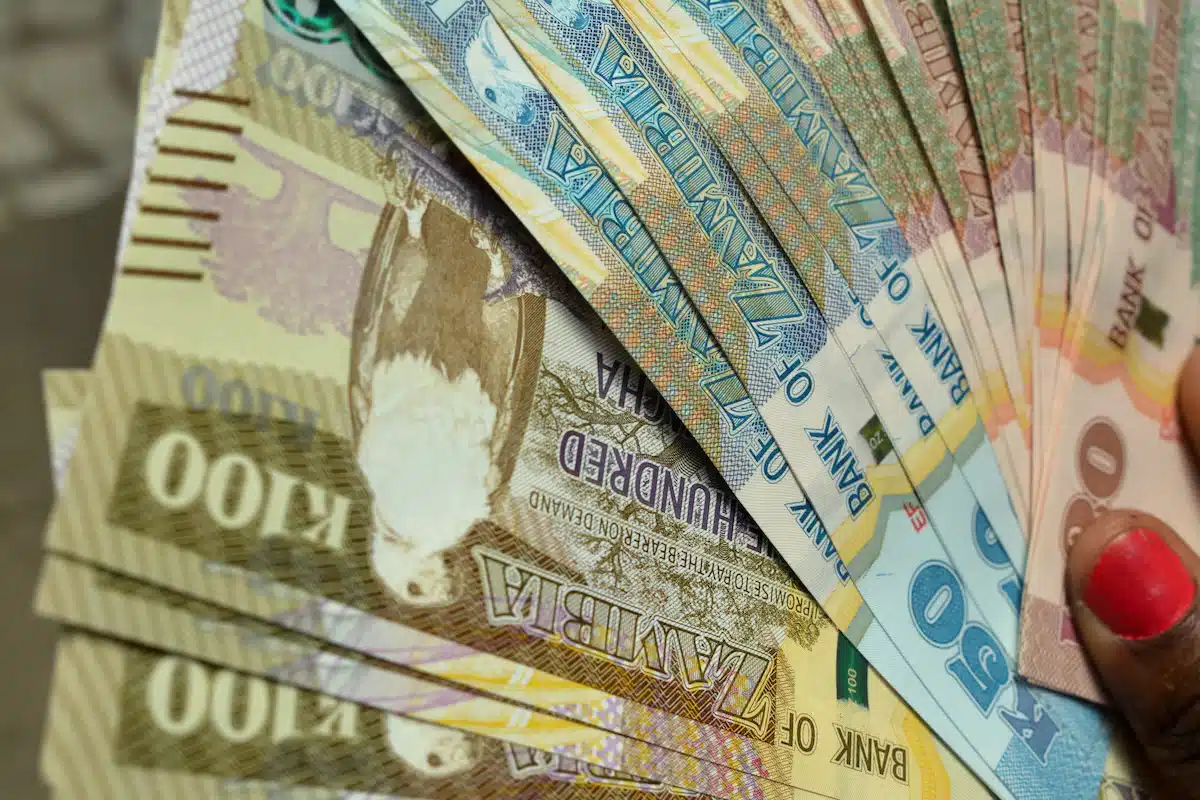
Zambia’s private sector slipped back into contraction in February, with the PMI declining to 49.3 from 50.2 in January, marking the first deterioration in business conditions in nearly a year. The reversal was driven by renewed weakness in output and new orders as firms struggled to compete with cheaper imported goods amid a sharp appreciation of the kwacha, which gained 17.7% to 18.79 per dollar since the start of the year.
As demand softened and competitive pressures intensified, companies scaled back purchasing activity and reduced inventories, while jobs rose slightly.
On the positive side, lower import prices helped ease purchase costs, resulting in a decline in overall input prices despite a slight uptick in wage bills. Despite the near-term slowdown, businesses remained broadly optimistic about output prospects over the year ahead.
Kenya: PMI creeps closer to 50 as growth momentum fades
Kenya’s private sector edged closer to stagnation in February, with the PMI declining for a third consecutive month to 50.4 from 51.9 in January, signalling only a marginal improvement in business conditions. The latest reading marked the weakest expansion in the current six-month growth streak.
Output growth nearly stalled as new orders rose at their slowest pace in six months. While total sales volumes increased slightly—supported by product launches, marketing drives, and price promotions—firms also cited weak purchasing power and heightened competition as constraints.
Sector performance was mixed, with gains in construction, wholesale and retail, and services offset by declines in agriculture and manufacturing.
“Although macroeconomic conditions have improved, the broader economy has not yet seen the benefits; sections of the private sector are still feeling the strain,” said Christopher Legilisho, Economist at Standard Bank.
Meanwhile, inflationary pressures eased to a three-month low, bolstering business confidence.
Mozambique: Sentiment hits nine-year low amid slow recovery
Business confidence in Mozambique plunged to its lowest level in more than nine years in February, reflecting persistent economic and operational challenges. The seasonally adjusted PMI edged up slightly to 50.2 from 50.0 in January, indicating only marginal month-on-month growth in private sector activity.
Despite the modest expansion, firms reported subdued optimism for the year ahead, with the PMI future expectations sub-index at its lowest since 2017.
Companies cited lingering fiscal pressures, foreign exchange constraints, and adverse weather affecting agricultural output as key factors weighing on sentiment.
Inflation dynamics were mixed: food prices surged to 3.1% month-on-month in January due to weather-related supply shocks, while headline inflation eased to 3% year-on-year from 3.2% in December, reflecting favourable base effects.
Analysts note that progress in a programme by the International Monetary Fund and LNG project developments could lift confidence later in 2026, though rising inflation risks may prompt the central bank to pause interest rate cuts, limiting immediate relief for businesses.