
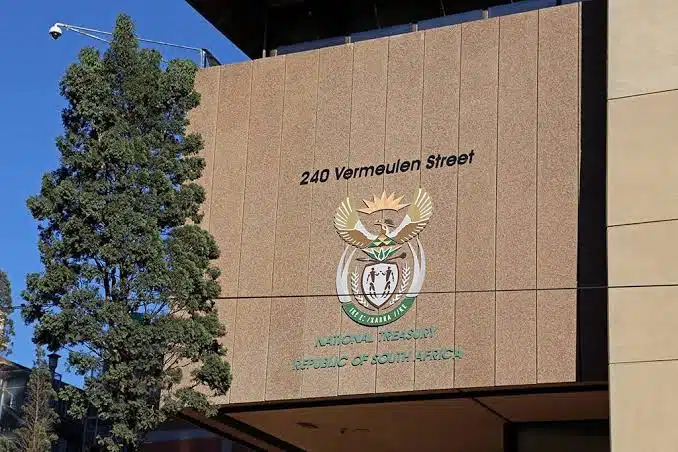


South Africa’s National Treasury has explicitly warned that it possesses “little room” to shield the economy from a looming fuel-price shock unleashed by the Middle East conflict. With Brent crude surging more than 40% to above $100 per barrel (R1,666) since U.S.-Israeli strikes on Iran began on February 28 disrupting the Strait of Hormuz and roughly one-fifth of global supply, the government faces a stark reality: offsetting even the direct knock-on to petrol and diesel would cost “tens of millions of rand,” according to Treasury Director-General Duncan Pieterse.
The risk is already materialising. Independent projections show that April 1 fuel-price adjustments, the next scheduled reset, will potentially the largest monthly increase in recent years. Local companies are unlikely to absorb the hit; instead, costs will cascade to consumers via transport, logistics, and food prices.
Macroeconomic headwinds: inflation, growth, and the debt anchor
South Africa’s public debt-to-GDP ratio peaked at 78.9% in 2025 and is projected to ease only marginally to 77.3% by the end of 2026, leaving the consolidated fiscal deficit at 4.5% of GDP for the current fiscal year. With borrowing already stretched and the post-pandemic consolidation plan in place, subsidies or levy cuts, tools deployed in 2022, are off the table. The Treasury has remained silent on relief measures ahead of April’s adjustment.
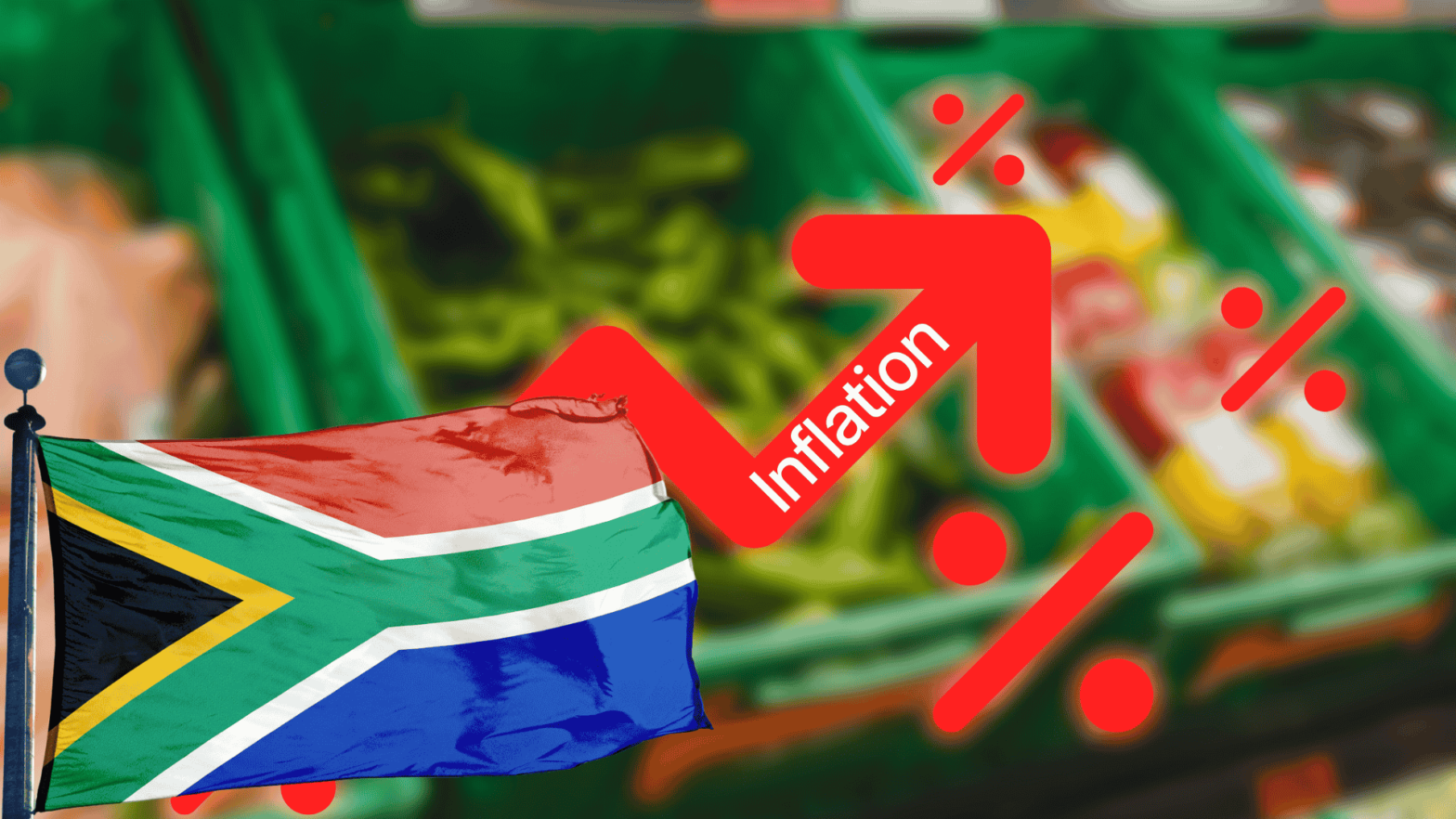
The inflation arithmetic is unforgiving. Headline CPI stood at 3.2% in March; PayInc forecasts a jump to 4.5% in April and an annual average of 4.4% for 2026, breaching the South African Reserve Bank’s preferred anchor and complicating rate-cut expectations. Economist Dawie Roodt warns that sustained $100 oil could push CPI above 4% within two months; a prolonged spike risks SARB pausing or even reversing easing, keeping real rates elevated and choking domestic demand.
Growth faces a quantifiable dent. Standard Bank economists calculate that every $10 sustained increase in crude oil reduces South African GDP growth by 20 basis points. With Brent up $30–40 from pre-conflict levels, the mechanical drag alone could shave 60–80bp off 2026 forecasts enough to derail the “fragile economic recovery” already pencilled in.
Add secondary channels — fertiliser prices, freight surcharges, and a weaker rand (already at a three-month low), and the risk of stagflation-lite becomes material. A worst-case fuel-shortage scenario, per economist Elize Kruger, could echo Covid-era mobility restrictions, triggering a confidence shock that “brings the economy to its knees.”
Sectoral pain points for businesses
Transport and logistics sit in the crosshairs. The Road Freight Association has already flagged diesel-driven cost surges feeding directly into consumer goods pricing. With SA’s refining capacity diminished and reliance on Middle East imports acute, supply-chain friction compounds the price effect.
Agriculture and food processors confront dual hits: higher diesel for planting/harvesting plus elevated fertiliser costs. These sectors, already margin-thin, will pass costs downstream, amplifying headline inflation and squeezing household budgets in a country where fuel forms a disproportionate share of lower-income spending.
Retail and manufacturing face classic cost-push dynamics. Absent pricing power in a high-unemployment environment, some firms may absorb part of the shock, eroding profitability. Others will hike prices, risking volume erosion. PayInc’s February transaction data (nominal value R1.33-trillion, +12.5% y/y) showed tentative recovery momentum; that impulse is now at risk of reversal.
Investor implications: currency, yields, and portfolio shifts
For fixed-income investors, the calculus shifts toward caution. Higher inflation expectations will pressure the yield curve; SA government bonds (already pricing in consolidation) could see risk premia widen if fiscal space appears even tighter. The rand’s vulnerability, a classic oil-importer currency, adds imported inflation and potential capital-flow volatility.
Equity investors confront sector dispersion. Cyclical names tied to domestic consumption and logistics face margin compression. Mining and resources may enjoy some offset from higher global commodity prices, while Sasol, with its synthetic-fuel exposure, offers a partial hedge. Defensive plays (staples with pricing power) and renewable-energy names could outperform as the crisis underscores the urgency of diversification away from imported fossil fuels.
Foreign investors in EM assets will reassess SA risk. The combination of external shock, limited fiscal buffers, and potential SARB hawkishness raises the bar for inflows. Portfolio rebalancing toward oil exporters (Nigeria, Angola) or commodity beneficiaries becomes logical.
Bottom line: A structural wake-up call
The Treasury’s candour is sobering but unsurprising: at 78.9% debt-to-GDP and a 4.5% deficit trajectory, the fiscal cupboard is bare. Absent rapid de-escalation in the Middle East, South Africa faces a textbook supply-shock transmission — higher prices, slower growth, tighter policy, precisely when the economy was supposed to consolidate post-2025 fragility.
Long-term, the episode accelerates the imperative for strategic reserves management, refinery revival, and renewable scale-up. In the near term, however, the numbers are stark: $100+ oil, record fuel hikes, 4.5% inflation print, and sub-1% growth risks. Markets and corporations must price in limited government backstops and prepare for a tougher 2026 than budgeted.