
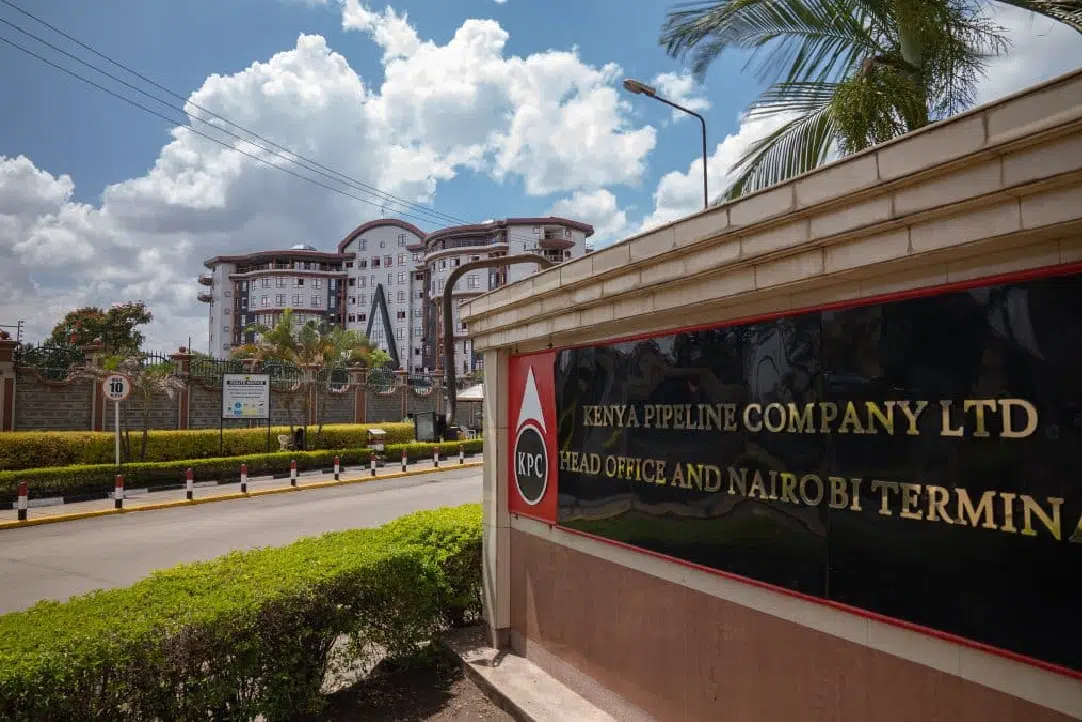


The Kenyan government has raised KSh106 billion, about $820 million, from the initial public offering (IPO) of the Kenya Pipeline Company (KPC).
The IPO is Kenya’s first significant equity listing since Safaricom in 2008. A 2015 REIT was the only intervening offer, raising less than a third of its target. This IPO saw the government divest a 65 percent stake in KPC, the first time an African country has publicly listed a state-owned company in the oil and gas ecosystem
Although Kenya is not an oil-producing nation, KPC is the major actor in its oil sector, alongside the National Oil Corporation of Kenya. KPC’s primary responsibility is transporting petroleum products from the Port of Mombasa to the hinterland of Kenya.
The IPO recorded a 105.7 per cent oversubscription, with investors subscribing for 12.486 billion shares. However, 11.823 billion shares were allocated, with Kenyan institutional investors receiving the bulk at 7.45 billion shares.
Background: KPC’s role in Kenya’s energy sector
KPC began as a wholly state-owned company in 1978, tasked with transporting fuel from the coastal city of Mombasa to Nairobi. Since then, the company has extended its pipeline network to major cities such as Eldoret, Nakuru, and Kisumu, and recently into neighbouring Uganda.
Today, KPC controls over 1,340 km of oil pipeline infrastructure, with adjoining services such as fibre optic cables installed in its Right-of-Way, and has an installed storage capacity of 1.14 billion litres across eight locations in Kenya. Essentially, KPC is the largest downstream oil player in East Africa. With the 65 percent stake valued at $820 million, the business has a market valuation of about $1.26 billion.
Lessons for Africa: Monetising state-owned assets
The transaction highlights a broader theme across African markets: the potential to unlock capital by partially privatising state-owned assets without relinquishing control.
According to the Kenyan government, funds raised from the KPC IPO will be channelled to a newly created National Infrastructure Fund (NIF), which is targeting mobilising KSh5 trillion ($39 billion) to fund infrastructure projects across Kenya over the next decade.
Beyond the NIF, which just came into law in March 2026, Kenya had provided a template for this with the IPO of Safaricom in 2008, when the government sold a 25 percent stake for $833 million. Since then, Safaricom has grown into East Africa’s largest telecommunications company.
Although Vodacom and Vodafone in South Africa and the UK now hold a joint majority stake of 39.9 per cent in Safaricom, the Kenyan government still holds 35 per cent. For the financial year ending March 31, 2025, the government enjoyed a dividend payout of KSh16.8 billion (~$130 million).
It has also struck a deal to sell an additional 15 percent stake to Vodacom, which will see the Kenyan treasury receive $1.6 billion. By monetising its state-owned assets through the capital markets, the Kenyan government is set to raise $2.42 billion in 2026 alone.
The transaction highlights how African governments could use capital markets to monetise state-owned assets. With Nigeria’s 2026 budget deficit at $18.5 billion, going the Kenyan route with some of its assets can be key to unlocking capital for Nigeria. An easy pathway is the listing of NNPC Limited, the largest GOE in Nigeria, although it has been cited as a potential candidate for future listing.
Like other National Oil Companies (NOCs) worldwide, NNPCL is frequently cited as a potential candidate for a future listing on the stock exchange to become a conduit of value for the government.
Examples abound globally: in 2019, the Saudi government raised $25.6 billion by offering a 1.5 per cent stake in Saudi Aramco on the New York Stock Exchange (NYSE); Brazil raised $4 billion in 2000 by listing Petrobras on the NYSE; and Norway raised $2.9 billion in 2001 when it listed 17.5 per cent of Equinor on the NYSE.
Corporate governance: Key to unlocking value
Another critical lesson is the value of a corporate governance structure. Listing on the exchange is one of the easiest pathways to developing a corporate governance framework.
Corporate inefficiencies and corruption are major factors that plague GOEs, not just in Africa, but across the world. This is where a contrast with Nigeria is instructive. Nigeria’s NNPC Limited, reputed to be the largest oil company in Africa, recorded a net income of ₦5.4 trillion (~$3.7 billion) in 2024, highlighting the scale of its assets. In 2025, its subsidiary NNPC E&P Limited produced an average of 355,000 barrels per day. On its own, NNPCL is the sixth-largest oil producer in Africa, behind Egypt.
However, unlike a well-run machine, NNPCL has faced longstanding governance and efficiency challenges, causing the oil giant to punch far below its weight. Since its creation in 1977, NNPC Limited has endured a long run of losses, probably reaching a profit for the first time in 2017. Although commercialised after the Nigerian Petroleum Industry Act of 2021, NNPCL is far from reaching its potential.
Lessons from across Africa
Turning back to the African context, similar governance challenges can be seen outside oil. South Africa’s Eskom, the national electricity provider, is 100 percent government-owned. Between 2017 and 2024, Eskom went through consecutive losses before a comeback in 2025. Like NNPCL, Eskom is another GOE where bureaucracy and mismanagement forced the entity to underperform.
Together, these examples illustrate that proper corporate governance driven by stock market participation is key to unlocking the value of state-owned enterprises across the continent.
One consistent outcome of listing NOCs on stock exchanges is improved corporate governance. For Kenya, this is a lesson the government appears to have absorbed. Kenya Airways, another publicly listed GOE, is currently profit-making, demonstrating the value of governance and accountability.