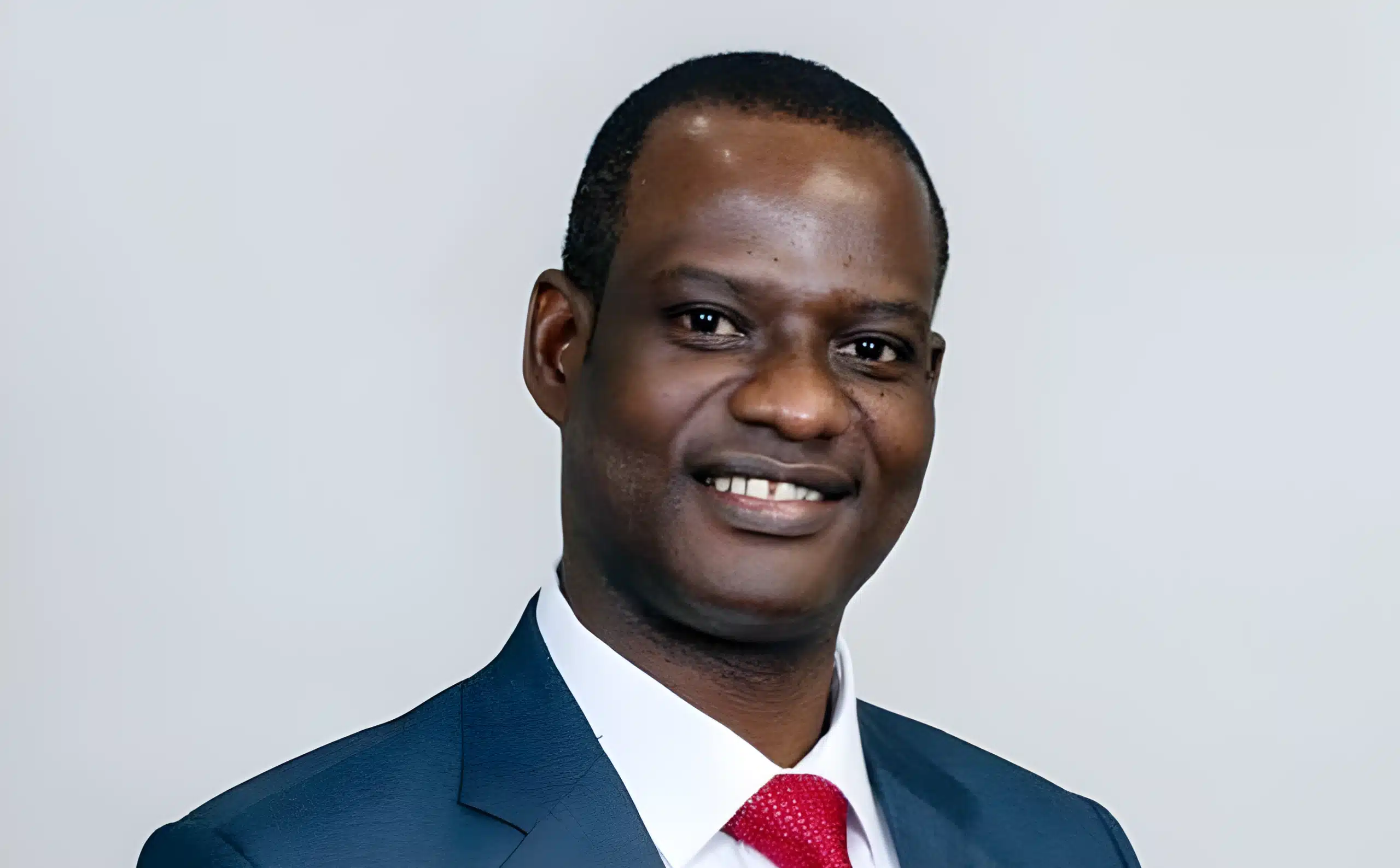

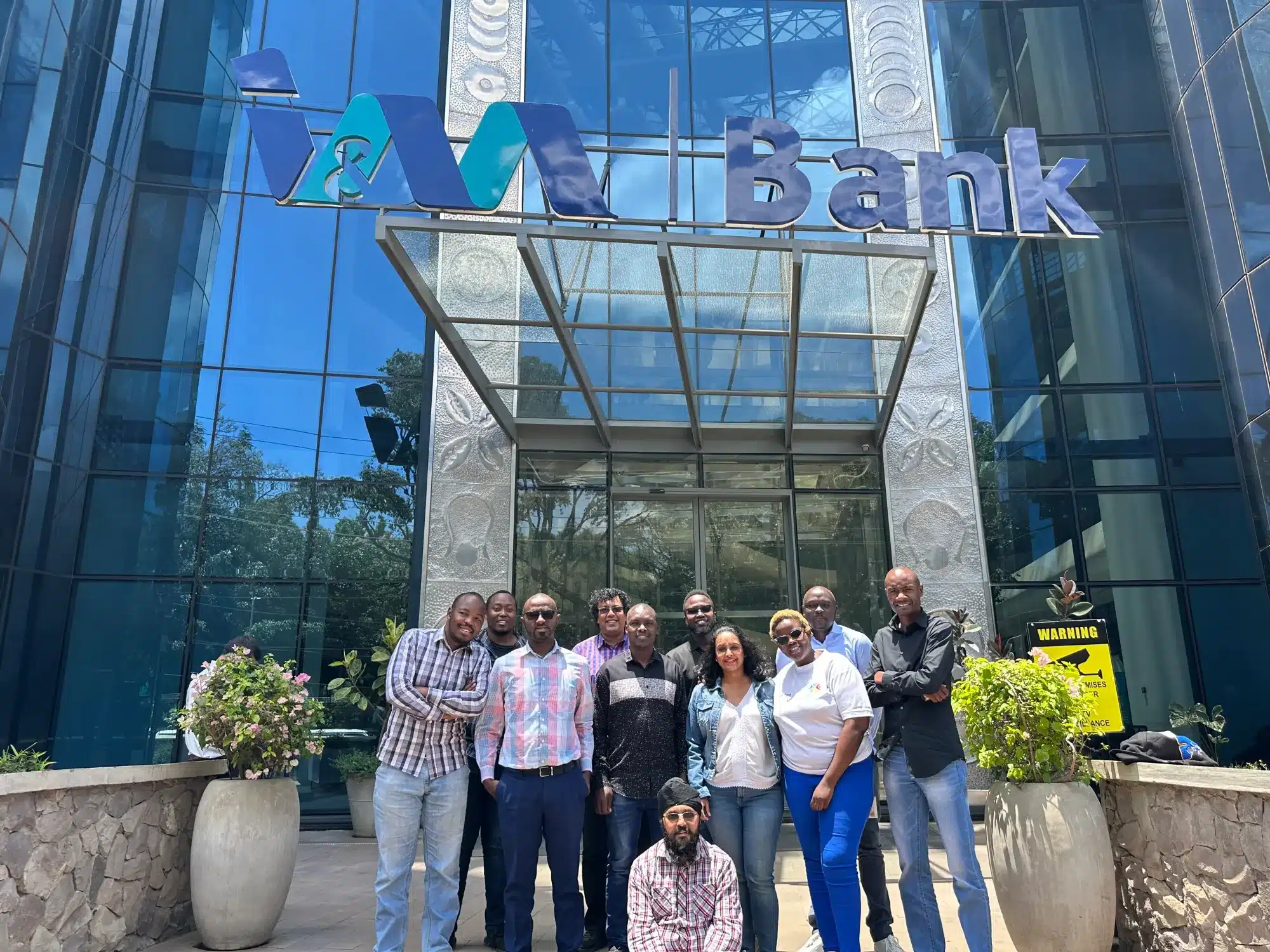


I&M Group PLC posted headline earnings growth in its 2024 full-year results, but a contracting loan portfolio and near-flat balance sheet reveal the limits of relying on elevated interest rates in Kenya’s challenging economic climate.
The East African lender reported a 21.9% increase in profit after tax to $119 million (KES 15.4 billion), with earnings per share rising 21.9% to KES 9.30.
Total operating income expanded 20% to $397 million (KES 51.2 billion), driven almost entirely by net interest income surging 31.2% to $292 million (KES 37.6 billion). Interest income jumped 35% to $528 million (KES 68.1 billion) as high policy rates early in 2024 widened margins. Non-funded income remained largely unchanged, with foreign-exchange fees declining.
Loan book contracts 7.8% to $2.23 billion as deposits fall 1.1%
Core lending activity weakened despite the profit surge. Net loans and advances declined 7.8% to $2.23 billion (KES 287.1 billion), while customer deposits dropped 1.1% to $3.20 billion (KES 412.2 billion). Total assets grew a marginal 0.3% to $4.51 billion (KES 581.3 billion).
The contraction reflects subdued credit demand in Kenya amid high inflation, elevated taxation, reduced disposable incomes, and a 17% appreciation of the Kenyan shilling against the US dollar, which lowered the reported value of regional subsidiary growth. Subsidiaries in Rwanda, Uganda, and Tanzania recorded local-currency loan increases, but the group’s dominant Kenyan operations (approximately 71% of assets) saw limited uptake. The loan-to-deposit ratio eased to 70% from 75%.
Gross non-performing loans edged up only 0.4% to $276 million (KES 35.5 billion), lifting the gross NPL ratio to 12.4% from 11.4%. While this remains below the Kenyan industry average of around 16.4%, it still indicates ongoing credit stress. Net non-performing assets stood at 4.7%. Provisions increased modestly, keeping the cost of risk stable at 2.6%.
Return on equity improves
Profitability metrics strengthened: return on equity rose to 17% from 15%, and return on assets to 2.9% from 2.6%. The cost-to-income ratio improved to 46%. The group maintained a solid liquidity ratio of 52% and total capital adequacy of 21%, comfortably above regulatory minima.
The board proposed a final dividend of KES 1.70, bringing the full-year dividend per share to $0.023 (KES 3.00), up 17.6% implying a payout ratio of approximately 32%.
Critical analysis: rate-driven margins hide structural weaknesses ahead of easing cycle
A significant portion of I&M’s 2024 profit growth derived from wider net interest margins during a high-rate period that has since reversed. With the Central Bank of Kenya cutting rates multiple times through 2025 (CBR around 9–9.25% by late 2025), margin compression appears inevitable in 2025 and beyond.
The unusual loan-book shrinkage for a major Kenyan lender underscores weak private-sector credit demand and persistent risk aversion that may continue even as rates decline. Elevated NPL levels continue to constrain capital deployment and aggressive lending growth.
Positives include digital revenue surging 163% to $9.3 million (KES 1.2 billion), with 83% of customers now digitally active, and regional subsidiaries raising their profit-before-tax contribution to 29%. The group’s “iMara 3.0” strategy aims for 20% ROE through ecosystem lending, digital expansion, and cross-border opportunities.
For global investors, I&M provides exposure to East Africa’s banking sector with relatively stronger asset quality and capital buffers than many peers. However, the stagnant balance sheet and heavy dependence on temporary rate tailwinds highlight that headline profit growth in the region frequently conceals softer lending volumes and lingering asset-quality pressures.
The stock traded near KES 34–35 around the March 2025 results release, suggesting a modest valuation. Sustainable upside will require visible loan recovery and faster NPL resolution in a lower-rate environment.
I&M’s 2024 results exemplify the high-rate banking trade-off: fatter margins today, but tougher volume and sustainability challenges tomorrow.